

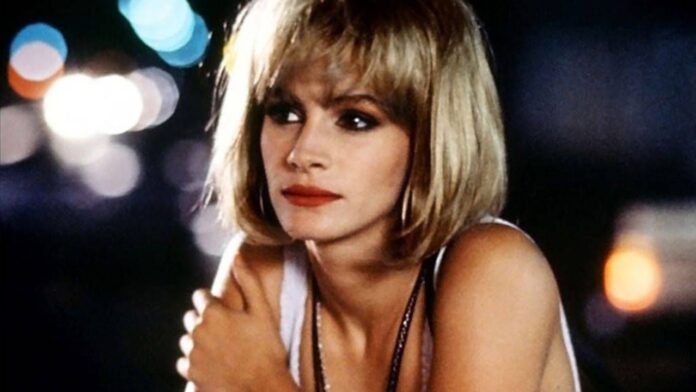
Sam Raimi was quietly making his own superhero movie long before capes and cinematic universes became the most valuable currency in Hollywood. His 1990 film ‘Darkman’, gritty, stylized, and emotionally raw, stood apart from the comic-book adaptations of its time.
The film, which starred Liam Neeson as the tragic Dr. Peyton Westlake, would later be known as a significant stepping stone for Raimi, who would later redefine the superhero era with Spider-Man a decade later. What most fans do not know is that ‘Darkman‘ nearly had one of the biggest stars of the time with Neeson: Julia Roberts. At the height of her rising fame, Roberts was seriously considered for the female lead. However, she ultimately chose to walk away. The reason wasn’t creative differences or scheduling conflicts. It was far more personal, and his name was Liam Neeson.
The Untold Story Behind ‘Darkman’s Original Casting
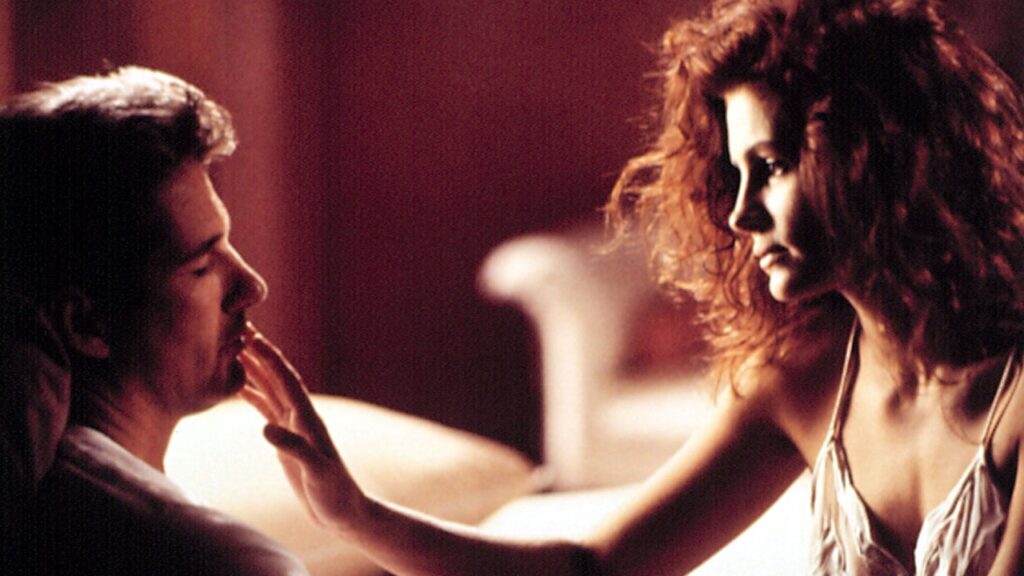
Julia Roberts and Liam Neeson had more than just screen time together by the late 1980s. The two met during the filming of ‘Satisfaction’ in 1988. While the movie was not well-received, a real-life romance was going on behind the scenes. Roberts was only 19 years old, and Neeson was 35, and their affair soon turned serious. They were said to have cohabited in Venice, California, and at one point, appeared to be very much devoted.
Related: 30 Best Julia Roberts Movies Of All Time, Ranked
However, relationships, particularly those that are in the glare of Hollywood, do not always work out. By 1990, Roberts and Neeson had parted ways. Around that same time, Neeson was cast as the lead in ‘Darkman‘, Raimi’s ambitious and unconventional superhero project. The studio was keen on reuniting the former couple on screen. Roberts even auditioned with Neeson, and by all accounts, the chemistry was undeniable. Casting director Nancy Naylor has since revealed that their audition was an emotional one.
Both actors were openly crying. There were tears, silence, and a sense of intimacy that went beyond performance. But that emotional authenticity might have been the very issue. Soon after the audition, the agent told the production that she wished to withdraw. The implication was obvious: collaborating with an ex that closely, and on a project that required emotional openness, was just too painful. Instead of putting herself in an awkward position, Roberts preferred to walk away.
Julia Roberts’ Most Personal Career Decision Had Nothing To Do With The Script
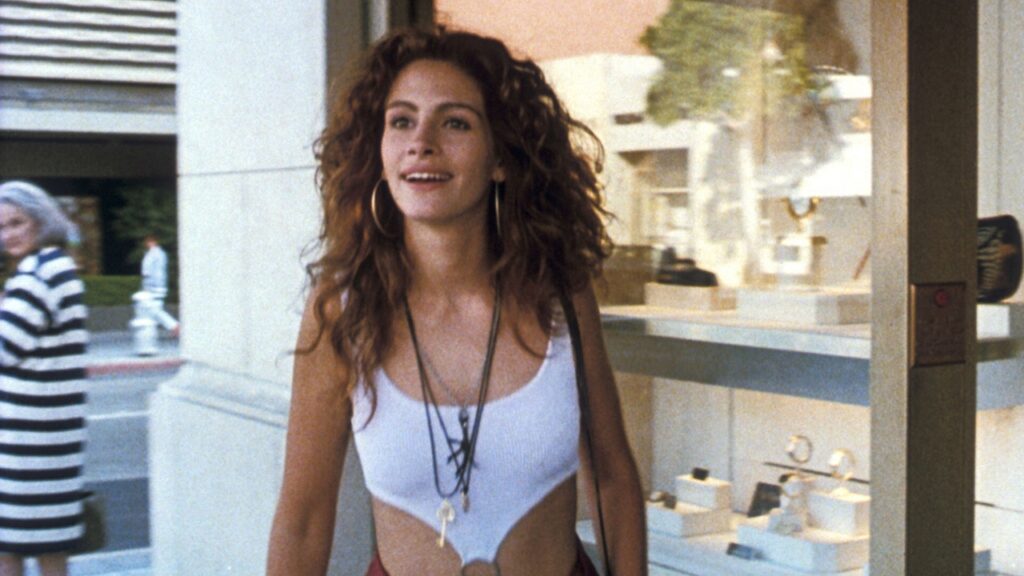
In hindsight, Roberts’ decision feels deeply human. She had to find her way in the world as an actress, and as a human being, early in her career, she had to deal with fame, heavy scrutiny of the press, and a trail of high-profile relationships. Roberts’ love life remained in the headlines after she broke up with Neeson. She also dated a number of her co-stars, including Kiefer Sutherland, with whom she was briefly engaged, but broke up with in dramatic style.
In case you missed it: “A Very Poor Idea”: Why Julia Roberts Turned Down A ‘Notting Hill’ Sequel
In 1993, she married country singer Lyle Lovett, a move that shocked many people and ended only after two years. Later relationships, including a long-term romance with Benjamin Bratt, eventually led Roberts to a more stable chapter in her life when she married cinematographer Daniel Moder in 2002, a partnership that has endured far longer than her earlier Hollywood romances. Neeson, in the meantime, pursued his own meandering way.
He met actress Natasha Richardson after dating Barbra Streisand in the early 90s, and she became the great love of his life. Their marriage lasted until Richardson’s tragic death in 2009, a loss Neeson has spoken about with heartbreaking honesty over the years. Although he has dated since, Neeson has frequently said that he is mostly happy to be single, although rumors of new relationships sometimes emerge.
Interestingly, fate later reunited Roberts and Neeson, at least on the professional front. In 1996, the two came back to the screen in ‘Michael Collins,’ and it was clear that time and distance had mellowed down old scores. In retrospect, Julia Roberts’ rejection of Darkman was not a professional mistake, but a very personal one, made at a very vulnerable time. The movie proceeded to be a success with Frances McDormand taking on Roberts’ turned-down role. Then Roberts herself became a superstar with ‘Pretty Woman’.