

Comic book adaptations thrive or falter on a delicate balance: honoring the source material while justifying their existence as something new. Movies are not comics, and they never will be, but when a movie openly asserts that it is based on a favorite story, the expectations are established, whether studios like them or not.
This is why a recent remark by James Gunn regarding the upcoming ‘Supergirl’ film has not only caused a stir, but it has also subtly altered the way some fans view the entire DCU experiment. This is not a nitpicking of casting decisions or trailer feel. It’s about identity. And with the most recent explanation given by Gunn, one must wonder whether the film is even interested in adopting the very concept that made it exciting in the first place.
James Gunn’s Words Reframe What The DCU Really Means By “Comic Accuracy”

‘Supergirl’ is placed as the second big film in the DCU, coming only a year after ‘Superman‘. Even at the beginning, its connection with ‘Supergirl: Woman of Tomorrow’ was a promise of boldness. The miniseries by Tom King is not another Kara Zor-El story; it is a definitive one. It’s self-reflective, emotionally traumatizing, and aesthetically unlike virtually anything DC had ever printed before it. This is why the initial buzz was so great. This was not a nod in the air or a blink-and-you-miss-it nod to the comic; the film was openly associated with the comic.
Related: Why James Gunn’s View Of ‘The Flash’ Feels Like A Course Correction For DC
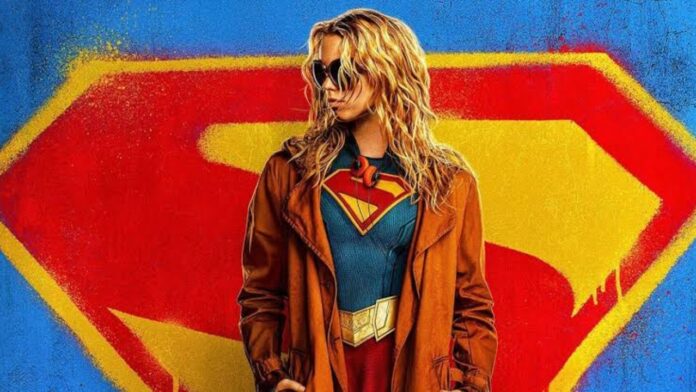
To fans, such an association meant that they were ready to take chances, particularly in the visual sense. However, Gunn’s recent comments have put that expectation in a new perspective that is difficult to overlook. When Gunn writes that the film is not a religious adherence to ‘Woman of Tomorrow’, he might have been trying to reassure the general audience. “I love Milly Alcock in the movie. It’s a space fantasy, which is like Guardians in a way, but it’s based on the Tom King book. It doesn’t follow it religiously, but it has a lot of the core of that there,” he told Variety.
The teaser trailer already had that tension. The visuals were more of a familiarity, clean sci-fi textures, beats that were familiar with space fantasy, and a sense of safety instead of strangeness. Not bad. Not incompetent. Just expected. And that is the problem. ‘Woman of Tomorrow’ was not anticipated. It was alienating in the most positive sense, constructed on stillness, loneliness, and a feeling of cosmic melancholy that is rarely tried in superhero media.
‘Supergirl’ May Be Losing What Made ‘Woman Of Tomorrow’ Special

Milly Alcock’s Supergirl, by all accounts, is being positioned as emotionally complex and deeply scarred, a foil to David Corenswet’s more hopeful Superman. But there is an ugly reality of adaptations that studios tend to undervalue: sometimes the story is the aesthetic. ‘Supergirl: Woman of Tomorrow’ is inseparable from Bilquis Evely’s artwork and Matheus Lopes’ coloring. Take away that dreamy, painterly quality, and you lose not only beauty, but meaning.
In case you missed it: Before James Gunn’s DCU, ‘Green Lantern’ Had A Very Different Future At HBO
The themes of the comic are supported by its visuals. Large, empty scenery highlights Kara’s isolation. It is a fairy tale that is being narrated at the border of the universe, both hopeful and devastating. It would have been difficult to translate that to film. However, it would have been needed. Rather, the initial appearance of ‘Supergirl’ is replaceable. Not offensive, not ugly, just familiar. And familiarity is what ‘Woman of Tomorrow’ never had.
It is here that the frustration becomes acute. The DCU appears to desire freedom without penalty. The film can borrow prestige by referring to the comic as a guiding light, as opposed to a blueprint, without taking the risk of losing a more general audience. That was the case with ‘Superman’, which was an open adaptation of ‘All-Star Superman’, but with an entirely different story. The distinction lies in the fact that ‘All-Star Superman’ is characterized more by theme, whereas ‘Woman of Tomorrow’ is characterized by form.
Something vital is lost when form is not considered. All this does not ensure that Supergirl will be a bad film. Actually, it can be an entirely solid, emotionally involving space adventure. Craig Gillespie is a good director, and Alcock has already demonstrated her capability to bring out depth in her years. The disappointment comes from recognizing a missed opportunity, not a failure, but a compromise. Right now, ‘Supergirl’ feels like it’s choosing comfort over conviction.