


With the DC Universe just starting to take its first steps in the right direction, ‘Supergirl‘ is slowly becoming one of the most interesting future projects. The film is set to be released in June 2026 and comes with a certain degree of anticipation and intrigue. On one hand, it follows the massive success of Superman, the movie that officially launched James Gunn and Peter Safran’s rebooted DCU.
On the other hand, it presents a quite different type of hero, one whose adventure is to reach far out into space and its emotional depths. While comparisons to Marvel’s ‘Guardians of the Galaxy‘ may seem inevitable given James Gunn’s involvement, ‘Supergirl’ isn’t a carbon copy of his Marvel work. Rather, it is a manifestation of his changing creative voice: cosmic, character-driven, emotionally bruised, and surprisingly intimate.
‘Supergirl’s DCU Debut Taps Into James Gunn’s Cosmic Strengths
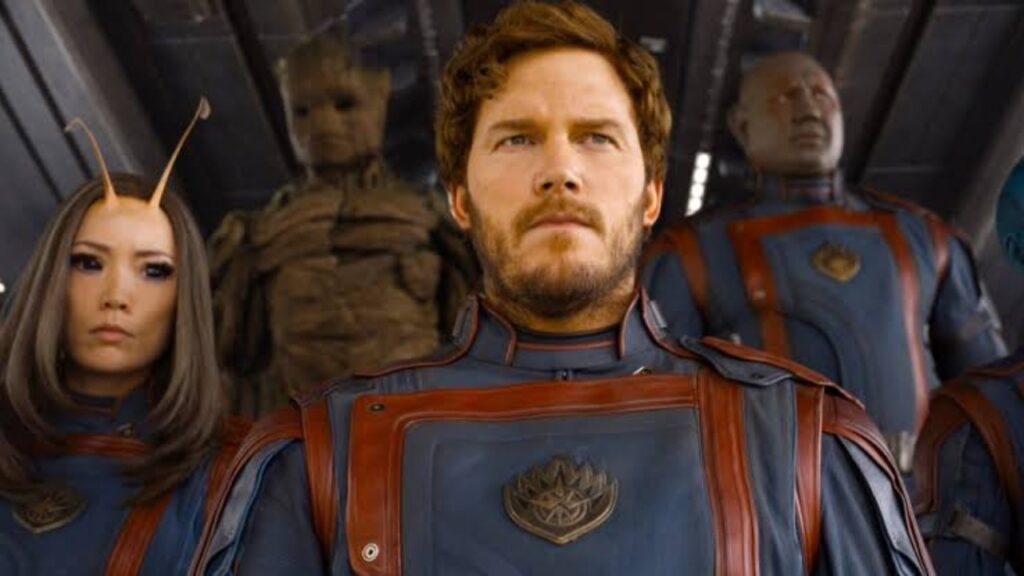
The parallels between the films are not only in tone but in philosophy. It’s in the way stories are told, heroes are positioned, and how space can be utilized not only as a setting, but as a reflection of loneliness and hope. On the face of it, the concept of ‘Supergirl’ being related to ‘Guardians of the Galaxy’ by DNA is questionable. Kara Zor-El is, after all, traditionally regarded as a more serious, optimistic character. She is closer to Superman than a group of cynical space outlaws. However, James Gunn has made it clear that the relationship is not just about humor or teamwork.
Related: DC’s New Green Lantern Plan Looks Nothing Like the 2011 Movie In The Best Way
“I think it’s a space fantasy, which is like ‘Guardians’ in a way, but it’s based on the Tom King book, but it doesn’t follow it religiously, but it has a lot of the core of that there,” he told Variety. Gunn has referred to ‘Supergirl’ as a space fantasy, and that difference does count. Similar to Guardians, the movie explores the universe and exposes viewers to alien worlds, new cultures, and ethically ambiguous scenarios. However, in contrast to Guardians, which lives off found-family anarchy, ‘Supergirl’ is set to be more personal and unpolished.
This interpretation of Kara Zor-El, based on ‘Woman of Tomorrow’, is full of loss in a manner that Superman never underwent fully. She remembers Krypton. She recalls how she saw things she adored fade away. That emotional baggage makes her stand out, not only against Clark Kent, but against the majority of superheroes on screen. The direction of Craig Gillespie, combined with Milly Alcock, promises a down-to-earth intensity.
It’s clear that Kara is not coming to the Earth with a wide-eyed and optimistic mind. She is flying in space with trauma, anger, and a broken sense of purpose. Here, the Guardians comparison really fits.
Gunn has always excelled at using cosmic backdrops to explore deeply human pain. Whether it was Peter Quill’s grief, Rocket’s self-loathing, or Gamora’s fractured identity, space was never just spectacle; it was emotional isolation made literal. ‘Supergirl’ seems to be exploiting the same narrative impulse, but with a more isolated, serious-minded approach.
James Gunn’s Creative Signature Comes Full Circle With ‘Supergirl’

The most interesting aspect of ‘Supergirl’ is that it shows the development of James Gunn as a storyteller. He made the obscure characters in ‘Guardians of the Galaxy’ into emotional touchstones through the sincerity behind irreverence.
In DC, he appears to be bent on using the same emotional honesty, without repeating himself. Gunn has publicly admitted that Supergirl will not be religiously faithful to ‘Woman of Tomorrow‘. However, it will still have its essence. That is the same strategy he used with Guardians.
In case you missed it: Before James Gunn’s DCU, ‘Green Lantern’ Had A Very Different Future At HBO
He honoured the spirit of the original source by adapting it for the big screen. That philosophy is not limited to ‘Supergirl‘ itself but to the uncertainty of Warner Bros. Discovery and the DC brand.
The remarks made by Gunn concerning possible changes in the corporation are the result of cautious optimism. He has witnessed franchises emerge, decline, and re-invent. That lived reality appears to shape the way he is constructing the DCU, slowly, intentionally, and knowing that nothing is stable.