For decades, people who love ‘The Lord of the Rings‘ have wondered about something. Why are there no churches in the books? No priests, barely any mention of gods or worship, and yet the story is full of mercy, sacrifice, and a sense that something bigger is guiding events.
It turns out Tolkien answered this question himself in a private letter that has become one of the most talked-about documents among Tolkien fans and scholars.
J.R.R. Tolkien Letter 142 Reveals ‘The Lord of the Rings’ Is a Catholic Work
In December 1953, right before ‘The Lord of the Rings‘ came out, Tolkien wrote to Father Robert Murray, a Jesuit priest who had helped proofread the books early on. Murray told Tolkien the story felt connected to the Catholic idea of grace. Tolkien wrote back saying he knew exactly what Murray meant.
Related: Why Kate Winslet Rejected Eowyn In ‘The Lord Of The Rings’ Before Joining ‘The Hunt For Gollum’
This letter is now known as Letter 142, found in The Letters of J.R.R. Tolkien, edited by Humphrey Carpenter. In it, Tolkien said his story was “a fundamentally religious and Catholic work.” He added that this was true “unconsciously so at first, but consciously in the revision.” That last part explains a lot. He said he had cut out “practically all references to anything like ‘religion’” on purpose, because “the religious element is absorbed into the story and the symbolism,” instead of being shown through rituals or church scenes.
Why Middle-earth Has No Religion Despite Its Christian Themes
Tolkien Gateway’s summary of the letter points out that Tolkien left almost all religious references out of Middle-earth on purpose, while still believing the spiritual heart of the story stayed whole underneath. Instead of building temples or writing in priests, he put his beliefs into the story itself. It shows up in how good and evil work, in the sense that events are being guided by something unseen, and in moments of mercy that show up right when they matter most.
In case you missed it: ‘The Lord of the Rings’ Finds Its New Aragorn And Fans Are Already Divided
People who study the letter say this wasn’t something Tolkien just stumbled into. One analysis notes that in that same letter, Tolkien admitted he hadn’t planned much of it out ahead of time. He gave the credit to the Catholic faith he grew up with, a faith he connected deeply to his mother. Her choice to convert cost the family a lot, and she died when Tolkien was still a boy. Biographers say this history helps explain why Tolkien treated faith in his writing as something you feel and live through, not something you stop to explain.
Applicability in Tolkien’s Catholic Symbolism
The letter has become important for readers trying to make sense of two things that seem to clash. Tolkien always said in public that ‘The Lord of the Rings’ wasn’t an allegory, and that it wasn’t some hidden retelling of Christian teaching. But privately, he admitted its Catholic roots. People who write about the letter, including voices from The Divine Mercy and the Tolkien Road podcast, say this isn’t really a contradiction. It comes down to the difference between allegory and what Tolkien called “applicability,” a story that carries religious meaning without ever spelling it out.
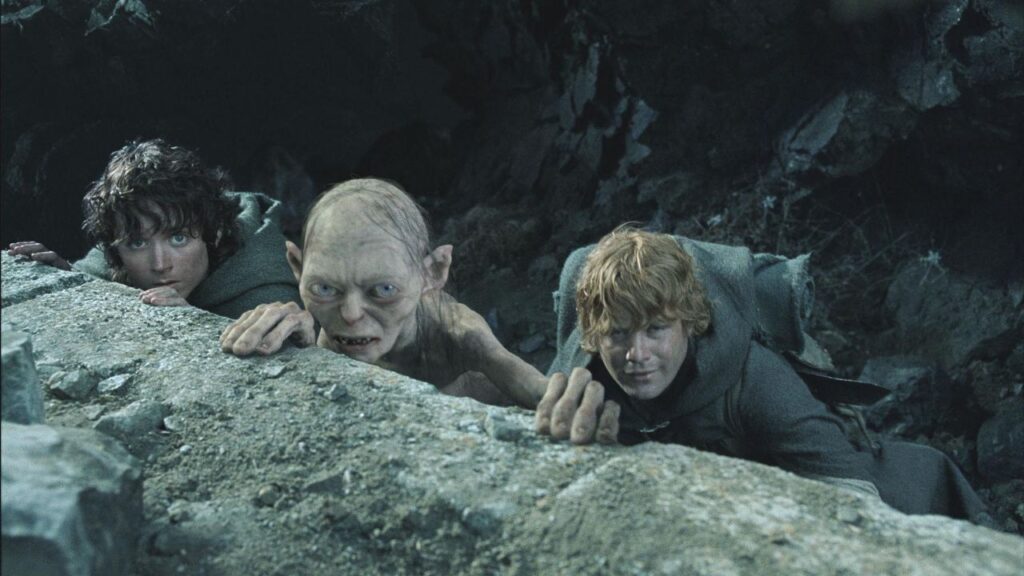
For fans, the letter feels like a key. Moments many readers already sense are meaningful, like Frodo showing mercy to Gollum, Gandalf coming back from death, or hope quietly holding on through despair, are exactly where Tolkien said his faith actually lives in the story. Not in any made-up religion or set of gods, but right there in the plot.
More than seventy years later, Letter 142 still gives one of the clearest looks into how one of the most influential writers of the twentieth century saw the connection between his imagination and his faith. And why he trusted a story to carry that faith better than any sermon ever could.
You might also want to read: Andy Serkis Breaks Silence on ‘Lord of the Rings: The Hunt for Gollum’ Diversity Backlash With Clear Casting Stance