

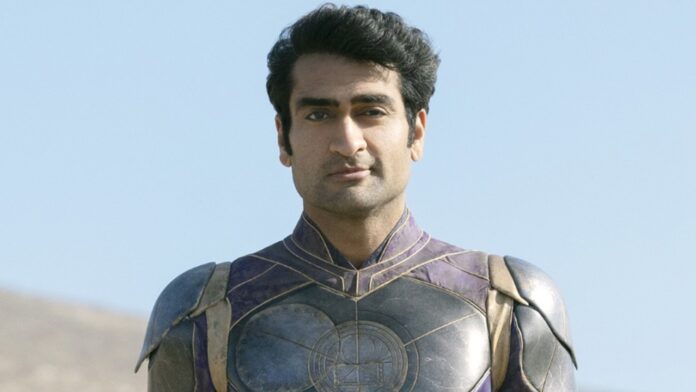
When ‘Eternals’ was released in theaters in late 2021, it was released under an unattainable burden of expectations. This was Marvel Studios trying something completely new, a cosmic ensemble film with an Oscar-winning director, packed with philosophical ideas about immortality, free will, and humanity’s place in the universe.
Instead, it became one of the most divisive chapters in the history of the MCU, a movie that did not resonate with critics, failed to perform well at the box office, and soon became a forgotten part of the overall story of the franchise. For many actors, being associated with a high-profile disappointment can be something to quietly distance themselves from. Kumail Nanjiani has chosen the opposite approach.
What Eternals Taught Kumail Nanjiani About Failure, Fame And Letting Go
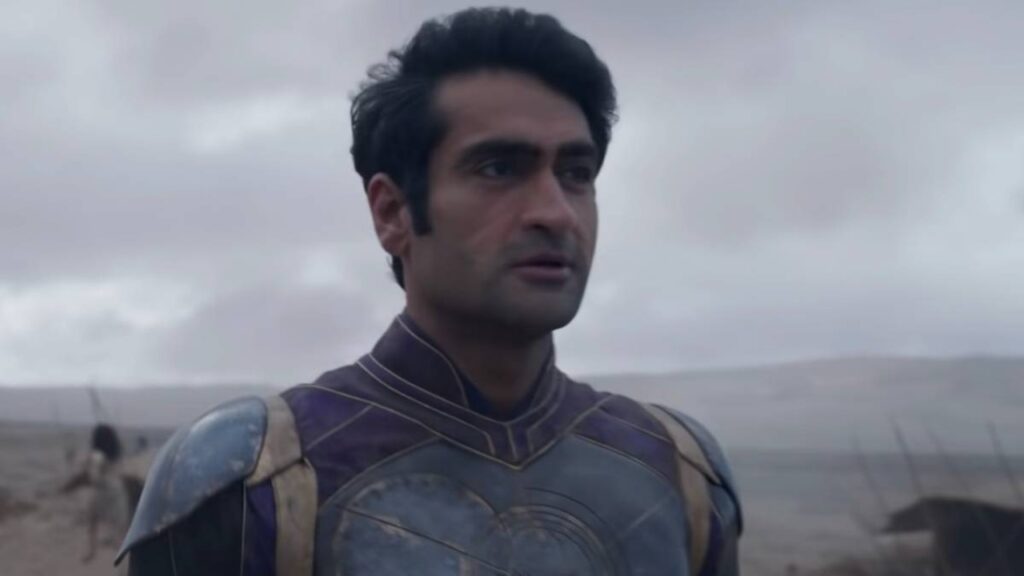
The actor who portrayed Kingo in the film is not bitter about ‘Eternals’ at all. He’s reflective. Grounded. And, most unexpectedly, thankful, despite the fact that the experience eventually led him to therapy. Instead of considering the movie a career mistake, Nanjiani thinks of it as a lesson on how to make it in Hollywood without losing oneself in the process. What stands out in Nanjiani’s defense isn’t blind loyalty to Marvel or denial of the film’s reception. It’s his clarity.
Related: Marvel’s Eternals Make A Humiliating Return In ‘What If…?’ Season 3
“Most times, if I’m acting in something, I do not get to decide how good it’s gonna be. I do not get to choose how the audience is going to receive it. I do not get to choose how much money it’s going to make. I do not get to choose what the reviewers are going to think of it,” he told NPR’s Wild Card. He does not hesitate to admit that actors can do very little to influence the final landing of a movie, which many actors cannot come to terms with, particularly when the stakes are as high as an MCU blockbuster.
Nanjiani has been open in interviews about how he learned to separate the process of creating something from the outcome of its reception. “What I do get to choose is whether or not I learned from it, you know? So to me, that’s been a thing that I have to remind myself over and over and over and over, is that a failure is not a failure. It truly is an opportunity to learn,” he added. The hype around Eternals was high.
It was further amplified by Marvel’s machine-like success rate and the actor’s highly publicized physical transformation to fit the role. When the movie did not hit, the disappointment was not merely professional, but personal. Therapy became part of how Nanjiani processed that disconnect. However, rather than positioning the experience as harmful, he has learned to view it as clarifying.
Why ‘Eternals’ Crashing Was Almost Inevitable
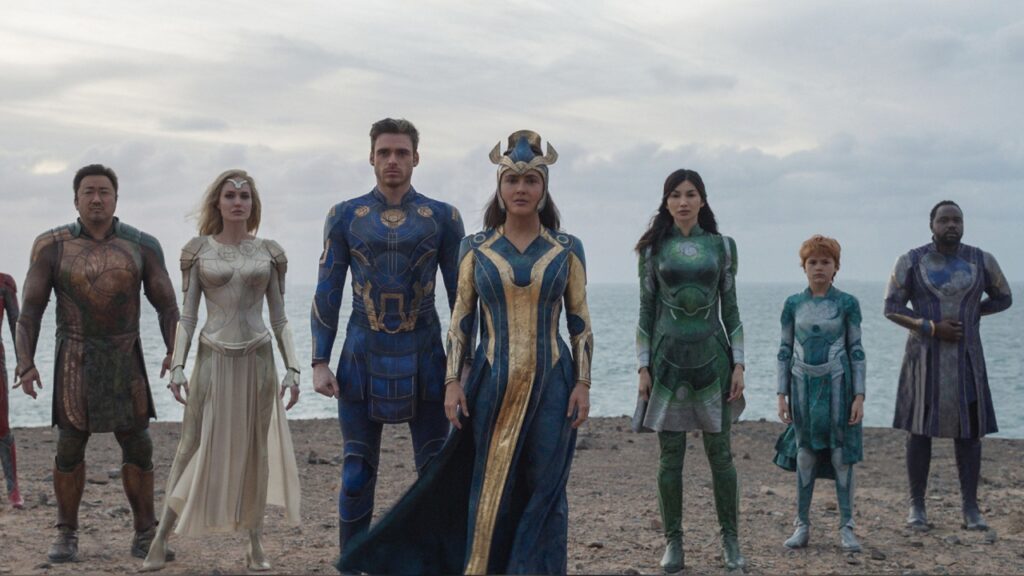
To comprehend the reasons behind the failure of ‘Eternals’, one must not focus on a single aspect. It failed not due to a single poor decision, but a clash of timing, expectations, and creative ambition. To start with, ‘Eternals’ came at an inopportune time to the MCU. ‘Avengers: Endgame’s specter was still big, and the viewers were getting used to a Marvel universe without Iron Man and Captain America at the centre. Phase 4 was also transitional in nature, requiring viewers to re-invest emotionally.
In case you missed it: ‘Eternals’ Story Finally Reaches Its Brutal End In Marvel Canon
However, at the same time, it wanted to broaden the universe in new directions. Secondly, the movie premiered at an unequal stage of the pandemic recovery. Theatre attendance was still shaky, and although Marvel movies had traditionally been cinematic events, ‘Eternals’ did not have the same urgency that compelled people to flock to theaters. It did not seem necessary for the continuing story. ‘Eternals’ was also a gamble creatively.
Chloé Zhao introduced a contemplative, restrained sensibility to a franchise that was based on momentum and humor. The movie was more about themes than thrills, character rather than plot propulsion. To certain viewers, that was refreshing. To many others, it was slow, remote, and emotionally closed off. The group aspect of the narrative did not assist. It was an epic undertaking to introduce ten new immortal characters in one film with centuries of history. This led to a number of characters being underdeveloped, and viewers were unable to connect.
Critics reacted as such. Having a Rotten Tomatoes rating in the mid-40s, Eternals was the first film in the MCU to be a truly divisive critical outlier. What followed, perhaps, is the worst: silence. All of the events shown in the film have been mostly disregarded in the later MCU projects. In the case of Kumail Nanjiani, such a wider re-evaluation does not alter his relationship with the film. Success or failure, Eternals gave him something more lasting than applause: perspective.