

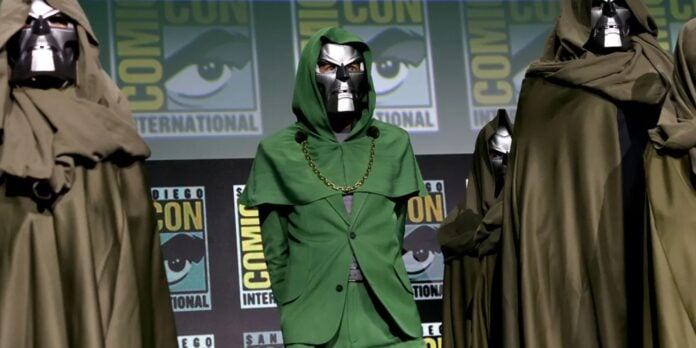
Doctor Doom’s arrival in the Marvel Cinematic Universe should feel like a seismic event. For many comic readers, Victor von Doom is not merely a villain; he is a pillar of the Marvel narrative, a character whose existence alters the universe.
‘Avengers: Doomsday’ is about to unleash Doom on the MCU with Robert Downey Jr. under the mask. Yet more than just excitement, the strategy poses an uncomfortable question: is Marvel sacrificing the essence of Doctor Doom in favor of shock value and narrative convenience?
Marvel’s Multiverse Gamble Could Cost Doctor Doom His Identity
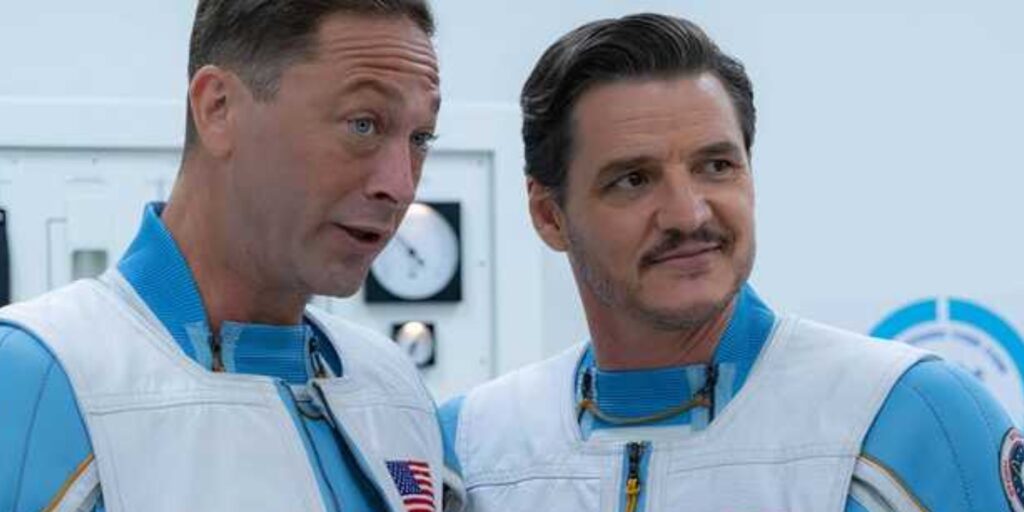
Marvel’s ambition is clearly there. Bringing back Downey Jr. in an entirely new role is a sensationalist decision, and the idea of making Doom a character tied to the emotional legacy of ‘Avengers: Endgame’ on paper sounds like a brilliant attempt to root a new villain in familiar soil. However, Doom has never required borrowed significance. His strength has never been in what he reminds audiences of, but rather what he is. With ‘Avengers: Doomsday‘ coming closer, it is becoming more apparent that this incarnation of Doctor Doom might be spectacular and unpredictable.
Related: How A ‘Damage Control’ Series Could Fix What MCU Is Missing Right Now
However, he also might be fundamentally disconnected from the core relationships and motivations that define him in the comics. The core of the Doctor Doom mythos is one of the biggest rivalries in Marvel’s history: Victor von Doom and Reed Richards. This struggle is not a footnote or a fun trivia fact. It’s the emotional and philosophical engine that makes Doom’s every decision. That resentment, arrogance, and obsession are inseparable from his belief that Reed stole the life and recognition he deserved.
The MCU, though, seems to be bringing Doom in reverse. Although ‘The Fantastic Four: First Steps’ foreshadows Doom’s existence and his connection with Reed Richards, there is no real groundwork to support the connection between the two. That absence matters far more than it might initially seem. Thanos worked as the Infinity Saga’s villain because Marvel slowly built his influence across multiple films. His shadow was looming over the universe even before he spoke.
Whereas, Doom is being thrown into the Multiverse Saga in full volume without the history that makes his actions meaningful. On one hand, most Marvel enthusiasts are aware that, on the surface, Doom dislikes Reed Richards. However, storytelling is not about what viewers already know. It is what the story deserves. Having no glimpse of Victory and Reed’s past, their ideological confrontation, or the events that transformed the rivalry into an obsession, runs the risk of Doom becoming a generic multiversal rather than the deeply personal antagonist he’s meant to be.
Turning Doom Into A Multiverse Villain First Is A Dangerous Shortcut
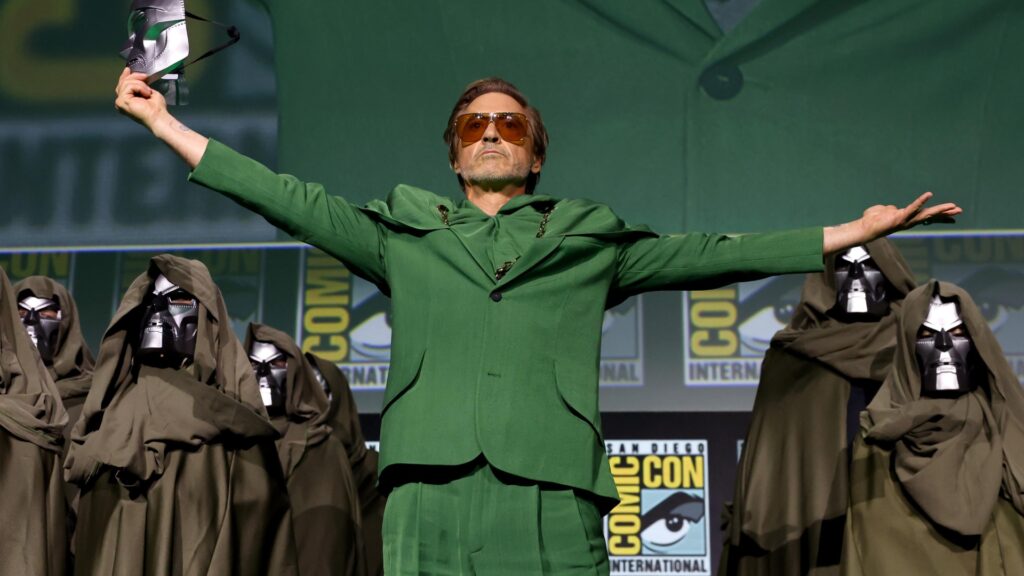
‘Avengers: Doomsday’ is becoming one of the most crowded Marvel movies ever. Having several Avengers teams, the X-Men, multiversal versions, and the Fantastic Four all sharing screen time implies that there is virtually nothing that can be assured: there is no room to develop the characters. That is a big problem for Doctor Doom. Doom is not merely strong in the comics; he is stratified. His intellect cannot be separated from his ego. And his sadism is mixed with his true love for his country, Latveria.
In case you missed it: ‘Avengers: Doomsday’ Might Be Turning Thor Into MCU’s Ultimate Sacrifice
He is a villain driven by a perverted ideology that he is the only one who can save the world. These overtones do not work when Doom is perceived more as a spectacle-driven Avengers-level threat. The ‘Secret Wars’ storyline further shows why this is important. Although the event was full of heroes and colliding universes, the emotional heart of the event was Reed Richards vs. Doctor Doom. The MCU may borrow visual elements or broad ideas from Secret Wars, but without decades, or at least several films, of shared history between Reed and Victor, those moments risk feeling hollow.