
One of the longest-running jokes among Marvel fans isn’t about costumes, continuity errors, or multiversal chaos. It’s about death. Or rather, how meaningless it can be. Death in Marvel Comics is not an end but a temporary inconvenience. Characters die heroically, readers grieve, and then, months or years later, they come back, with little or no repercussions. It’s funny because it’s true. And it is tiresome since it undermines the very concept that death is supposed to be: finality.
The Marvel Cinematic Universe has largely avoided that trap, despite its flaws. And with the MCU in a particularly vulnerable stage of its narrative life cycle, it has an uncharacteristically good opportunity to correct the most broken narrative rule of Marvel not by never resurrecting characters, but by making resurrection mean something again.
MCU Avoided Marvel Comics’ Most Self-Destructive Habit
Marvel Comics did not make death cheap out of malice. It occurred gradually, by commercial pressure, viewer loyalty, and the mere fact that certain characters are too iconic, or too lucrative, to remain dead permanently. Readers respond intensely when a favorite hero is killed. Sales spike. Emotional investment intensifies. However, at some point, the lack turns out to be a disadvantage instead of a victory. So the characters come back.
Related: ‘Avengers: Doomsday’s X-Men Teaser Revealed MCU’s Darkest Villains Yet
Sometimes it’s clever. Sometimes it’s cosmic. However, most of the time it’s agonizingly artificial. A clone, retcon, time anomaly. Or an alternate universe counterpart who’s “basically the same.” The approach is not as important as the inevitability over the decades. As soon as the readers absorb the notion that death is reversible, all dramatic sacrifices become meaningless. The mourning is theatrical.
That is the main issue: if death is not permanent, or at least not significantly disruptive, then it ceases to be narratively honest. Marvel Comics attempted to avoid this by using alternate universes and soft reboots. This enabled stories to restart without undoing all the previous ones. In theory, that works. As a matter of fact, it continues to condition audiences to anticipate reversals. When one dies, readers no longer ask why, but how long. This does not mean that Marvel Comics did not deal with death well. They did. But repetition eroded trust. When loss is temporary, it stops feeling like loss at all.
Marvel’s Future Depends On Whether Its Characters Can Stay Gone
The MCU inherited Marvel’s characters, but not its habits. And that’s one of its biggest advantages. Since the inception of the MCU, death was taken seriously, even when it was not final. The death of Phil Coulson in The Avengers was not only a shock moment but also the emotional foundation of ‘Agents of S.H.I.E.L.D.’ When he eventually died again, it mattered precisely because the story acknowledged how much his survival had already cost.
In case you missed it: ‘Wonder Man’ Could Introduce The MCU’s Most Unlikely Avengers Lineup
Another example of a quietly brilliant sacrifice is the one made by Groot in ‘Guardians of the Galaxy’. Yes, Groot returned. However, James Gunn re-packaged it. The original Groot was gone. The new Groot was not a reset, but a continuation, a legacy. Same body. Different souls. That difference saved the sense of the loss. Even the journey of Loki does not disregard this principle as it may seem.
The Loki who was killed by Thanos in ‘Infinity War‘ remains dead. The Loki that came later was a variant, not a reversal. The story didn’t erase grief; it explored a different version of the character shaped by different experiences. The same can be said about Wolverine and Tony Stark. The fact that Hugh Jackman is back as Wolverine does not nullify Logan. That death remains one of the most emotionally sincere superhero movie endings.
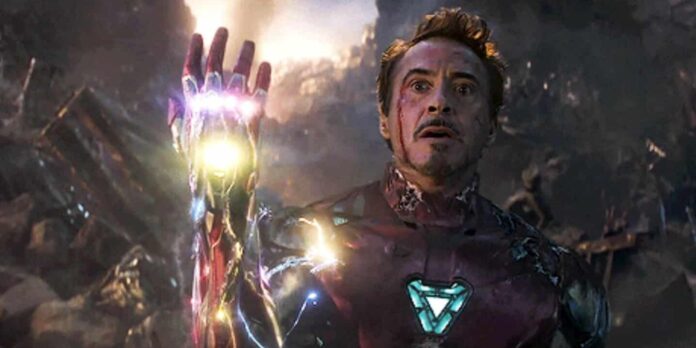
And the fact that Robert Downey Jr. is coming back to the MCU is not Tony Stark being brought back to life, but something different, which Marvel is well aware of and requires a lot of explaining. That distinction matters. The MCU does not deny the fact that death occurred. It builds around it. Bring someone back too quickly, and the loss never had a chance to matter. That’s why the MCU’s restraint is so important right now.
As multiverse storytelling opens up anything as technically possible, Marvel Studios is at a crossroads. It may either go all the way into comic-book impermanence, in which case death becomes cosmetic, or it may maintain the line and use resurrection as a narrative exception, not a rule. Fans no longer care for shock value. They want accountability. They desire consequences to be enforced.
Death does not necessarily need to be absolute to be meaningful, but it must cost something. If the MCU is able to maintain that principle, it will not only escape the most notorious storytelling trap of Marvel. It will reestablish the way long-form cinematic universes deal with loss, legacy, and closure. That type of emotional sincerity could be the most radical gesture in a genre that is constructed on spectacle.