

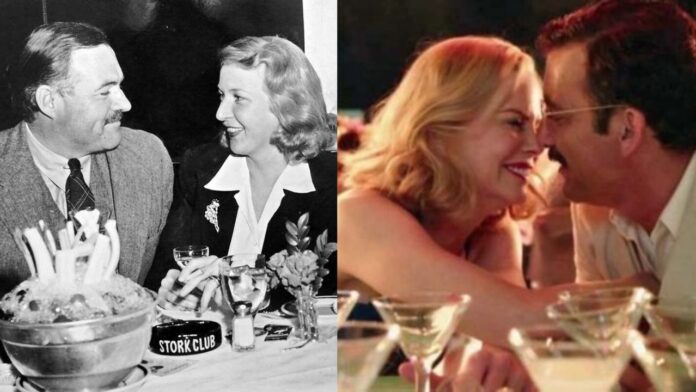
War reporting isn’t fascinating, but that doesn’t stay true when globally celebrated writer Ernest Hemingway and trailblazing journalist Martha Gellhorn step into the picture. There’s something about the way they move through chaos in the film adaptation, the way they observe people, and the way they react to each other that makes you wonder how two writers could turn a battlefield into something so gripping.
Their story moves from bars in Florida to bombed-out streets in Spain, and then to frontlines in China, all while their relationship shifts in ways neither of them seems ready for. Everything builds toward a turning point that changes how we look at both of them, and that moment doesn’t take long to appear.
How Ernest Hemingway And Martha Gellhorn End Up On The Frontlines Together
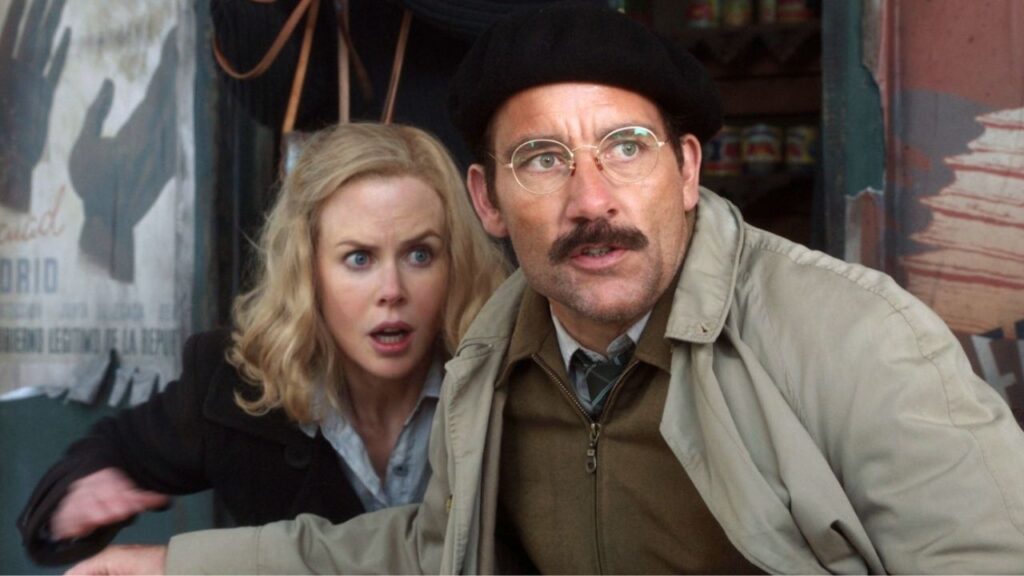
The movie starts by bringing up the real history with scenes that feel much more dramatic, like the moment in Spain where they are together in a hotel room while bombs explode outside and debris, possibly even glass, flies in through the windows. That alone shows the film is taking a bold approach to its story.
Related: The Forgotten Feminist Pioneer Who Inspired The Wizard Of Oz’s Witches
It also makes you think about how strange it must be for families of real people to see such intimate, heightened moments on screen. We see Hemingway surrounded by creative friends: photographer Robert Capa, writer John Dos Passos, and filmmaker Joris Ivens, who work on a documentary about the Spanish Civil War.
Gellhorn enters the picture in a Florida bar, already known for her writing, and interested in covering the human side of war. That interest pulls her toward Hemingway, and before long, they end up reporting side by side in Spain and later in China. When they return home, their personal life become more complicated than the war zones they just left.
The Turning Point In Their Personal And Professional Lives
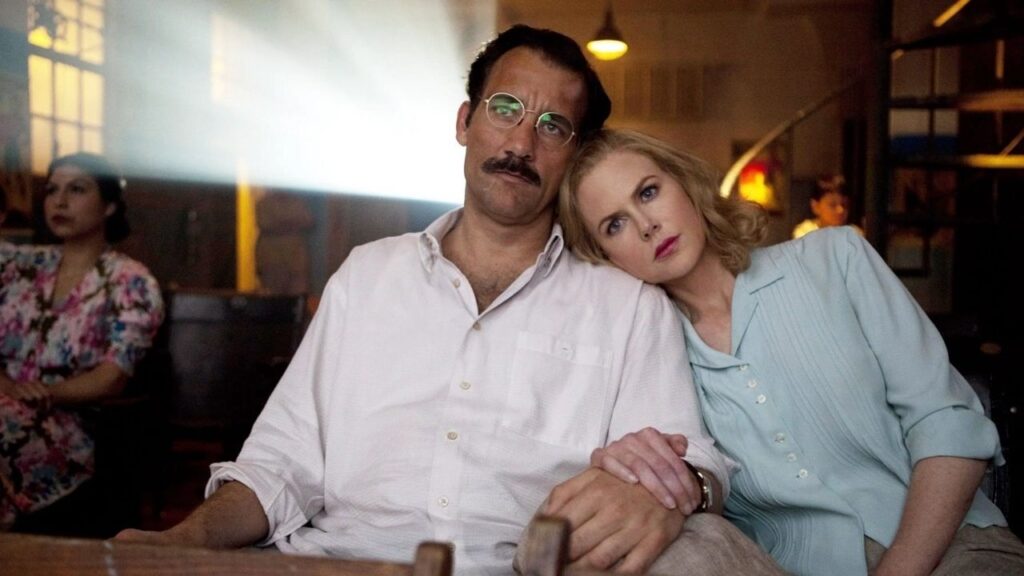
Hemingway is shown as talented but extremely difficult. He drinks heavily, smokes constantly, and treats almost everything like a competition, even with Gellhorn. When a critic challenges him, he responds by showing off his chest and saying that this is what a man looks like.
In case you missed it: 25 Most Important Holocaust Movies Ever Made
The film also includes a troubling moment before one of his speeches, where he forces himself on Gellhorn. When she manages to push him off, he snaps at her and blames her appearance for making him act that way. Gellhorn begins their relationship by admiring him. She notices how he can drink late into the night and still wake up early to write pages and pages on his typewriter.
But the film shows her flaws too. Hemingway cheats on his second wife to be with her, and sometimes she lets his behavior slide even when she shouldn’t. Still, she comes across as smart, ambitious, resourceful, and brave. Nicole Kidman plays her with a lot of depth, especially in the scenes where an older Gellhorn talks to an interviewer. The makeup and her lowered voice make those moments believable.
The Story Could Have Taken A Different Path
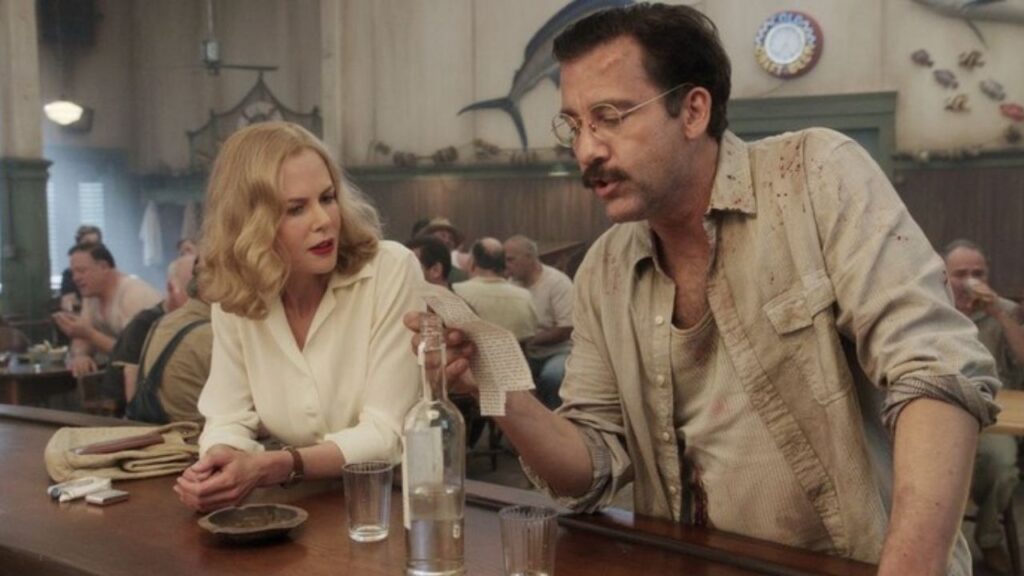
The film captures the old world of typewriters and long writing sessions, but director Philip Kaufman adds stylized touches that sometimes pull you out of the moment. In the China scenes, for example, an officer keeps saying “watchumacalit” whenever he forgets a word, which feels oddly out of place in a war story.
The movie includes several historical figures, but most don’t get enough time to make an impact. Robert Duvall appears briefly for a Russian roulette scene. Tony Shalhoub plays a Spanish reporter with a style that feels like a different genre entirely. Joan Chen appears as Madame Chiang Kai-shek, but isn’t explored deeply. And Parker Posey shows up looking a bit like Katharine Hepburn as Hemingway’s fourth wife, but her role is also underused.
These characters stay in the background while the story focuses on the central pair. The film’s shifts between sepia, black-and-white, and color look interesting, but they don’t fully balance out its uneven tone or the underdeveloped side characters.
Related: Top 10 Authors Who Hated The Movie Adaptations Of Their Books
By the time the story settles, it becomes clear that Martha Gellhorn could have carried this film on her own. She was one of the few women reporting directly from the frontlines, often doing work that even many men avoided. Nicole Kidman, who has played women like Virginia Woolf, Grace Kelly, and Gertrude Bell, fits naturally into a role like this.
In real life, Gellhorn refused to talk about her marriage to Hemingway after they divorced. She once said she didn’t want to become a footnote in someone else’s life. And after watching the way their story unfolds in the film, it’s easy to understand why those words still make sense.