
The Oscar-nominated short film ‘A Night at the Garden‘ opens with a scene that instantly pulls you in. You watch black-and-white footage of New Yorkers walking into Madison Square Garden as if they’re heading to a regular night out. They smile, chat, adjust their coats, and move toward their seats without a hint of hesitation. Nothing in the first few seconds prepares you for what the camera reveals.
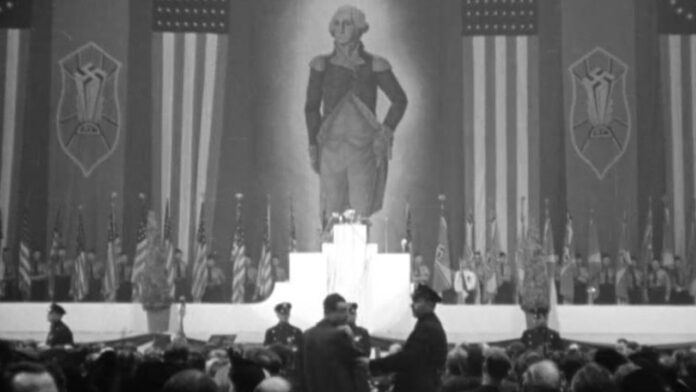
As the film keeps rolling, you finally see what they’re cheering for. American flags frame the stage, a huge portrait of George Washington hangs overhead, and then, right beside them, swastikas appear. So, what’s it all about?
The Terrifying Night When 20,000 New Yorkers Cheered For Nazis
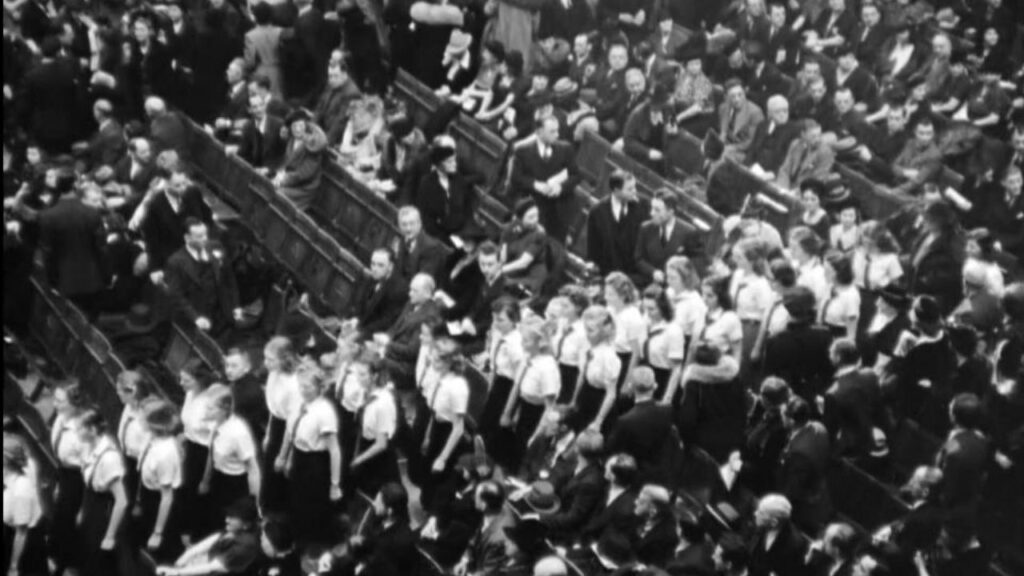
Once the intro opens, the film instantly pulls you into the night of February 20, 1939. More than 20,000 New Yorkers walked into Madison Square Garden at a time when the world was growing uneasy. Hitler was gaining power in Europe, and the conflict felt closer every day. Even so, the scene inside the arena initially looked comforting. People stood proudly in front of giant American flags and a massive portrait of George Washington. They recited the Pledge of Allegiance, sang the national anthem, and watched uniformed men line the stage.
Related: 25 Most Important Holocaust Movies Ever Made
However, the event was not what it seemed to be. The rally was run by the German American Bund, a group in the United States that openly supported Hitler. As the crowd waved American flags, many also raised their arms in the Nazi salute. Soon, the speeches made the crowd’s support even clearer. Fritz Kuhn, the leader of the Bund, told the cheering audience that the press treated him unfairly because he believed it was “controlled by Jews.”
He urged New Yorkers to “take back” the country and insisted America should be led only by white Gentiles. The crowd clapped and whistled as he spoke. Likewise, another speaker named Gerhard Wilhelm Kunze claimed that America had always tried to “protect its Aryan character,” pointing to old laws as proof. Some Bund members even described George Washington as “America’s first fascist.” Meanwhile, outside the arena, the mood was completely different.
Thousands of protesters filled the streets; veterans, housewives, activists, and even a Broadway orchestra that played the national anthem for the crowd outside. Furthermore, the NYPD sent 1,700 officers to control the area, which the police commissioner said was enough “to stop a revolution.”
‘A Night At The Garden’ Scene That Exposed Hitler’s Influence In America

Inside the Garden, the cheers grew louder as the speakers continued to speak. But eventually, one man decided he couldn’t stay silent. His name was Isadore Greenbaum, a 26-year-old Jewish plumber from Brooklyn. He sat through hours of speeches, shocked by how easily thousands of New Yorkers supported Nazi ideas. Finally, he stood up.
At that moment, he pushed toward the stage, climbed up, pulled down the microphone cables, and shouted, “Down with Hitler!” Almost instantly, Bund guards tackled him to the ground. They punched and kicked him as the crowd laughed and cheered.
In case you missed it: How Hollywood Icon Marlene Dietrich Once Planned To Seduce And Kill Hitler
The beating was so rough that his pants were torn off during the attack. Eventually, the police dragged him out. But, instead of arresting the attackers, they arrested Greenbaum. He was fined $25 for interrupting the rally. Later, his family said he believed he would have done the same thing again. When the U.S. entered World War II, he joined the Navy to fight the Nazis directly. After that night, the Bund’s moment of influence quickly fell apart.
For decades, most people completely forgot that such a rally ever happened. Then, years later, filmmaker Marshall Curry discovered the footage by accident. As he watched it, he said he couldn’t believe he had never heard of the event. Because of that, he decided to turn the clips into a short documentary called A Night at the Garden. He wanted people to see how ordinary the New Yorkers in that crowd looked, like neighbors, coworkers, or families.
When the film premiered at Sundance in 2018, the festival director said it was the most shocking thing he had seen that year. Soon after, PBS aired it, and it was later nominated for an Oscar. Because the film has no narration, viewers watch the crowd cheer on their own, which makes it even more unsettling. Remembering that it happened in one of the world’s most famous arenas, in the middle of New York City, is what makes the story so unbelievable.