

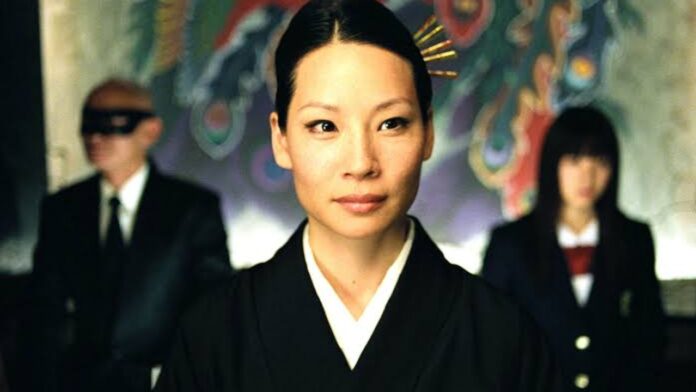
O-Ren Ishii’s role, played by Lucy Liu in ‘Kill Bill’, is usually remembered with its icy authority, razor-sharp violence, and memorable presence. However, behind the sword battles, snowy gardens, and operatic revenge music is a little-known fact: one of the most recognizable elements of the character was not created by Quentin Tarantino, but rather by Liu’s creative eye.
In a recent conversation with Vogue, Liu revealed that O-Ren’s striking black-and-white kimono, now inseparable from the character’s legacy, was a deliberate homage to Pulp Fiction, and one that originated entirely from her.
The Untold Story Behind O-Ren Ishii’s Iconic ‘Kill Bill’ Wardrobe
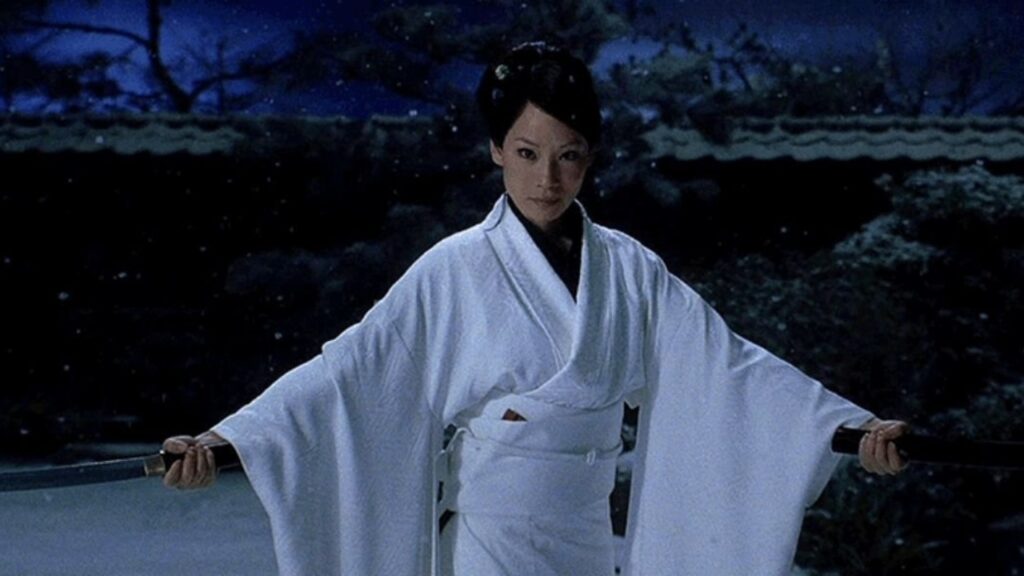
What started as a mere costume talk eventually transformed the way viewers would view one of the most memorable characters of Tarantino. Originally, O-Ren Ishii was not intended to appear the way fans recall her. Liu claims that Tarantino originally intended something much more subdued, a communist gray outfit that was more inclined to uniformity. The motive was not bad, but it did not match the way Liu related to the character when reading the script.
Related: Why ‘Kill Bill’s True Power Emerges Only In ‘The Whole Bloody Affair’ Theatrical Cut
“When I read the script, which was so beautifully written, and Quentin is really such an artist and a visionary,” Liu explained, “I saw something very different.” Instead of depicting O-Ren as a cold-blooded murderer, Liu felt that there was something graceful about him.
She perceived femininity and ferocity, poise and brutality. And she felt that stripping the character of visual elegance would flatten her complexity.
When ‘Kill Bill: Vol. 1’ was filmed in 2003, Liu was not new to leading roles. She had gained a keen sense of how visual storytelling can define character between Charlie’s Angels, Chicago, and her emerging recognition as a screen presence who could be both glamorous and dangerous. That confidence empowered her to speak up, not in opposition to Tarantino, but in conversation with him.
A Subtle Tribute That Changed How O-Ren Was Seen
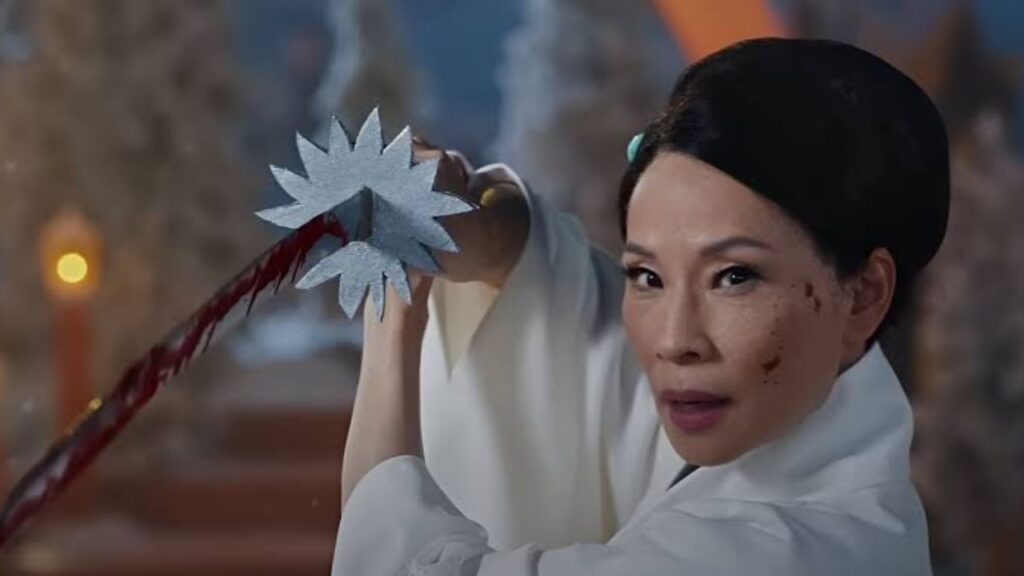
Liu suggested grounding O-Ren’s look in something unmistakably Tarantino: the minimalist, iconic style of ‘Pulp Fiction’. Specifically, she pointed to the black suits, white shirts, and skinny ties worn by Vincent Vega and Jules Winnfield, outfits that had become cultural shorthand for cool, controlled menace. “I said, ‘Why don’t we take what you are known for, like your Pulp Fiction?’” Liu recalled. “The black ties and the white shirts and the black suits, the simplicity of what he did.”
In case you missed it: The Forgotten Japanese Film Icon Who Quietly Shaped ‘Kill Bill’
Liu collaborated with costume designer Kumiko Ogawa to bring that simplicity to something that was clearly O-Ren. The outcome was the now-notorious black kimono with white lining. It was a visual echo of ‘Pulp Fiction’s monochrome aesthetic, reimagined through Japanese tradition and martial arts cinema.
The symbolism did not end there. In the final snow garden battle between O-Ren and the Bride, Liu suggested the opposite: white on the outside, black on the inside.
The impact was dramatic, not only in the visual sense but also in the emotional sense. O-Ren looked like a ghost in the falling snow, regal and exposed, her internal darkness subtly hinted beneath the pristine exterior. “He was willing to say yes,” Liu said of Tarantino, noting that this single decision “changed the direction of how O-Ren was able to be perceived.”