
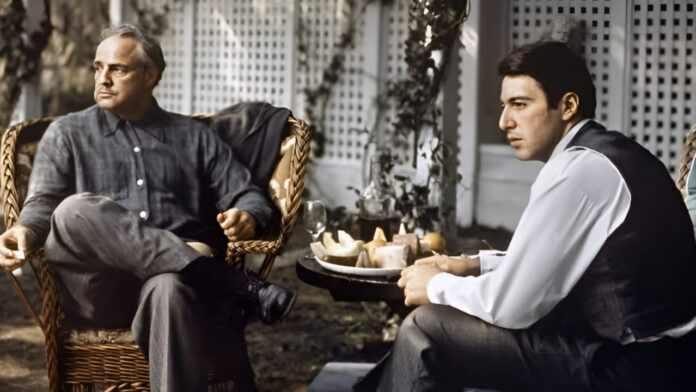
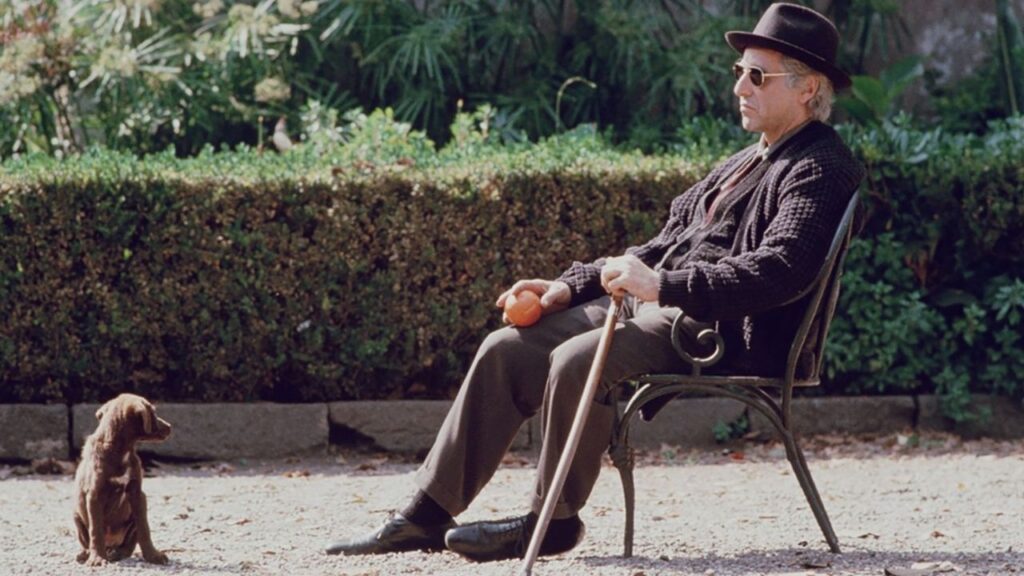
The final scene of Michael Corleone in ‘The Godfather: Part III‘ is filmed to look almost identical to the way Vito Corleone’s story ended in the first movie. Both moments take place in the sunlight, away from the violence that shaped their lives.
But when you look closely at how the films present these two endings, it becomes clear that the trilogy draws attention to a major difference between father and son, one that only becomes obvious when Michael reaches the end of his journey.
How ‘The Godfather’ Franchise Sets Up Its Defining Father-Son Divide
Across the trilogy, Michael’s life gradually lines up beside Vito’s, and that creates a natural comparison between the two dons. Michael begins as a young man who wants distance from the mafia, while Vito starts as the respected leader whose influence shapes the entire family.
Related: The Real Reason Why Vic Damone Was Too Scared To Star In ‘The Godfather’
Coppola structures ‘The Godfather‘ like a story told in stages: Vito’s rise and fall, then Michael’s rise and eventual decline. Because of this, their journeys constantly echo each other. That echo becomes strongest near the end, when the films repeat the same setting for both men: a sunny garden, a quiet afternoon, and the life of a retired don winding down. But the purpose of repeating the scene isn’t to show how similar they were.
Michael Corleone’s Death Truly Sets Him Apart From Don Vito’s End
When Vito dies, he’s playing with his grandson. Despite his violent world, he leaves surrounded by love and innocence, which says a lot about the kind of man he was and how he led his family. Michael’s death, although filmed in the same style, tells a completely different story. He dies alone. No children, no grandchildren, no partner, no family nearby; only a couple of dogs moving around him.
That emptiness is the key difference. Vito dies, embraced by family. Michael dies with none of them beside him. This contrast comes from the choices each man made. Vito balanced leadership with affection and kept his family close. Michael grew colder and more distant as he gained power. His marriage suffered, his relationship with his children weakened, and he even ordered Fredo’s death after the betrayal.
In case you missed it: Robert De Niro Once Rejected A Totally Different Role In ‘The Godfather’ And It Was The Best Career Decision
Some viewers believe Michael accepted this lonely end as a way to protect his remaining family. After Mary’s death, he lets Kay and Anthony stay outside the mafia world. Even so, the outcome remains unchanged: Vito’s life ends in connection; Michael’s ends in isolation. That is the clearest difference between them.
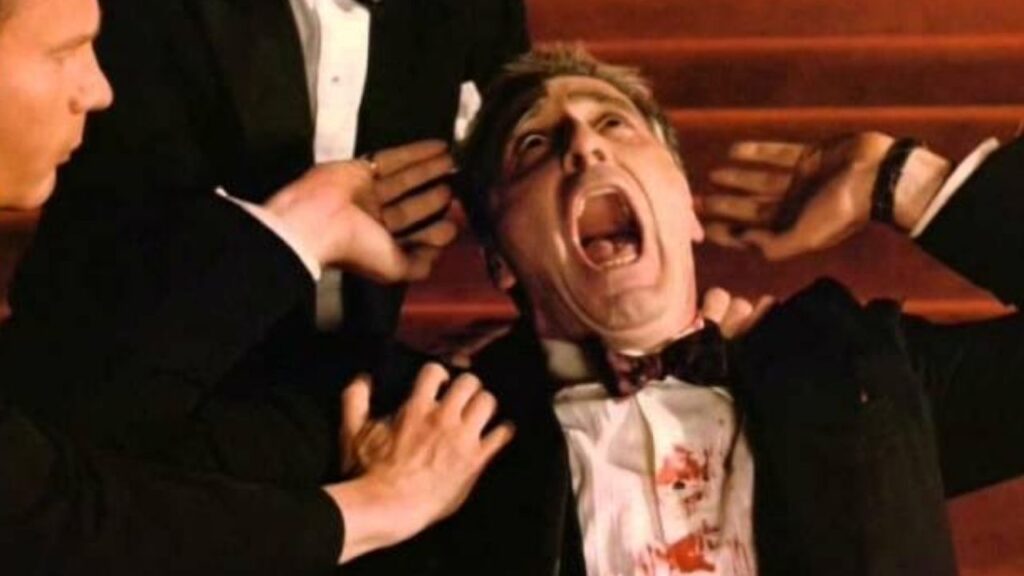
In the 2020 re-edit, ‘The Godfather Coda: The Death of Michael Corleone‘, Coppola removes Michael’s original death scene. Instead, the film ends with Michael grieving over Mary on the opera house steps. Coppola explained that Mary’s death is the moment Michael “dies inside.” But the re-edit doesn’t change the message. Nothing in the Coda version suggests that Michael’s later years were any less lonely.
If anything, the emotional weight of losing Mary reinforces the idea that his story closes in on itself in isolation. So whether the audience watches the original version or the Coda cut, the conclusion stays the same: Michael’s final chapter reveals exactly how different he became from Vito. Placed side by side, their endings show two very different lives. Vito leaves behind love. Michael leaves behind silence. And through that silence, the films reveal the biggest difference between the two dons.