
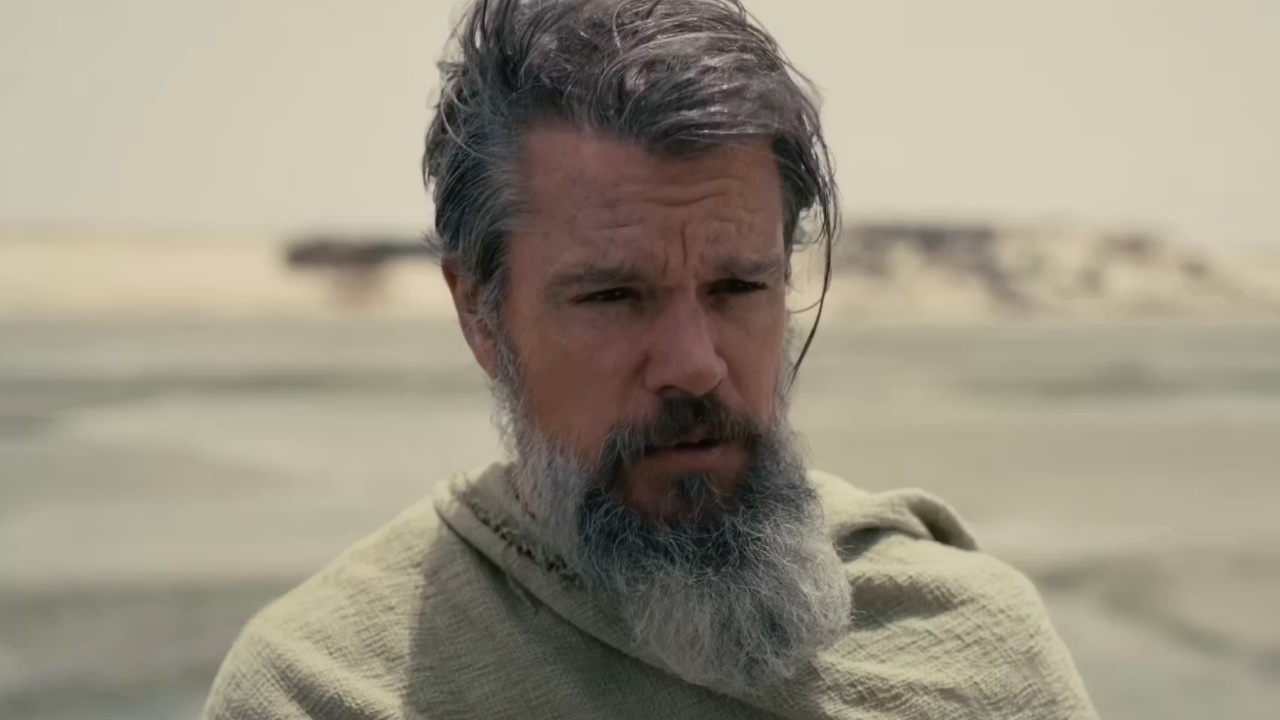
Christopher Nolan has finally made ‘The Odyssey‘, but in a strange way, he has been making versions of it for most of his career. Matt Damon’s Odysseus spends years fighting a war, helps the Greeks achieve the victory they have been chasing, and then discovers that winning Troy was only the beginning of his real struggle.
His next goal is to get back to Penelope, Telemachus, and Ithaca. Yet, Nolan has repeatedly built movies around precisely that contradiction. The men accomplish enormous things, but their deepest desire is usually something painfully ordinary that achievement cannot easily give back to them.
Odysseus Might Be The Ultimate Christopher Nolan Protagonist
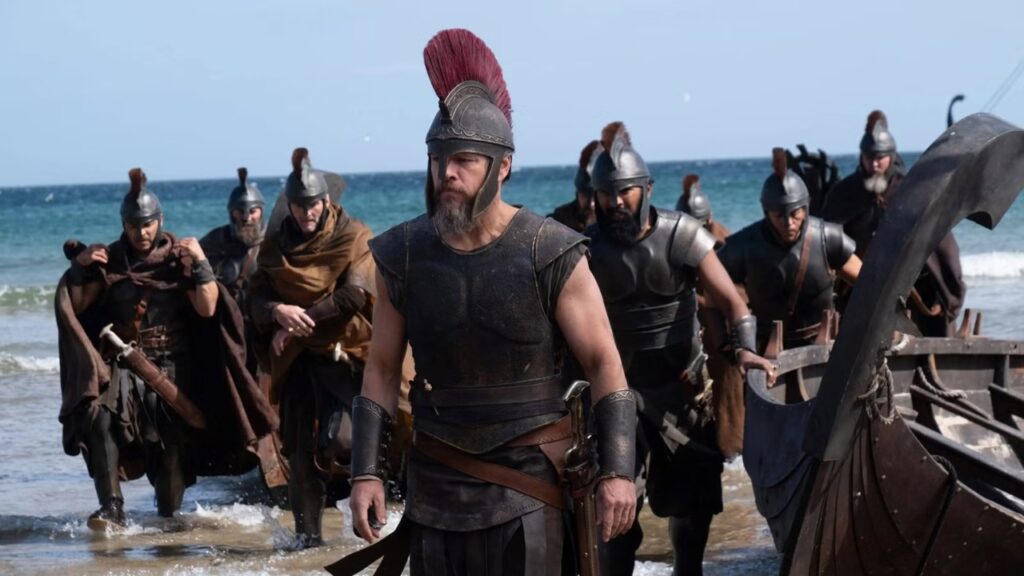
Homer’s basic premise could almost have been designed for Nolan. Odysseus spends ten years fighting at Troy and another ten trying to return to Ithaca. Nolan’s adaptation makes the psychological damage of that experience especially important. Rather than presenting Odysseus simply as the ingenious warrior of the poem, the film makes the Trojan Horse and the destruction of Troy the main focus, and the person he becomes afterward.
Ithaca is not merely a location Odysseus has difficulty reaching because Poseidon keeps throwing monsters and storms in his path. It represents the version of himself he believes existed before Troy. Penelope and Telemachus become reminders of the life that war interrupted. Nolan even reduces the direct involvement of Homer’s gods considerably.
Athena is the only god prominently visualized and can almost be read as Odysseus’ conscience. By stripping back much of the divine machinery, Nolan turns an ancient supernatural journey into something recognizably Nolan-esque. He is a damaged man attempting to live with the consequences of something extraordinary he has done.
And the distinction makes sense because Nolan has rarely been fascinated by victory itself. His films are usually more interested in the price paid for reaching it. He has described Oppenheimer as being driven by the consequences of its protagonist’s actions, while The Odyssey similarly places unusual emphasis on what Troy does to Odysseus psychologically.
‘Interstellar’ and ‘Inception’ Were Already Stories About Getting Home

‘Interstellar‘ provides perhaps the clearest earlier version of the Odysseus template. Cooper leaves his children because humanity may not survive unless someone crosses the wormhole and searches for another world. He eventually contributes to humanity’s survival, but Nolan makes the emotional cost of that mission almost cruelly literal.
In case you missed it: The Most Unforgettable Moments In Christopher Nolan’s ‘The Odyssey’
Relativity means that while Cooper experiences a comparatively short journey, decades of Murph’s life disappear. Saving humanity and returning to his daughter become two increasingly incompatible goals. Nolan even gave Hans Zimmer a tiny story about a father leaving his child before revealing that he was actually developing an enormous science-fiction movie. It showed how central the parent-child separation was to the film’s conception.
Cooper therefore gets the Nolan version of a heroic victory. Humanity survives, but he cannot simply walk back through the door and resume being Murph’s father. When they finally meet again, Murph is an elderly woman surrounded by generations of family Cooper never knew. His “home” still exists emotionally, but time has made returning to his previous life impossible.
That is remarkably close to the fundamental tension in ‘The Odyssey.’ Odysseus is desperate to return to the wife and son he left behind, yet twenty years of war and wandering ensure that the family awaiting him cannot simply recreate the family he remembers.
Inception reaches the same idea through dreams instead of space. Cobb can invade subconscious worlds, manipulate perception, and perform an apparently impossible inception, but his personal motivation is embarrassingly simple beside all that complexity: he wants to go back to his children.
Nolan has since explained that the famous spinning top is ultimately less important than Cobb’s decision to stop looking at it. He has reached his children, and whether the world is objectively “real” no longer controls him. Once again, Nolan builds a massive high-concept adventure around a man whose true reward is not money, professional triumph, or intellectual achievement but getting home.
Dunkirk makes the same theme even more literal. Nolan himself said that the movie was “about the idea of home” and the frustration of being unable to reach it. The British soldiers can almost see England across the Channel, yet those few miles become an enormous physical barrier.
Unlike Cobb, Cooper, or Odysseus, there is no single genius at the center of Dunkirk. Nolan distributes the Odysseus role among thousands of frightened young men. Their heroic objective is not conquering France. It is surviving long enough to return.
‘Oppenheimer’ Reveals the Darker Side Of Nolan’s Obsession

The ‘Oppenheimer‘ initially feels like the odd one out here because its protagonist is not literally trying to return to his wife and children. The deeper structure, however, is strikingly similar. J. Robert Oppenheimer and the Manhattan Project achieve their immediate objective: they successfully create an atomic bomb.
In case you missed it: “I Would Be Ashamed”: Christopher Nolan’s ‘The Odyssey’ Slammed as “Abysmal” by the Translator Who Inspired It
Nolan stages Trinity as the culmination of years of scientific work, but the successful test does not provide emotional completion. It opens an entirely new nightmare. Nolan has said that Oppenheimer’s confrontation with the possibility that the Trinity test might trigger a catastrophic chain reaction was crucial to the way he approached the story.
That makes Oppenheimer an important bridge between Interstellar and The Odyssey. Cooper achieves something enormous and discovers that the home he remembers has moved beyond him. Oppenheimer achieves something enormous and discovers that there is no returning to the world that existed before the bomb. Odysseus wins Troy but cannot simply switch off the person that war has turned him into.
In each case, Nolan asks essentially the same question: what happens after a man completes the mission that has consumed him? More importantly, can he ever return to the person he was before he completed it? Nolan’s version of Odysseus makes that question especially visible by making the Trojan Horse a source of lasting guilt.
Even the circumstances behind The Odyssey make the film feel like a Nolan homecoming. Oppenheimer grossed nearly $1 billion and won seven Oscars, giving Nolan extraordinary freedom for whatever came next. Nolan himself acknowledged the effect of that success, saying, “That gave me options.” After one of the biggest triumphs of his career, Nolan chose a story about what comes after triumph.
That may be why The Odyssey feels so completely at home in Nolan’s filmography despite ancient Greece looking nothing like Gotham, Los Alamos, outer space, or Cobb’s dream worlds. Nolan’s recurring protagonist is not simply the obsessive genius people often describe him as. He is frequently a man who travels impossibly far because he believes completing one great task will allow him to reclaim his children, his family, his country, his identity, or his old life.
The cruel part is that Nolan rarely allows achievement to reset the clock. Cobb can come home, Cooper can find Murph, the soldiers can cross the Channel, and Odysseus can reach Ithaca, but the journey changes what “home” means. That is perhaps the most Nolan idea inside ‘The Odyssey‘, winning the war is one thing. Finding your way back from it is much harder.
You might also like to read: Christopher Nolan Lost A Homer Adaptation Two Decades Before ‘The Odyssey’