

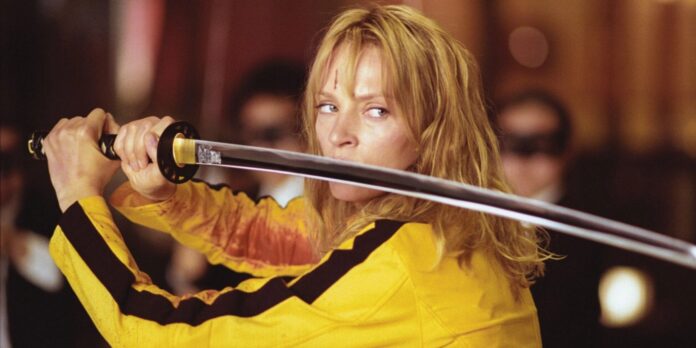
By the time ‘Kill Bill: The Whole Bloody’ Affair by Quentin Tarantino comes back to theaters in 2026, it will not be a rerelease, but a resurrection. This unified cut, long spoken of in cinephile circles with near-mythic reverence, finally allows audiences to experience the saga as Tarantino originally intended: not as two separate volumes, but as one relentless, operatic odyssey of revenge, myth-making, and heartbreak.
And as the fans recall the action, watching it on a huge screen will bring back something deeper: the emotional anatomy of the journey of Beatrix Kiddo. The architecture is the violence, but the soul of the film is in the silent, human moments that interrupt it. The film is now finally coming back in its most unadulterated form.
‘Kill Bill’s Definitive Cut Is Finally Here, And It Changes Everything
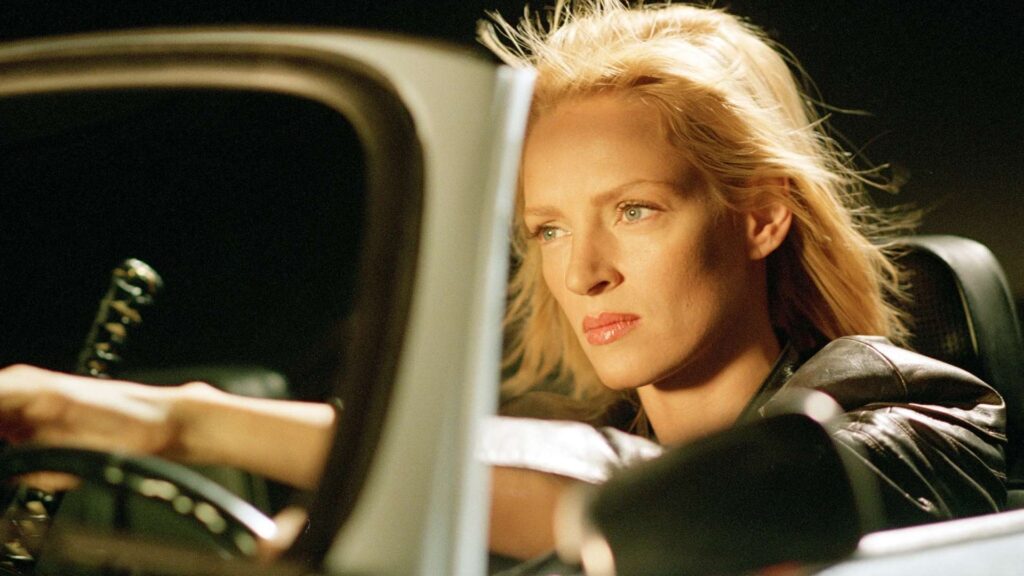
‘The Whole Bloody Affair’ starts as a reopening. It’s a reminder of what was stolen from Beatrix and why she feels so much anger. However, Tarantino does not merely document revenge; he creates a mythology around it. The animated origin of O-Ren Ishii is one of the most impressive narrative decisions. Tarantino breaks the rules of the genre by handing over this sequence to Production I.G. The animation is not just a stylistic choice, but a spiritual one.
Related: ‘Kill Bill’: The Hidden Meaning Behind The Most Misunderstood Superman Monologue
The camera angles, the abrupt violence, the silence between frames: all this is reminiscent of the live-action Tarantino. Moreover, the style has an ethereal brutality that could only be captured by animation. On a movie screen, the tragedy of O-Ren as a child, the killing of her parents, the trembling fury of a child turned into a murderer, is a fever dream cut in ink.
This created identity transfers to the other major dualities of the film, Earl McGraw and Esteban Vihaio. The dual act is witty on TV, but on stage, it turns into a reflection of the masks that men put on in Tarantino’s world. McGraw is the lawman who surveys the carnage at Beatrix’s wedding; Esteban is the aging devil who helped shape Bill. Parks provides each character with a unique spine. Tarantino is not only tying his movie worlds together; he is gluing them with faces, histories, and ghosts.
And then there is Pai Mei, not only a mentor, but a living legend of martial arts. His scenes are like a window into a different dimension of film: the training scenes, the unbelievable jumps, the notorious three-inch punch. The performance of Gordon Liu is both comic and frightening. And the physicality of the sequence, particularly when shown on a huge screen, reminds the audience that Kill Bill is not a mere revenge movie; it’s a love story to the genres that influenced Tarantino.
‘Kill Bill: The Whole Bloody Affair’s Violence Is As Poetic As It Gets
Where Volume 1 felt like a tornado of steel, blood, and neon, ‘The Whole Bloody Affair’ redefines the violence as a symphony. It’s orchestrated with increasing tempo, emotional stakes, and its own kind of visual poetry. The Bride’s fight through the House of Blue Leaves, which ends in the fight with Crazy 88, is one of the most ambitious action scenes ever filmed. However, on a massive screen, the geography of the fight becomes clearer. The choreography is more precise, and the emotional state of the Bride is much more tangible.
The black-and-white conversion is no longer a censorship evasion; it’s a stylistic sigh of relief. As the color comes back, and O-Ren enters the snow, the movie turns from ferocity to elegance. Their duel is not merely a battle; it is a dialogue between two warriors who are formed by pain. The snow falling softly, the treading of feet in the snow, the hissing of metal, the nonchalant way Lucy Liu accepts death: the scene is film perfection. The contrast of the visuals is even more impressive on the second viewing.
Then comes Elle Driver, the antithesis of O-Ren’s grace. Where O-Ren encounters it in a ritualistic way, Elle does it in an animalistic way. Their fight is claustrophobic, desperate, and fueled by years of venom. Everything is turned into a weapon; everything is personal. The anger between them is nearly uncontrollable. These are two women who are similar in ability but different in spirit. Their struggle is a kind of reckoning; the violence is uncouth and almost personal.
The Film Ends With Resolution, Humanity And The Heart Beneath The Bloodshed
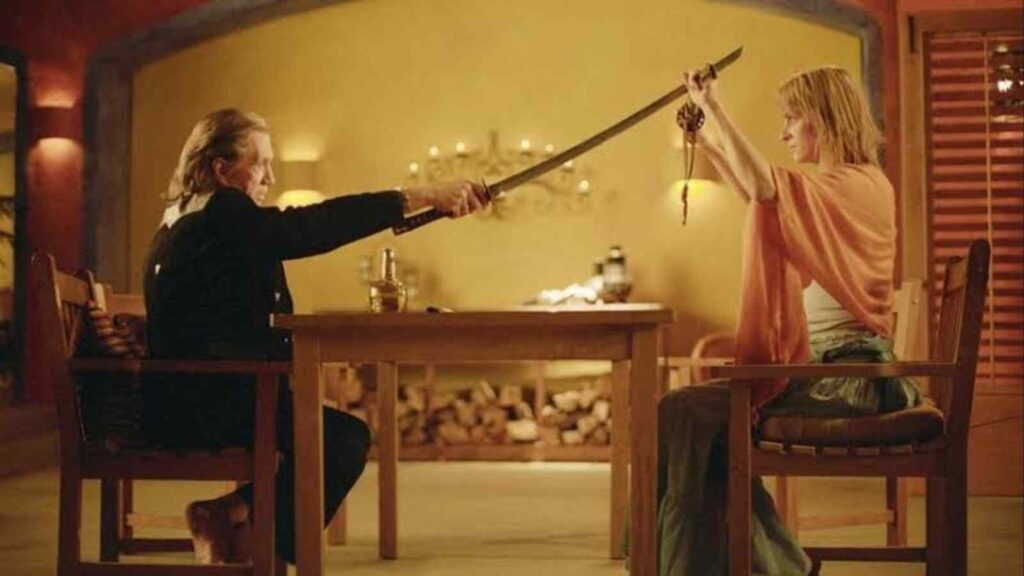
For all of Tarantino’s stylized violence, Kill Bill’s beating heart lies in its softest scenes. In theaters, these moments land with unexpected force. The dialogue between Beatrix and Bill is a subversion of expectation. It’s a delicate, hurtful, weirdly loving conversation. Their verbal dueling is as complex as any swordfight: two ex-lovers, two ex-warriors, circling each other emotionally before the physical battle has even started.
In case you missed it: Quentin Tarantino’s First Movie Never Made It To The Theaters. Here’s Why
The casual admission of Bill, who says that he overreacted by ordering the massacre, is presented with such subtle sadism that the audience shudders even before the Bride. The final fight is shockingly small. A chair skidding across the floor. A final flurry of movements. Five touches to the chest. And then the quiet walk of a dying man.
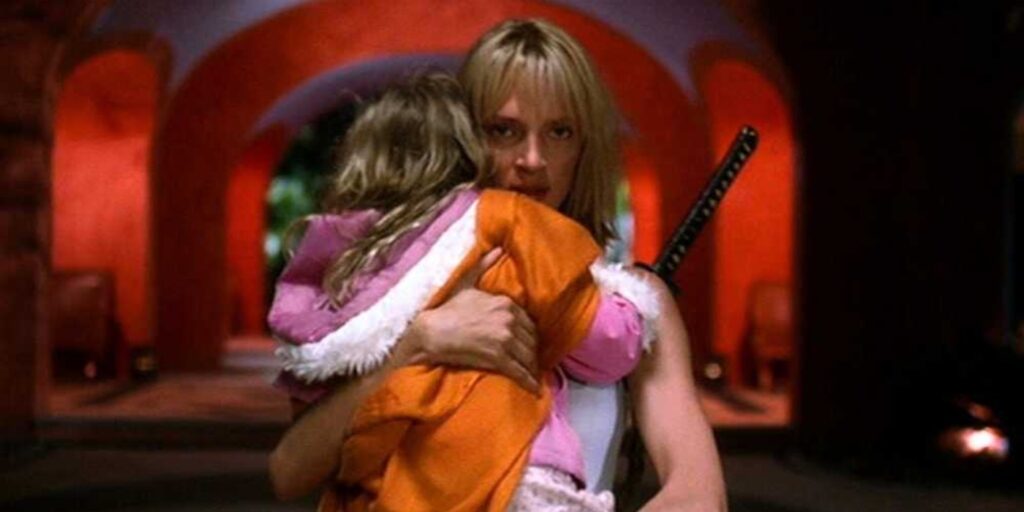
Tarantino is commonly criticized for his violence. However, this scene reminds the audience that he also has restraint. Then there is the emotional heart of the whole saga: Beatrix sees her daughter. To all the bloodshed and vengeance demanded, this is the time that makes it all worth it. A killer, finally, becomes simply Beatrix Kiddo again.