

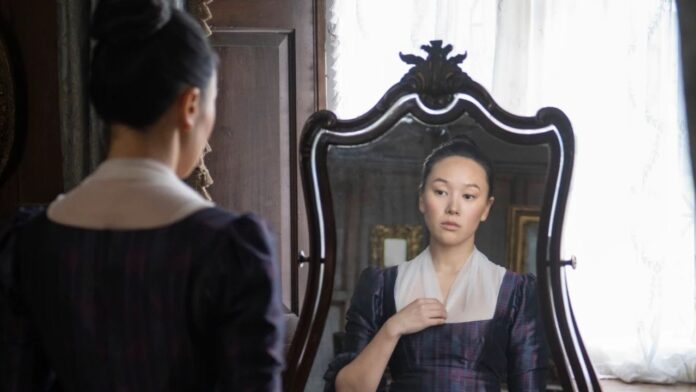
A single label defines Sophie Baek’s entire childhood in ‘Bridgerton‘ Season 4: ward. Viewers meet her as the dazzling Lady in Silver at a masquerade ball, yet her past reveals a very different life.
Society never knew her as a daughter of the house, even though she lived under her father’s roof. That one term, “ward”, explains why Sophie grows up in privilege, then loses everything tied to her name and place.
The Real Meaning Of A Ward In ‘Bridgerton’ Explained

A ward refers to a child placed under a guardian’s legal and social protection. Lord Penwood introduces Sophie under this title; therefore, he can raise her in his household without publicly admitting that she is his child. Reputation matters greatly in aristocratic society, so this decision shields him against scandal. Yerin Ha explains that Sophie is the illegitimate daughter of Lord Penwood and a maid.
Related: The Meaning Behind “Rake” In ‘Bridgerton’ And Why It Matters For Benedict
Public acknowledgment would damage his standing, so the ward label offers a safer explanation. He still gives Sophie an education, fine clothes, and the lifestyle of a noble child. Flashbacks confirm that Sophie understands Lord Penwood is her father. Everyone else hears the official story, yet she knows the truth about her birth. As a result, her childhood carries both comfort and secrecy at the same time.
A Marriage That Changes Sophie’s Place In The House
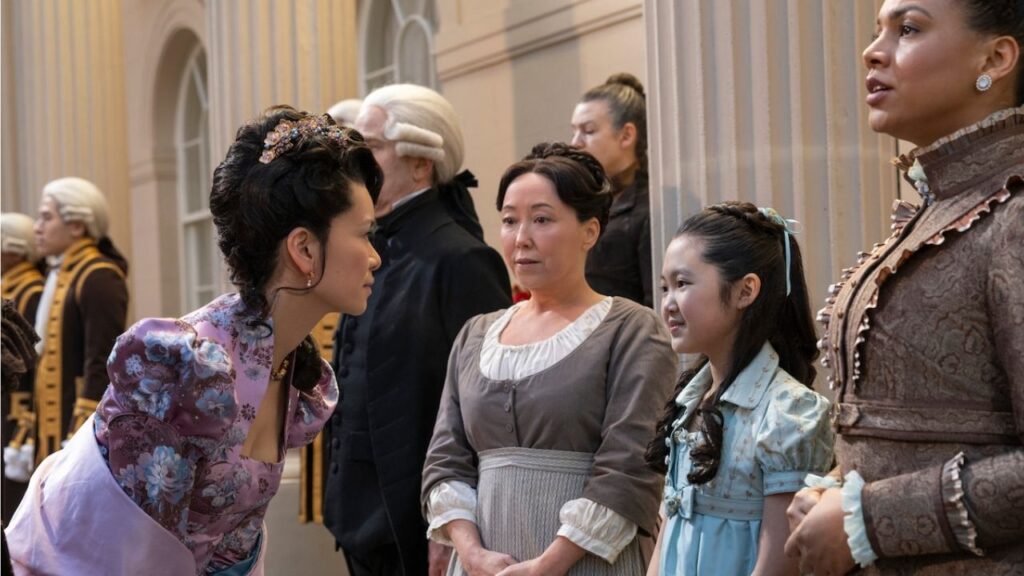
Trouble begins after Lord Penwood marries Araminta, a widow who arrives alongside her daughters, Posy and Rosamund. He hopes his new wife will welcome Sophie. Instead, tension grows quickly inside the home. Katie Leung shares that Araminta loves Lord Penwood deeply, so the discovery hits hard. She realizes Sophie is not merely a ward but his child.
In case you missed it: ‘Bridgerton’ Readers Fear Netflix’s Gender-Swapped Francesca Romance Undermines Her Most Important Arc
Anxiety rises because her inheritance and financial security for her own daughters could be at risk. Consequently, the word “ward” no longer sounds harmless to Araminta. Lord Penwood once used it for protection, yet Araminta sees it as a threat to her family’s future. Sophie’s position in the household becomes less certain even before tragedy arrives.
Lord Penwood’s death removes Sophie’s greatest supporter, and her situation changes overnight. Araminta lets her remain in the house; however, Sophie stays as a maid rather than family. Her former status disappears, and daily duties replace noble comforts. Sophie now works in a home where she receives far less respect than servants in other grand houses. Araminta runs the household under strict rules, so Sophie must think quickly to survive. Araminta believes providing food, clothing, and shelter counts as fairness.
Sophie has lost both parents, her status, and her sense of belonging. She always knows she could end up penniless on the street, which leaves her guarded and slow to trust anyone’s promises. Still, her strength shows through; she keeps her kindness and moral compass despite everything. So, when a child grows up as a “ward” instead of a daughter, how much of her life gets decided by that single word?
You might also like to read: ‘Bridgerton’: Who Does Gregory End Up With In The Books?