


When ‘Stranger Things’ reached its thunderous conclusion, fans were prepared for chaos, spectacle, and heartbreak, but few were ready for the quiet emotional weight of Eleven’s final decision.
Over the last decade, Eleven was at the center of the Netflix phenomenon, characterized by both pain and power. At last, now that the series is officially concluded, Brown has been able to express her own opinion about Eleven’s fate.
Why Eleven’s Ending Was Inevitable
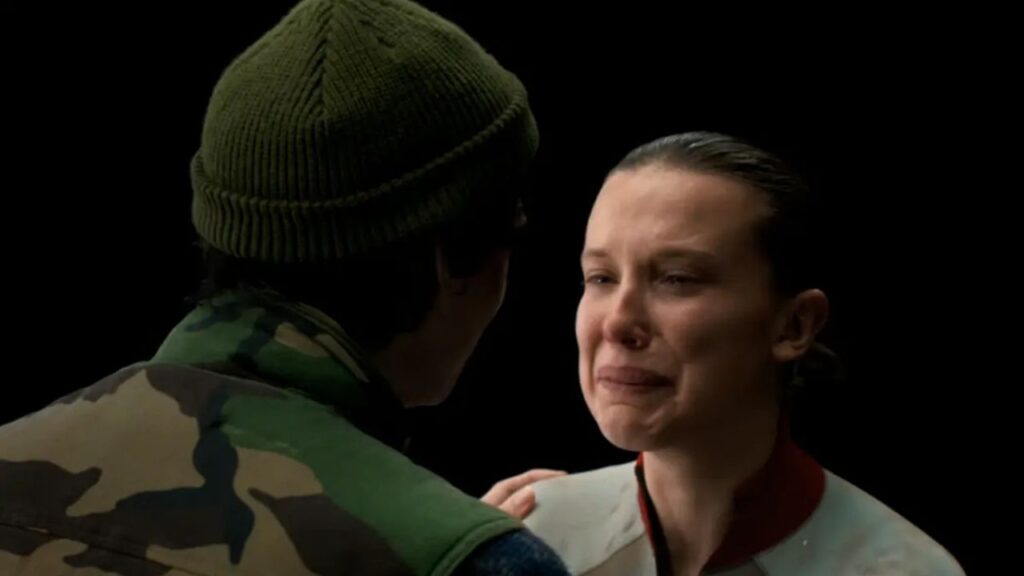
Instead of providing closure with a sense of certainty, ‘Stranger Things’ opted to give something much more delicate: sacrifice with ambiguity. The fact that Eleven seemingly dies after Vecna’s defeat was not only a plot twist but also the result of years of emotional and physical suffering. According to Brown, that was not a tragic ending, but it was a necessity. Since Eleven ran out of Hawkins Lab in season one, her life has been influenced by trauma.
Related: Netflix’s ‘Stranger Things’ Spinoff Will Reframe How Vecna’s Powers Began
Experiments, isolation, lost childhood, and the crushing responsibility of saving the world again and again became her load to bear. Brown has been talking extensively about how much she relates to Eleven’s pain, and when she talked about the finale, she made it clear that the sacrifice was not cruel, but deserved. “I just think it’s incredibly important that it all ends for her, and the suffering and the pain end,” she told Tudum.
To her, it wasn’t about shock value or spectacle, but about release. After years of suffering, Eleven finally reached a point where the pain could end. Eleven had endured years of pain, and at last she reached her limit. That feeling of finality was important. In the series, Eleven is repeatedly requested to do more than just be a kid. The ending was the first time she was not surviving, but choosing. She wasn’t running or reacting. She was finally deciding.
Co-creator of ‘Stranger Things‘, Matt Duffer, also shared the sentiment. He claims that the ending was meant to be the payoff of a story constructed like a Dungeons and Dragons campaign. Each of the characters contributed something to the last battle; each arc led to the same purpose. The role of eleven was crucial, yet not isolated. It was a reminder that she was never alone, even in the very end. To Brown, such effort made the sacrifice even more effective. Eleven died because she chose to protect a world that had finally shown her love.
‘Stranger Things’ Ending Belongs To All The Characters
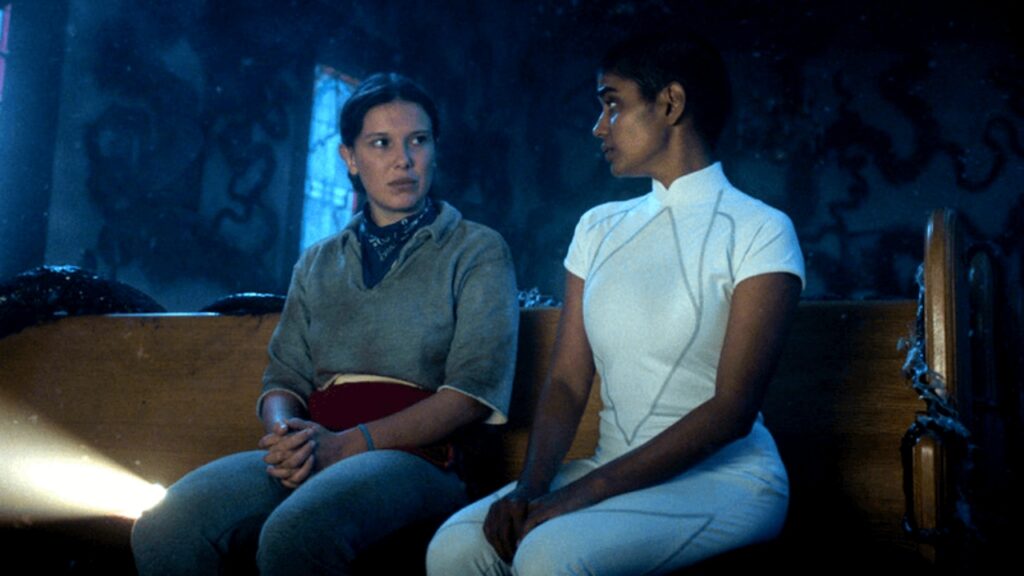
Although her sacrifice has an emotional dimension, ‘Stranger Things’ did not give in to the temptation to shut the door altogether. The fact that Mike believed that Eleven could still be alive in the last moments, perhaps because of Kali, provided some hope. It was not a confirmation, but it was not a denial either. “It’s very new to me,” she said, acknowledging the strange mixture of closure and uncertainty. The fact that her story had come to an emotional end did not always imply that every question had to be answered.
In case you missed it: ‘Stranger Things’ Spinoff Will Finally Explain The Glowing Rock Mystery
And Brown welcomed the open-endedness. She liked the thought that Kali’s powers had not been in vain. That hope to her was not about reversing the sacrifice, but about celebrating the notion that each moment in the story was important. “I kinda love that ending,” Brown shared. “Everything has a purpose, and everything is there for a reason.” The Duffer brothers, though, have decided to keep the final truth locked up. They are aware of what actually happened to Eleven, yet the audience will never know. By leaving it unresolved, ‘Stranger Things’ invites fans to sit with their feelings rather than escape them.