

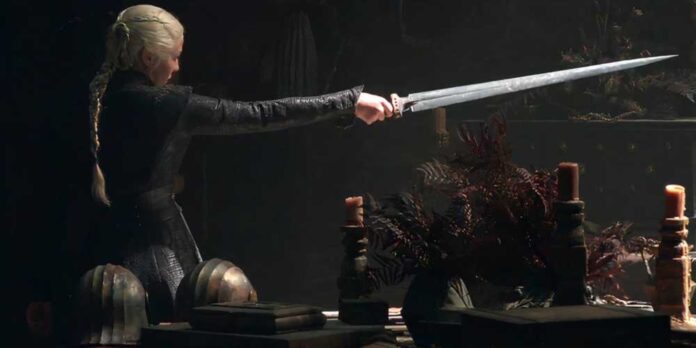
As ‘House of the Dragon’ moves closer to its third season, one quiet but striking detail has ignited conversation across the fandom: Rhaenyra Targaryen is no longer just a ruler who commands from the throne. She is being positioned as a person who might finally enter the physical violence of the Dance of the Dragons herself. The evidence does not lie in the dialogue or leaks; it is right in the promotional art of the show, where Rhaenyra is holding a sword not as a symbol, but as a threat.
This change might not appear very significant at first glance. However, it is an indicator of something much larger regarding the way HBO plans to end the story of Rhaenyra. The series is no longer satisfied with showing her as a tragic, misunderstood queen. Season 3 seems to be willing to make her a participant in the war itself. And that choice fundamentally changes how we understand Rhaenyra Targaryen.
‘House Of The Dragon’ Season 3: Rhaenyra’s Sword Isn’t Just A Weapon, It’s A Statement
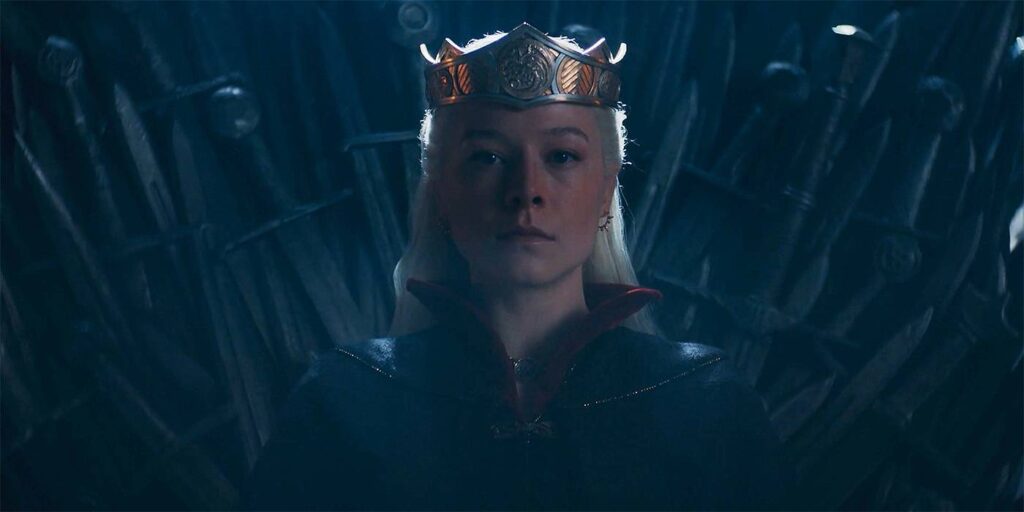
Since the first season, ‘House of the Dragon’ has intentionally tried to make Rhaenyra a conflicted hero. She is remembered in ‘Fire and Blood‘ as Rhaenyra the Cruel, a paranoid, brutal, and unsuccessful ruler. The show, however, has consistently framed her as a woman cornered by circumstance. She is someone forced into harsh decisions by betrayal, misogyny, and war rather than driven by cruelty.
Related: Who Is Ser Roderick Dustin In ‘House of The Dragon’ Season 3?
This reinterpretation was taken further in season 2. Rhaenyra did not merely respond to things; she complained about being marginalized. She wanted to fight. She wanted to act. That desire alone marked a clear departure from the book, where Rhaenyra remains largely removed from physical conflict. Her fights were not martial but political and symbolic. However, season 3’s marketing implies that the internal conflict has come to its limit. Rhaenyra’s sword is no longer lying in her lap and acting as a visual shorthand of power.
It is raised, visible, and it demands attention. This is important since ‘House of the Dragon’ has never been afraid to employ imagery. When the show puts an object in the forefront of its marketing, it is not decorative, but thematic. The fact that Rhaenyra is holding a sword is an indication that she is altering her role in the war. She can no longer be satisfied with handing violence over to dragonriders, knights, and sons.
In case war is her reign, then Season 3 can perhaps enable her to embrace that fact in full. This choice has a very human aspect to it as well. Rhaenyra has lost children. She has lost allies. She has seen her right to the throne being ripped to pieces. Giving her a sword isn’t about turning her into an action hero; it’s about showing what prolonged grief and rage can do to someone who once believed restraint was strength.
How The Unreliable Narrator From ‘Fire And Blood’ Opens Many Doors
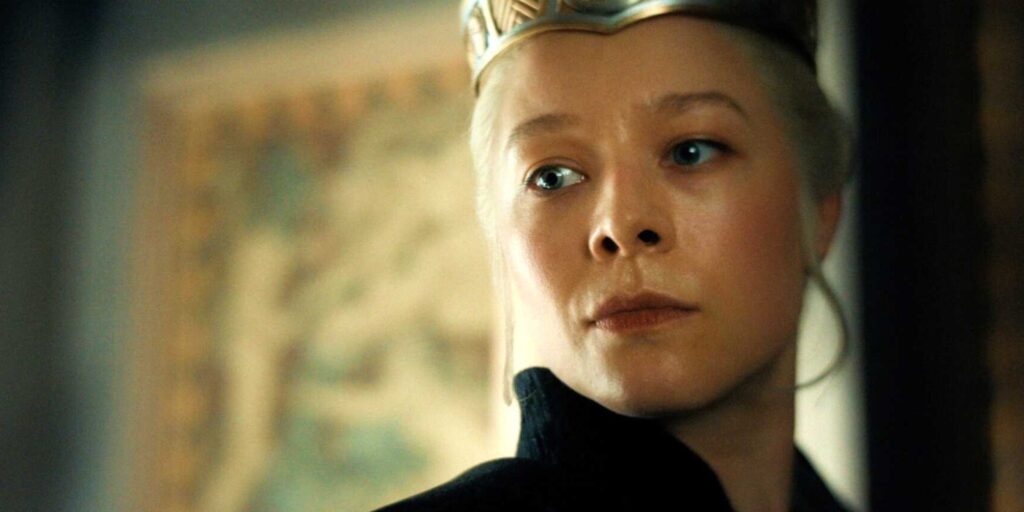
The connection between ‘House of the Dragon’ and ‘Fire and Blood’ is one of its strongest aspects. This book is not just a novel, but a historical account by an in-universe Maester who was not even alive during the events he is describing. All the information is refracted through gossip, prejudice, and partial evidence. That framing provides HBO with a creative loophole: the ability to argue that what we read isn’t necessarily what truly happened.
In case you missed it: ‘House Of The Dragon’ Season 3 Walks A Dangerous Line With Rhaenyra’s Dark Turn
Rhaenyra does not engage in battles in the book. She does not take the lead or draw swords. Her power is royal, not physical. It is not a battle, but a reclaiming, even when she rides Syrax into King’s Landing. The difference is significant. Rhaenyra’s tragedy in the books is not ambition, but her isolation and political failures. The show questions that version of history by posing a simple question: What if the Maesters were wrong, or simply did not want to document the entire truth?
‘Fire and Blood’ official art makes things even more complicated. Rhaenyra is often depicted with a sword at her hip, suggesting that even in Martin’s imagined history, there was room for interpretation. But a sword worn is not the same as a sword used. HBO’s choice to depict Rhaenyra with a weapon in her hand is a crossing of a line that the book never touches. Nevertheless, this does not necessarily weaken the story. By leaning into the idea of an unreliable historical record, ‘House of the Dragon’ reframes Rhaenyra’s legacy as something shaped by who survived to tell the tale