Daniel Day-Lewis holds a record three Academy Awards for Best Actor, and he’s just as well known for how far he takes method acting. He doesn’t play a character so much as disappear into one, and he’s done it enough times that people wonder what’s left of the actor underneath all those roles. During a stage production of ‘Hamlet,’ he reportedly became so immersed in the role that he said he saw his own father’s ghost onstage.
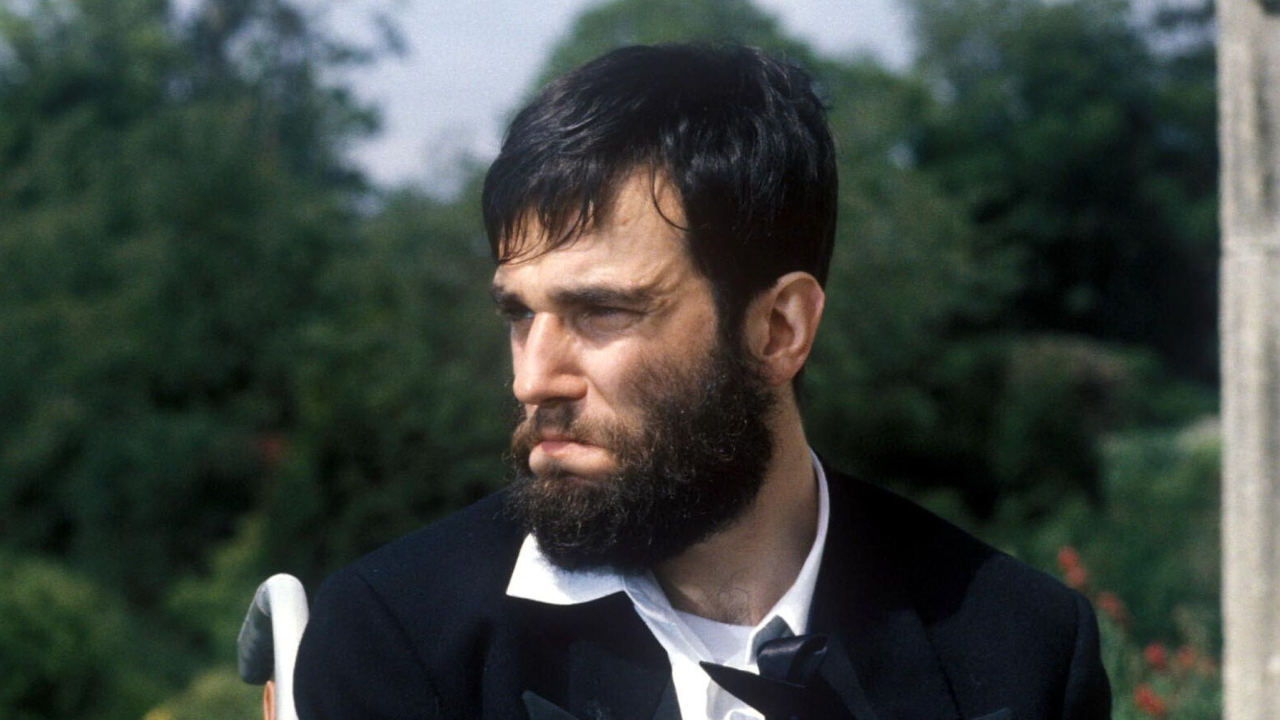
That same instinct drove his first Oscar-winning performance. In the 1989 film ‘My Left Foot,’ he played Christy Brown, a real-life Irish writer and painter born with severe cerebral palsy who could only control his left foot. To find the truth of that role, Day-Lewis didn’t pretend to be disabled for the cameras. He lived it for the entire shoot, on and off set, costing him severe physical damage to his ribs.
Daniel Day-Lewis Never Left The Chair
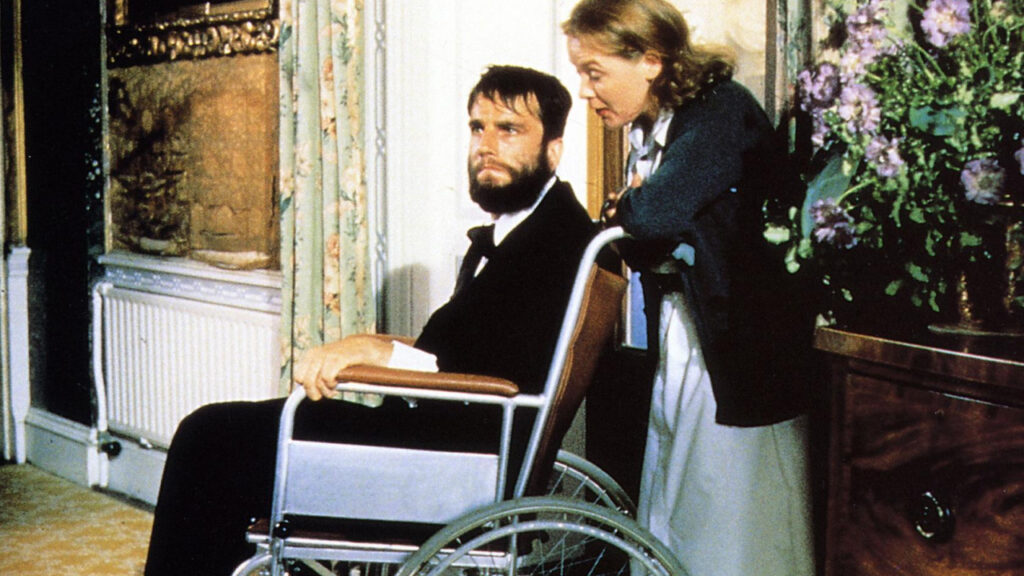
Plenty of actors have played characters in wheelchairs without much fuss. Patrick Stewart did it across the ‘X-Men’ trilogy and simply stood up once the camera stopped rolling, but Day-Lewis didn’t see it that way. Christy Brown couldn’t get out of his wheelchair, so for the length of the shoot, neither could Day-Lewis.
Related: The 1986 Cult Classic Daniel Day-Lewis Lost To Gary Oldman
That decision meant he needed help with almost everything. Brown had virtually no control over his limbs, so the crew carried him over cables, pushed him from scene to scene, and fed him during breaks.
Cast members took turns spoon-feeding him in the commissary and wiping food from his face between takes because he refused to do it himself. It frustrated the people around him, as feeding a grown man his lunch wasn’t in anyone’s job description, and it slowed the day down.
But Day-Lewis wanted the discomfort as much as the physical posture. He wanted to feel the embarrassment Brown might have felt in those same situations, not just imitate it from a distance. He held onto Brown’s heavily slurred speech, too, and used it whenever he spoke on set.
According to the ‘Making of My Left Foot’ featurette on the film’s Special Edition DVD, he stayed in character even for visitors. When his own English agent came to see him on set, Day-Lewis stayed in character and wouldn’t break off the conversation. His agent reportedly got frustrated enough to leave.
How Sitting Still Damaged The Actor’s Ribs
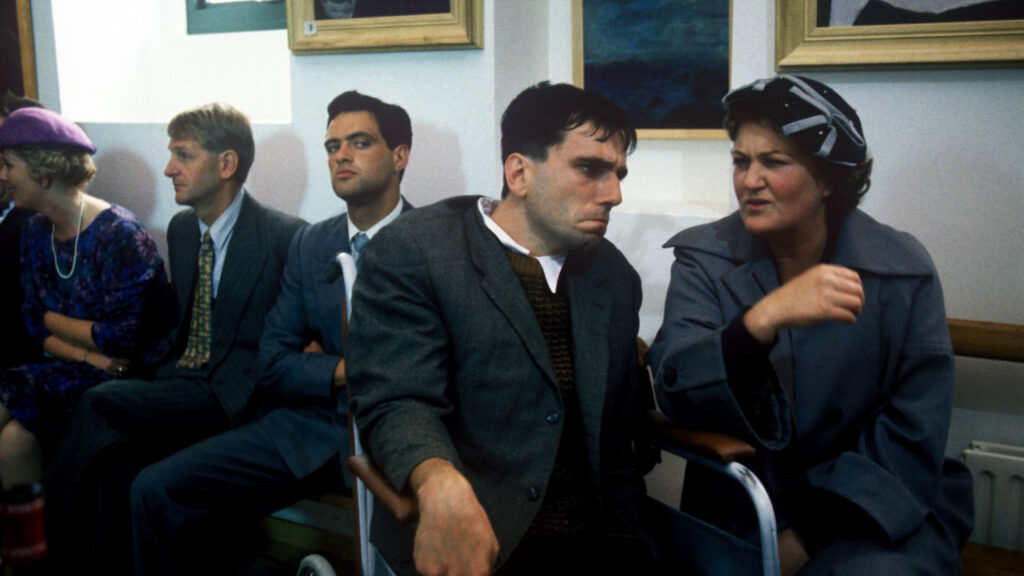
It sounds strange that simply sitting in a chair could injure anyone. After all, people sit all day without consequence. But Christy Brown’s cerebral palsy kept his body in a constant, hunched contortion, and if that’s how Brown sat, that’s how Day-Lewis sat too.
In Case You Missed It: Jacob Elordi Joked About Daniel Day-Lewis-Level Scars, Then Ended Up With Real Burns On ‘Wuthering Heights’
For 12 to 14 hours a day across an eight-week shoot, he twisted his torso and hunched his spine into a rigid, unnatural position and held it there. He didn’t ease out of the posture between takes or stretch when the cameras weren’t rolling.
The chair and the position it forced on him became permanent for the length of the production. The constant physical strain built up over weeks until it severely damaged and bruised his ribs, straining his spine. He could have stopped at almost any point.
Nobody on set would have blamed him for standing up and working out the tension in his back. He chose not to, and he kept working through the injury rather than break character to treat it.
The Massive Payoff At Hollywood’s Biggest Night
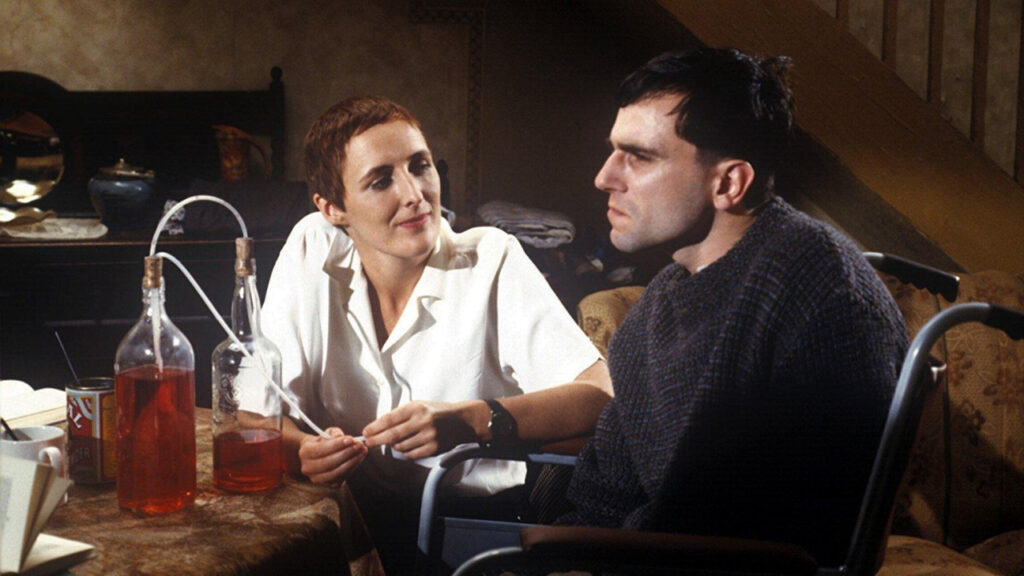
Day-Lewis finished the shoot still in the chair, as he never broke the character. But those harsh efforts weren’t in vain, as ‘My Left Foot’ went on to become a critical triumph, and his performance as Christy Brown won him his first Academy Award for Best Actor in 1989.
The role set the template for the rest of his career. Every part since has carried some version of the same demand he made of himself in Dublin: To get as close to the real thing as the body allows, and don’t stop just because it hurts.
The painful strain on Daniel Day-Lewis’ skeletal system turned out to be a small price for a performance people still call one of the most complete transformations ever put on screen.
You Might Also Like To Read: “We’ve Got Other Things To Do”: Hannah Waddingham Rejects The Idea Of A Female James Bond