In the spring of 1889, the world got two of its strangest gifts. Within the same week, a baby boy was born to a sewing machine salesman in a small German town, and another was born to a pair of music hall performers in London. One grew up to be the most loved man on earth; the other became the most hated. Years later, their lives would cross in a dark theater over a stolen moustache and a film that still stands as the greatest act of defiance in movie history.
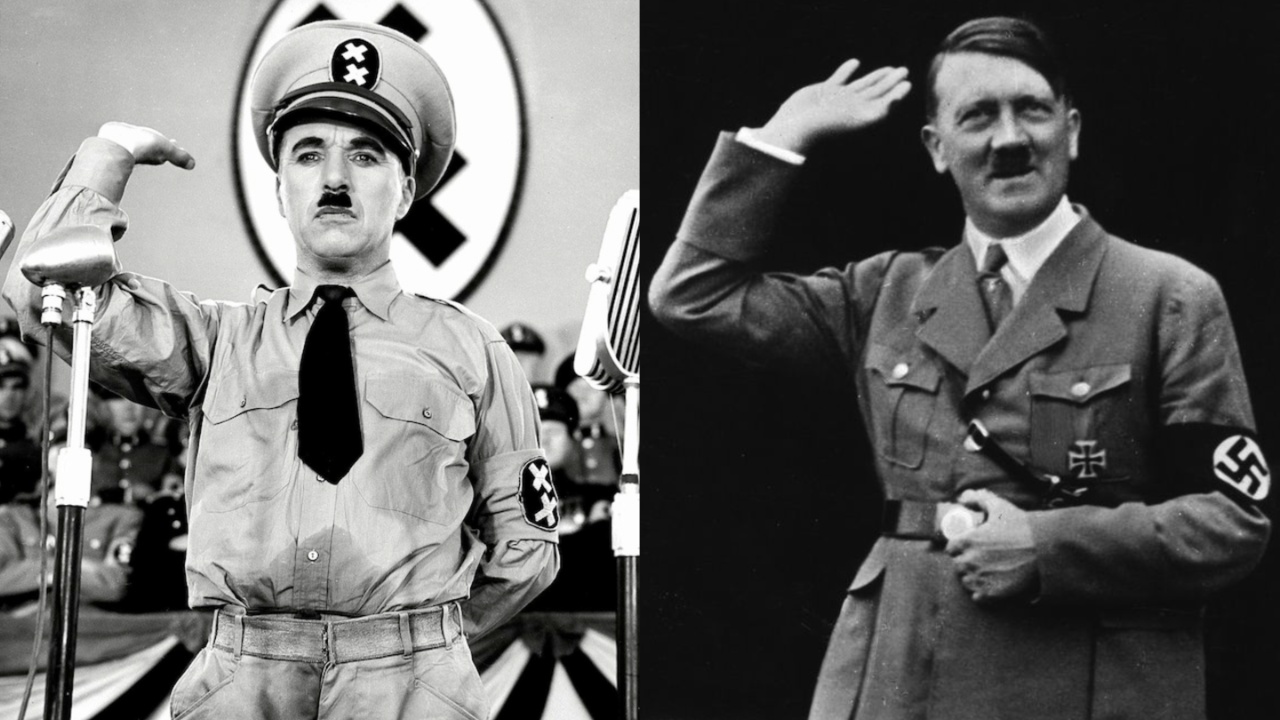
Adolf Hitler and Charlie Chaplin were, believe it or not, cosmic twins. Chaplin was fascinated by how strange that was. Born just four days apart in April 1889, both were short, scrappy outsiders who came from nothing and rose to total power over crowds. One did it through dance and slapstick. The other did it through hate speech. “Just think,” Chaplin later said with a shudder, “he’s the madman, I’m the comic. But it could have been the other way around.”
How Chaplin Used Ridicule in ‘The Great Dictator’ to Fight the Nazis
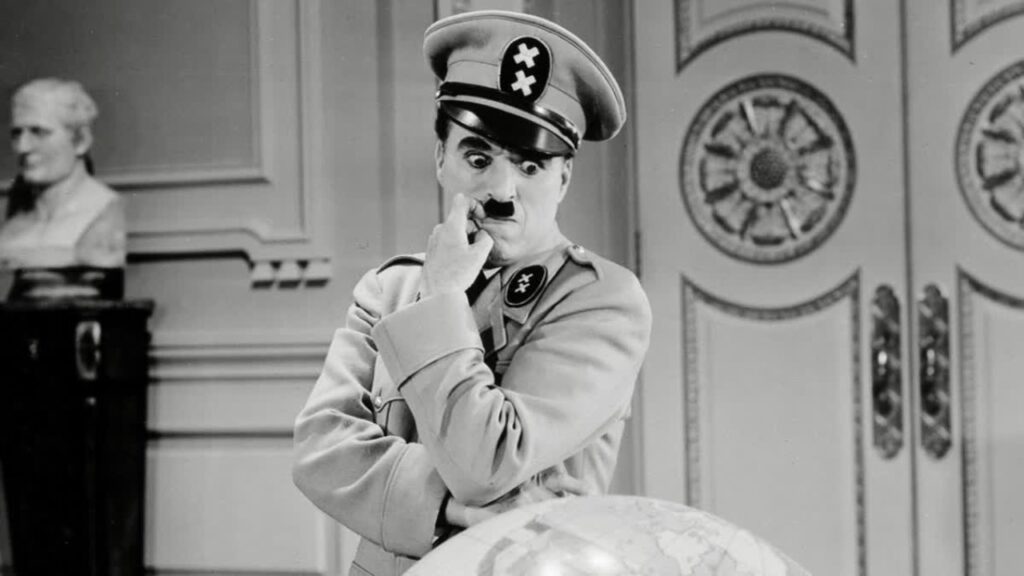
By 1938, with war clouds building over Europe, Chaplin decided to fight back using the only thing he truly trusted: making fun of evil. Even though Hollywood studios were terrified and still saw Germany as a business partner, Chaplin mortgaged everything he owned to pay for ‘The Great Dictator.’ He played two roles; a gentle Jewish barber who gets pushed around, and “Adenoid Hynkel,” a ridiculous tyrant who bounces an inflatable globe around his palace and makes speeches that mean nothing. It was the first time audiences ever heard Chaplin speak on screen.
Related: ‘Peaky Blinders’ Connected Tommy Shelby to Charlie Chaplin Through a Shocking Real-Life Mystery
The Nazis were furious. The German Consul in Los Angeles wrote angry letters to Washington trying to get the movie shut down, saying a “burlesque” of the Führer would cause violence. But curiosity is a powerful thing, even for a dictator.
Did Hitler Watch ‘The Great Dictator’?
Here is the rumor that has stuck around for nearly a century. According to detailed testimony from an agent who escaped the Nazi Ministry of Culture, backed up by research from film historian Kevin Brownlow, Hitler was so curious about the “Jewish acrobat” making fun of him that he ordered a copy smuggled into Germany through Portugal.
In case you missed it: The Stunt That Secretly Left Buster Keaton Walking Around With a Broken Neck for Years
Adolf Hitler sat alone in a private screening room. He watched Charlie Chaplin roll his eyes, click his heels, and yell at invisible enemies. Then he watched it again.
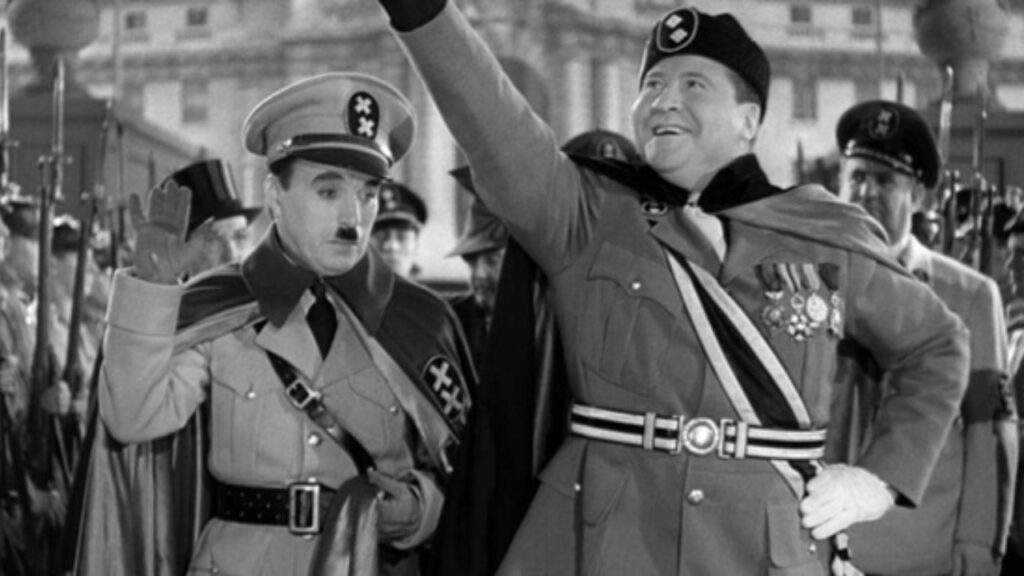
What did the Fuhrer really think? No one knows for sure. His architect Albert Speer said Chaplin’s imitation was spot on, but he never said whether Hitler laughed or got angry. The only clue comes from a frightened projectionist who later said the dictator sat completely still the whole time except for one scene: the barber chair moment where Hynkel and his rival the “Bacteria” dictator, a clear dig at Mussolini, raise their chairs just to look down on each other. According to that story, Hitler laughed.
Chaplin’s Deep Regret
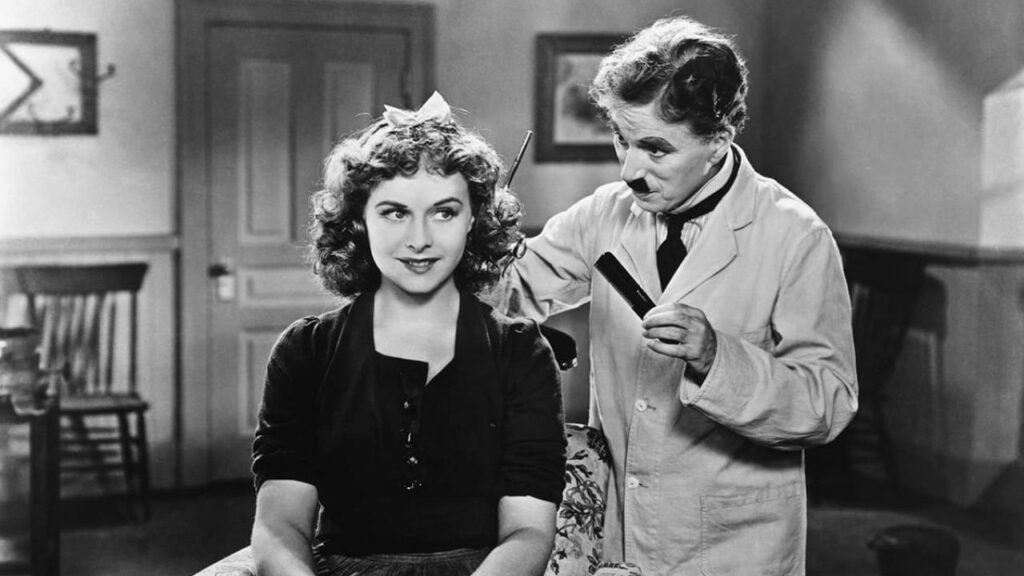
If he laughed, he was laughing at himself. Joseph Goebbels had already banned the film across occupied Europe and called Chaplin a “disgusting Jewish acrobat,” which is funny because Chaplin wasn’t even Jewish. When the actor heard about the private screening, he said something pretty sad. “I’d give anything,” he said, “to know what he thought of it.”
The final bitter twist is this. ‘The Great Dictator‘ came out in 1940. Back then, the full horror of the concentration camps was either kept secret or just a rumor no one really believed. Later in life, Charlie Chaplin admitted he felt terrible regret. If he had known how bad the genocide really was, if he had known that the gentle barber he was standing up for was being sent to the ovens, he never would have made the joke. “It was a comedy,” he said, “but I would not have made it if I had known.”
Chaplin’s Speech That Still Resonates
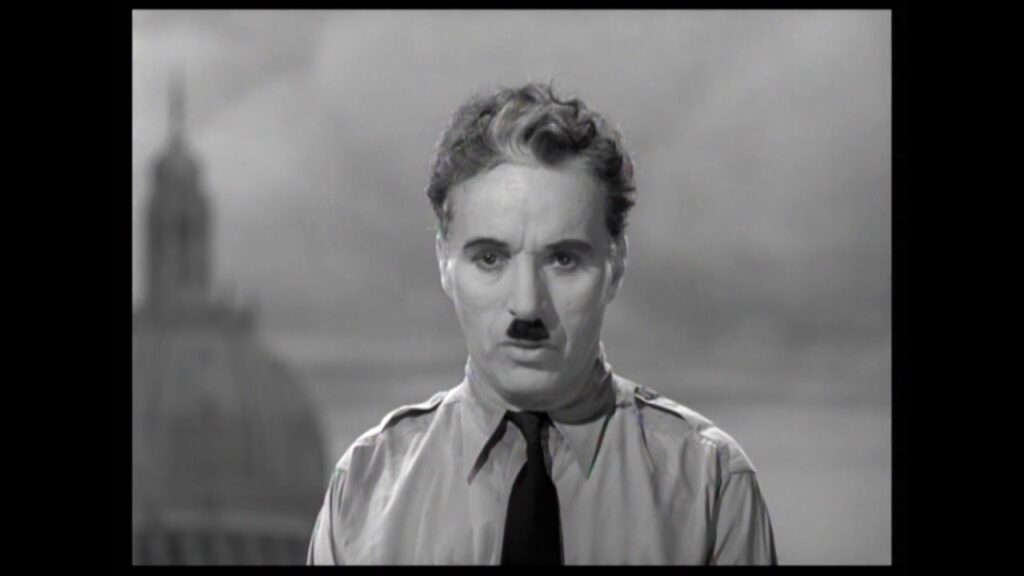
Whether Hitler watched it twice out of vanity, self hate, or just to study his own performance, the film is still here. But the last laugh belongs to the Tramp. ‘The Great Dictator‘ does not end with a pie in the face; it ends with a four minute plea for humanity, a speech that still hits hard nearly a hundred years later. In the final shot, Chaplin stares right at the camera, breaking the fourth wall to speak not just to the audience in the theater, but to the man in the bunker.
“Let us fight for a world of reason,” he says. “A world where science and progress will lead to all men’s happiness.” Hitler may have watched it twice, but he never got the joke.
You might also want to read: Not Sci-Fi, A Silent Classic Film Shaped Ryan Gosling’s ‘Project Hail Mary’ Performance