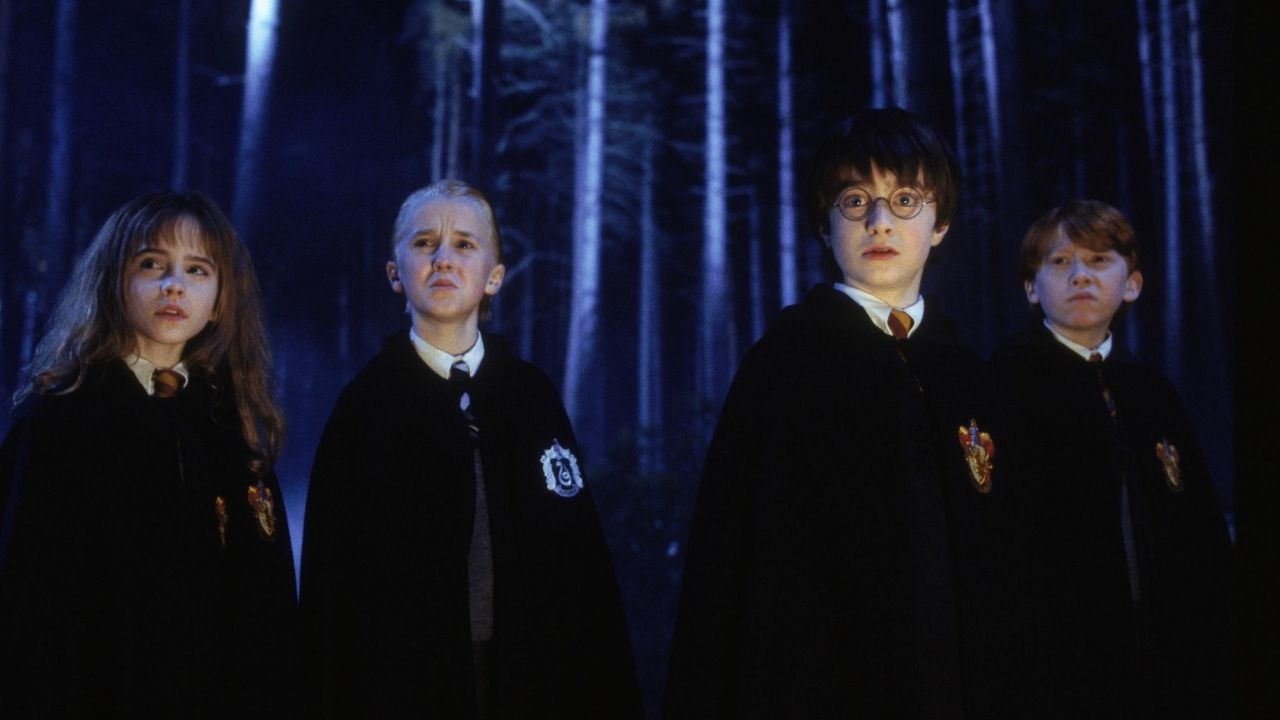
‘Harry Potter‘ made an entire generation dream about getting a Hogwarts letter, but maybe we should be grateful ours never arrived.
Behind the floating candles, Chocolate Frogs, Quidditch matches, and Christmas feasts is a world where children regularly face death, a government employs creatures that can eat human souls, an enslaved species works inside Hogwarts, teenagers can buy substances that interfere with consent, and teachers sometimes physically torture their students.
Voldemort is horrifying, but he is far from the only disturbing thing about the Wizarding World.
Hogwarts Is Basically A Child Safety Nightmare
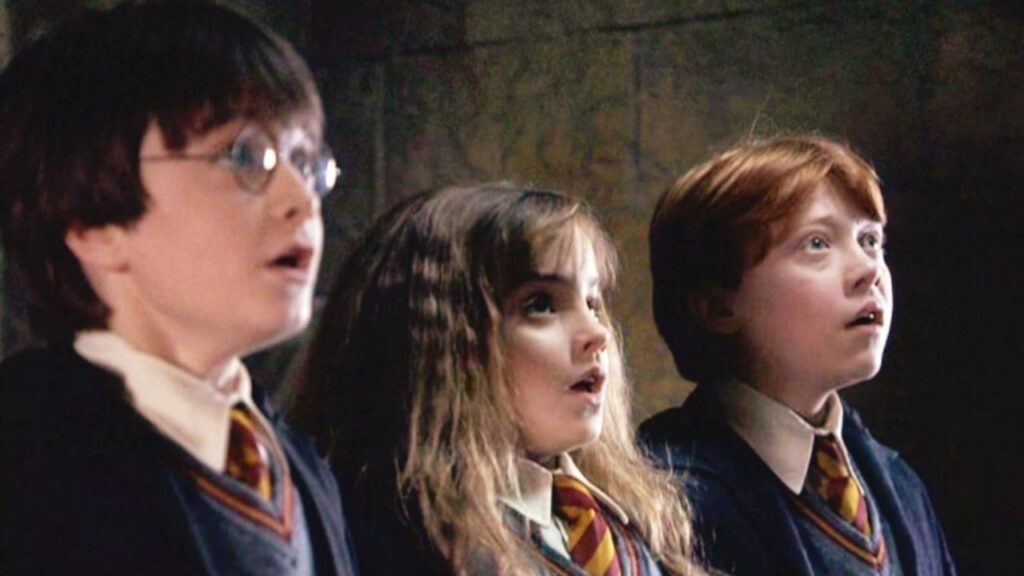
Harry’s life is disturbing before he even learns magic exists. The Dursleys force an orphaned child to sleep in a cupboard under the stairs, repeatedly humiliate him, allow Dudley to bully him, and generally treat him as an unwanted burden. The exaggerated comedy of the early story makes some of this easier to overlook, but stripped of that tone, Harry spends the first decade of his life experiencing serious neglect and mistreatment.
Related: Why Dumbledore’s Death Lost Its Emotional Power In ‘Harry Potter’ Movies
Hogwarts is supposed to rescue Harry from all that. Instead, an eleven-year-old quickly finds himself dealing with a troll, a three-headed dog, murderous magical obstacles, and a teacher secretly carrying the Dark Lord on the back of his head. One year later, a Basilisk is roaming through the school, petrifying students.
At thirteen, Dementors surround the grounds. At fourteen, Harry enters a tournament dangerous enough to have previously killed competitors, and Cedric Diggory ultimately dies during it. Hogwarts might be magical, but its safeguarding policy is basically “good luck.”
Even punishments can become life-threatening. First-year students receive detention in the Forbidden Forest while something is killing unicorns. Harry and Ron later follow Hagrid’s instructions into Aragog’s colony and nearly become food for giant spiders.
Neville’s childhood is not much safer. His relatives become so desperate to prove he possesses magic that his great-uncle Algie drops him from an upstairs window. Neville survives because his magic finally activates and he bounces.
Dolores Umbridge takes Hogwarts’ treatment of children somewhere even darker. During detention, she makes Harry repeatedly write “I must not tell lies” using a Black Quill that requires no ink. Instead, it cuts the words into his hand and uses his blood to write them. Harry undergoes the punishment repeatedly until the words leave a scar.
The official ‘Harry Potter‘ material itself describes the Black Quill as an exceptionally horrible punishment. Umbridge is not a Death Eater doing this in a dungeon. She is a government-appointed teacher abusing a student inside a school.
Azkaban Makes The Ministry Look Almost As Terrifying As Voldemort
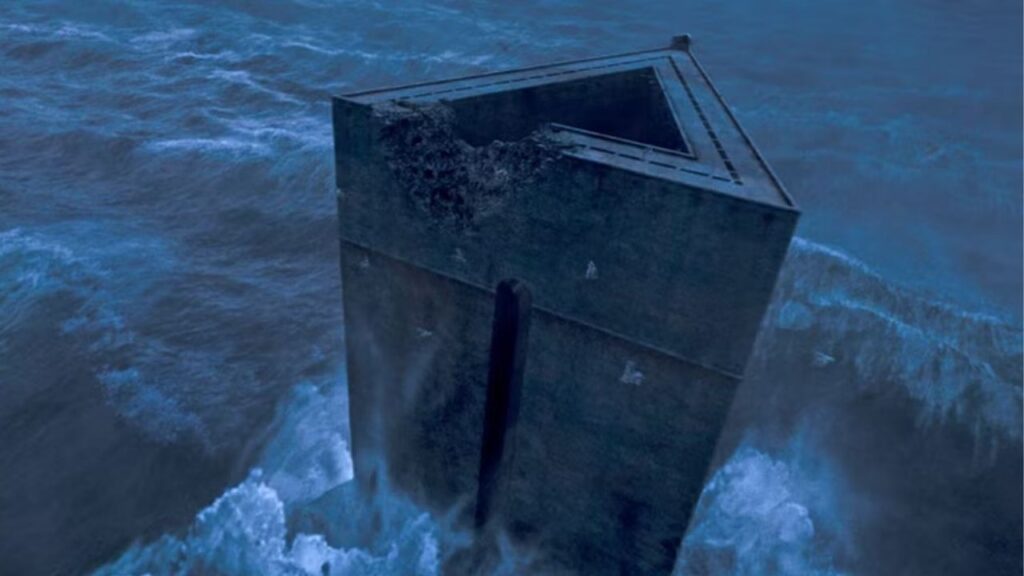
Azkaban might be the clearest sign that something is deeply wrong with wizarding society. Dementors drain happiness, produce overwhelming despair, and force people to relive their worst experiences. Their ultimate weapon, the Dementor’s Kiss, consumes the victim’s soul while leaving the body alive. The Ministry knowingly uses these creatures as prison guards.
Azkaban’s history makes that decision even more disturbing. The fortress originally belonged to a Dark wizard named Ekrizdis, who reportedly lured Muggle sailors to the island before torturing and murdering them. When the magical concealment around the island disappeared after his death, Ministry investigators entered the fortress and reportedly refused to discuss much of what they discovered. Dementors had already infested the place.
In case you missed it: The Forgotten Feminist Pioneer Who Inspired The Wizard Of Oz’s Witches
Instead of destroying this nightmare, the Ministry eventually turned it into a prison. Official Wizarding World history describes prisoners becoming insane and even dying from despair. A graveyard had to be created for inmates who died there.
Then consider Sirius Black. He spends twelve years inside this environment for a crime he did not commit, without receiving anything resembling the fair process we would expect from a functioning justice system. Barty Crouch Jr., meanwhile, eventually receives the Dementor’s Kiss before he can publicly provide crucial testimony about Voldemort’s return.
Harry himself nearly loses his soul to Dementors when he is thirteen. The problem eventually becomes painfully obvious when the Dementors abandon the Ministry and join Voldemort, who can offer them more victims. The government spent years using inherently predatory Dark creatures to punish prisoners, only to discover that those creatures were never particularly loyal to them in the first place.
The Wizarding World Has A Huge Slavery And Prejudice Problem
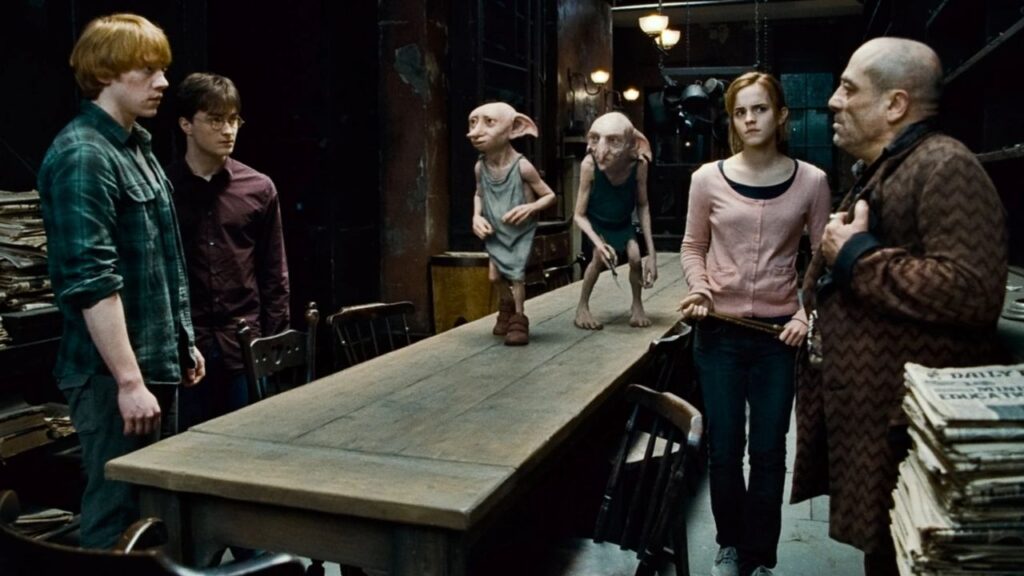
House-elves are one of the hardest parts of Harry Potter to revisit as an adult. Dobby is magically bound to the Malfoys, cannot freely disobey them, and physically punishes himself when he believes he has done something wrong. House-elves perform unpaid domestic labor for wizarding families and even Hogwarts.
Hermione immediately recognizes the problem and creates S.P.E.W., the Society for the Promotion of Elfish Welfare. Other characters argue that house-elves enjoy serving witches and wizards, and many elves themselves reject Hermione’s attempts to free them. That does not necessarily make the situation less disturbing. It arguably makes it worse.
Related: What Happened To Dolores Umbridge After Lord Voldemort’s Defeat?
Academic analysis has examined this contradiction, noting that house-elves are born into slavery and magically compelled to serve wizarding families. Their treatment becomes morally complicated because many supposedly good characters continue accepting the institution rather than trying to destroy it.
Dobby proves that a house-elf can desire wages, independence, and personal freedom. Yet defeating Voldemort does not bring an equivalent revolution for his species. The heroes save the Wizarding World while leaving one of its oldest systems of inequality largely intact.
Werewolves face another form of discrimination. Remus Lupin does not choose his condition. Fenrir Greyback attacks him when he is a small child because Greyback wants revenge against Remus’s father.
Greyback himself is one of the franchise’s most disturbing villains. He deliberately targets children and wants to infect as many people as possible. Official background material also connects him to investigations involving the deaths of Muggle children.
Remus consequently spends his life paying for something another person did to him when he was young. He struggles with employment and social acceptance because wizarding society treats werewolves as dangerous outsiders. The prejudice becomes self-defeating because Voldemort can recruit marginalized werewolves partly by exploiting their resentment against mainstream wizarding society.
Squibs occupy another uncomfortable position. Filch’s bitterness becomes easier to understand when viewed through a society where magical ability strongly determines status. Neville’s relatives are so terrified he might be a Squib that they repeatedly attempt to force magic out of him.
Pure-blood ideology sits on top of all these divisions. Muggle-borns, Muggles, werewolves, giants, goblins, Squibs and house-elves all occupy complicated positions within a hierarchy dominated by witches and wizards. Voldemort does not invent the Wizarding World’s prejudices. He radicalizes beliefs and divisions that already exist.
Love Potions And Mind Control Make Consent Almost Meaningless
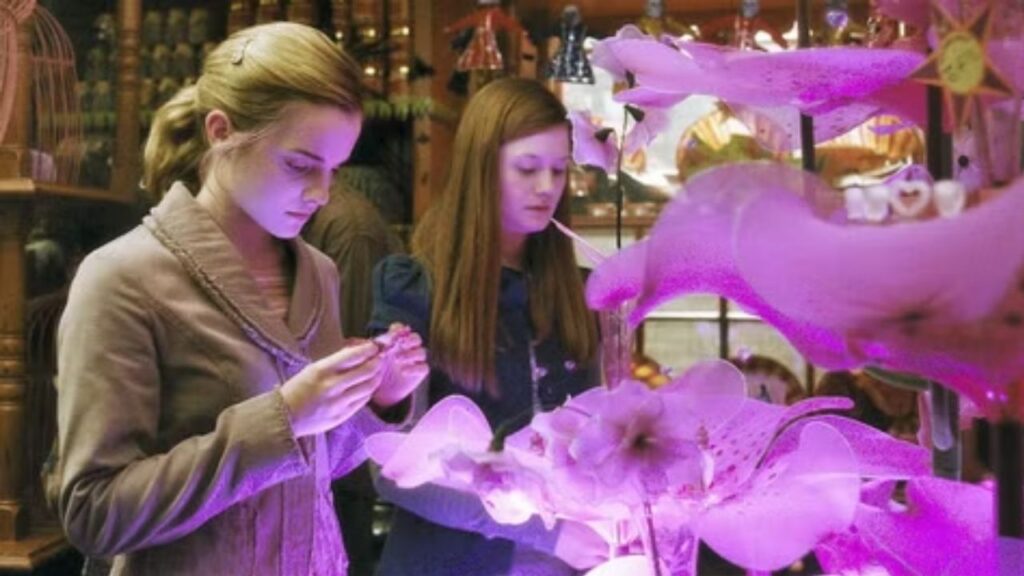
Love potions sound cute until you actually think about what they do. They magically manufacture infatuation or obsession. That means a person’s romantic feelings can be chemically and magically manipulated without consent. Academic criticism of ‘Harry Potter‘ has specifically examined this problem, arguing that the books sometimes soften the implications through comedy and teenage romantic plots even though love potions interfere with autonomy.
Related: The Surprising Family Reason Daniel Radcliffe Almost Lost ‘Harry Potter’
Romilda Vane attempts to give Harry chocolates containing a love potion. Ron accidentally eats them instead and becomes obsessively infatuated with her. The scene is funny on the surface, but switch the genders or remove the hilarity and the implications become considerably more uncomfortable.
Voldemort’s family history takes the concept much further. Merope Gaunt is believed to have used a love potion or magical coercion to make Tom Riddle Sr. remain with her. When the magical influence ends, he leaves.
And love potions are only the beginning. The Imperius Curse gives somebody control over another person’s actions. Official Harry Potter material explicitly states that victims can be forced to commit crimes, torture, and murder, or even kill themselves. The person being controlled may also experience an oddly pleasant feeling while under the curse, making resistance even harder.
Then there is memory modification. Wizards possess the ability to erase or alter another person’s memories. The Ministry routinely modifies Muggle memories to maintain magical secrecy. Hermione even alters her parents’ memories before going into hiding during the war, removing herself from their understanding of their own lives to protect them.
Some Of The Backstories Are Too Brutal

Neville Longbottom’s parents provide one of the bleakest examples. Frank and Alice Longbottom survive Voldemort’s first war only to be captured and tortured with the Cruciatus Curse by Death Eaters, including Bellatrix Lestrange. The torture leaves them permanently incapacitated.
Neville therefore grows up with parents who are alive but cannot raise him. His visits to St Mungo’s are particularly devastating because the series never offers a magical cure that restores them.
In case you missed it: 10 Comfort Movies For When You’re Having A Bad Day
Ariana Dumbledore’s story is equally grim. When she is six, three Muggle boys attack her after seeing her perform magic. The experience traumatizes her so severely that she struggles to control her magical abilities. Her father retaliates against the boys and ends up in Azkaban.
Ariana’s unstable magic later accidentally kills her mother, Kendra. Years later, Ariana herself dies during a three-way duel involving Albus Dumbledore, Aberforth Dumbledore and Gellert Grindelwald. Nobody ever discovers whose spell actually killed her.
The tragedy also exposes a darker chapter of Dumbledore’s own life. As a young man, he becomes close to Grindelwald and is briefly seduced by grand ideas about wizarding power and dominance “for the greater good.” The wise headmaster Harry eventually knows carries the guilt of having once entertained a worldview dangerously close to magical supremacy.
Then there is the Gaunt family. Voldemort’s maternal family is consumed by obsession with blood purity and descent from Salazar Slytherin. Their home is defined by poverty, violence, and abuse. Merope grows up under the control of her father, Marvolo, and brother, Morfin, before escaping.
The story becomes even more disturbing because the Gaunts’ obsession with preserving their supposedly superior bloodline includes generations of intermarriage. The family that prides itself on magical purity becomes physically and psychologically broken by the ideology it worships.
Voldemort therefore does not simply emerge from nowhere. His history is surrounded by abuse, coercion, obsession with blood purity and generational dysfunction long before he becomes Lord Voldemort.
Voldemort’s Magic Is Straight-Up Body Horror
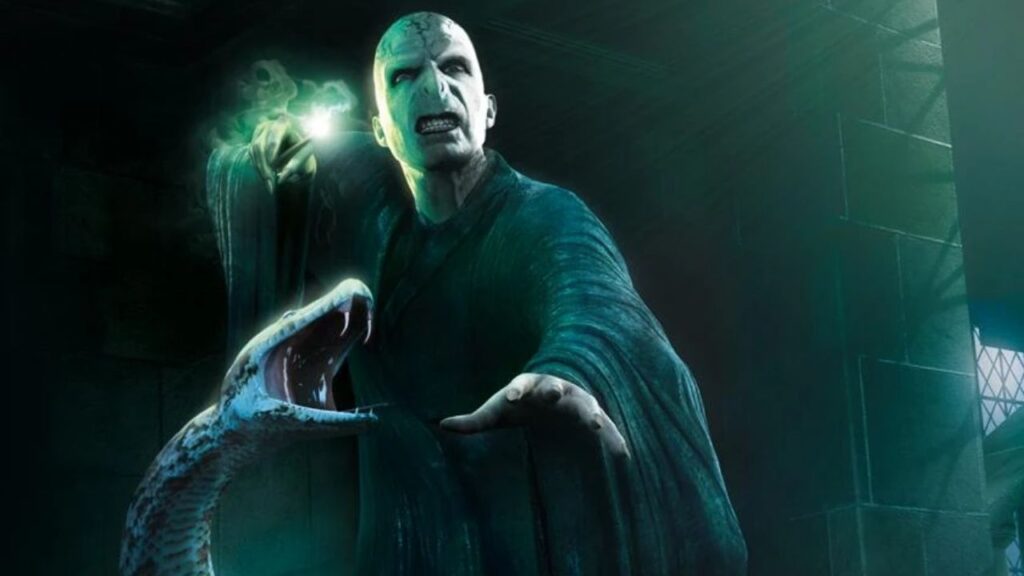
Horcruxes might be the darkest magical concept in the entire franchise. Creating one requires murder. Killing tears the soul, and Dark magic allows part of that damaged soul to be placed inside another object. Voldemort does this repeatedly because he wants to make himself effectively immortal.
The result is not merely magical immortality. Voldemort progressively destroys his own humanity while physically transforming into something increasingly inhuman.
His return in the ‘Goblet of Fire‘ is essentially a horror ritual. Peter Pettigrew cuts off his own hand. Voldemort uses Harry’s blood, Pettigrew’s severed flesh, and material from his father’s grave to restore his body.
Then Voldemort tortures fourteen-year-old Harry shortly after ordering Cedric Diggory’s murder. ‘Deathly Hallows‘ somehow becomes even more macabre.
Inferi are dead human bodies magically reanimated and controlled by Dark wizards. Voldemort fills the lake protecting one of his Horcruxes with them, effectively turning human corpses into a security system.
Nagini and Bathilda Bagshot produce one of the closest things ‘Harry Potter‘ ever gets to outright corpse horror. Bathilda is already dead when Harry and Hermione visit her house. Nagini has been using the dead woman’s body as a disguise to lure Harry into Voldemort’s trap. A snake hiding inside the corpse of an elderly woman is the kind of imagery you expect from horror, not the same franchise that gave us Bertie Bott’s ‘Every Flavor Beans‘.
Charity Burbage’s death is equally brutal. Voldemort murders the Hogwarts professor while Death Eaters sit around a table, then gives her body to Nagini to eat.
Bertha Jorkins is tortured for information and murdered. Cedric is killed merely because he arrived in the graveyard with Harry. Voldemort casually refers to him as unnecessary. Once the series reaches its final books, the fairy-tale exterior has almost completely fallen away.
Even Hogwarts’ Ghosts Have Haunting Backstories
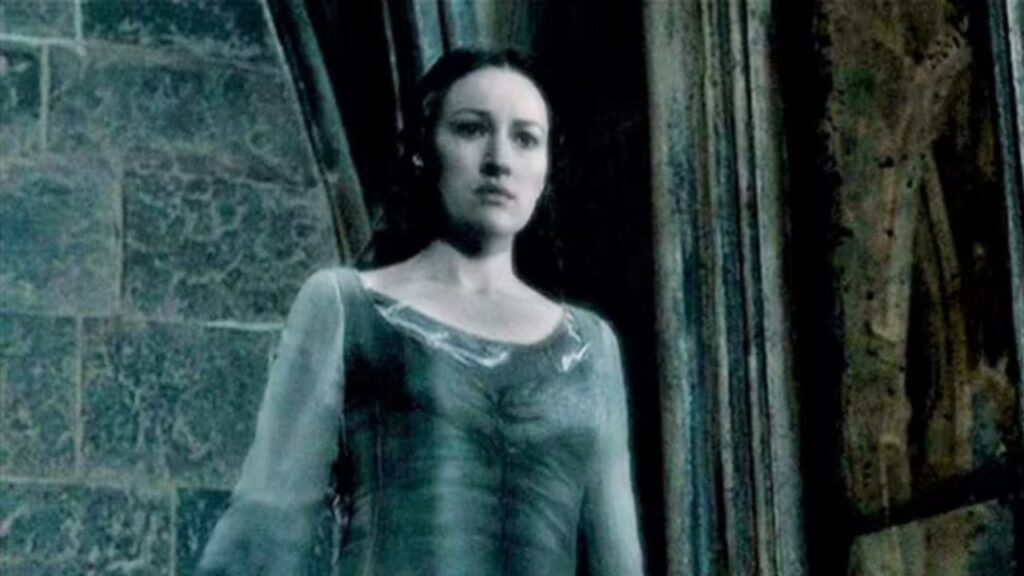
Hogwarts ghosts seem charming when they float through walls during dinner, but several of them are walking reminders of brutal deaths. Nearly Headless Nick’s execution went catastrophically wrong. The axe failed to completely sever his head, leaving it attached by a small amount of skin and tissue. His funny nickname essentially comes from a botched beheading.
The Grey Lady has a more heartbreaking story. She is Helena Ravenclaw, daughter of Hogwarts founder Rowena Ravenclaw. Helena steals her mother’s diadem and runs away. The Bloody Baron is sent after her. When Helena refuses to return with him, he murders her. Horrified by what he has done, the Baron then kills himself. Their ghosts subsequently spend centuries inside the same school.
Hogwarts contains the ghost of a murdered woman and the ghost of the man who killed her, and generations of children simply grow up accepting this as part of school life.
In case you missed it: Ralph Fiennes’ Improvised Voldemort Moment Left Tom Felton Genuinely Creeped Out In ‘Harry Potter’
Moaning Myrtle is another murdered child. She dies at Hogwarts after encountering the Basilisk in the girls’ bathroom and remains there as a ghost. Later, Myrtle admits to watching students in situations where they reasonably expect privacy, including Harry while he is bathing in the prefects’ bathroom. Once again, something presented partly for comedy becomes much stranger when examined seriously.
The later ‘Harry Potter‘ books make another disturbing transition: students stop merely being endangered children and become active participants in a war.
Students Become Weapons Of War
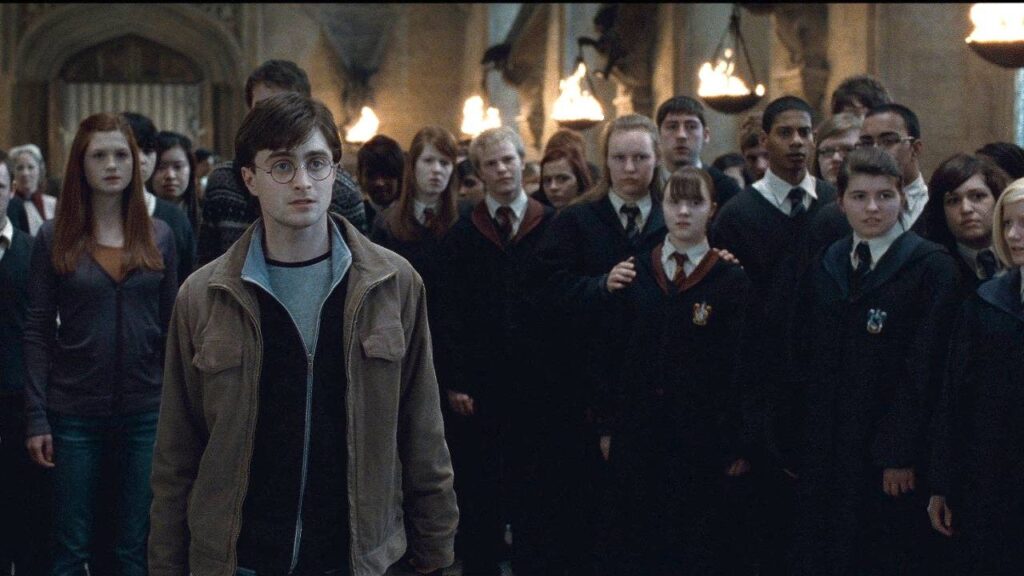
Dumbledore’s Army begins as a secret defense group because Umbridge refuses to properly teach students defensive magic. Eventually, many of those same teenagers fight actual Death Eaters.
Draco Malfoy represents the other side of the same tragedy. Voldemort recruits him into the Death Eaters while he is still a teenager and gives him the task of murdering Dumbledore. The assignment is partly punishment for Lucius Malfoy’s failures, leaving Draco trapped between killing someone and potentially seeing himself and his family punished by Voldemort.
Harry, Ron and Hermione spend their final school-age year hunting pieces of Voldemort’s soul while being pursued by killers. At the Battle of Hogwarts, teenagers fight alongside adults against Death Eaters and magical creatures. Fred Weasley, Remus Lupin, Nymphadora Tonks, Colin Creevey and many others die during the wider conflict.
Harry himself has been carrying extraordinary trauma long before that final battle. He witnesses Cedric’s murder at fourteen, gets tortured immediately afterward, and returns to a society where large numbers of people initially refuse to believe his account. He experiences nightmares, anger, isolation, and visions connected to Voldemort while adults debate whether he is trustworthy.
The magical coming-of-age story gradually becomes a war story about traumatized kids being forced to confront failures created by previous generations.
The Ministry Eventually Becomes A Full-Blown Authoritarian Regime
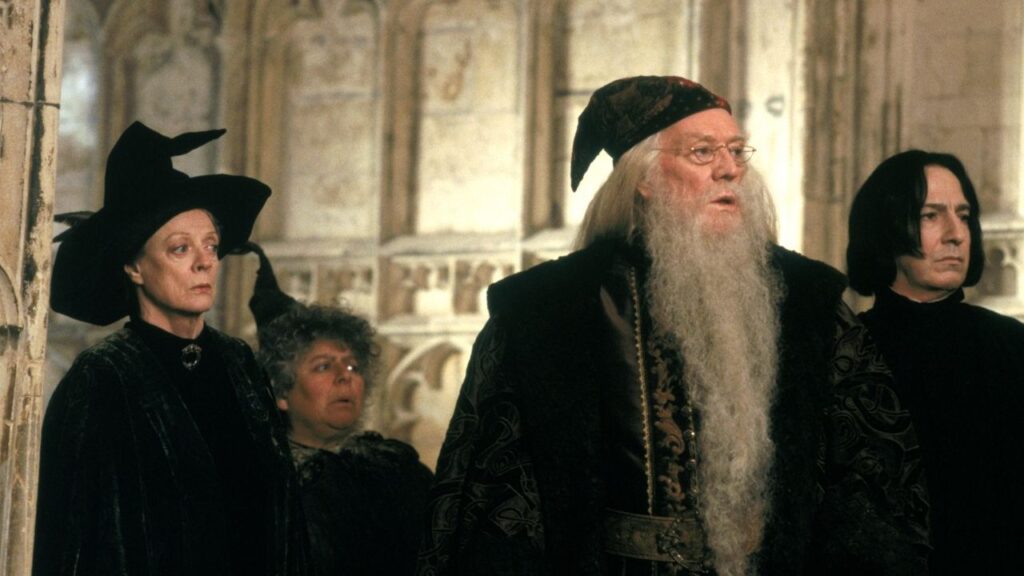
The Ministry of Magic is dysfunctional long before Voldemort takes control. Cornelius Fudge spends much of Order of the Phoenix denying Voldemort’s return because acknowledging it could threaten his political position. The Ministry attacks Harry and Dumbledore’s credibility instead of confronting the growing danger.
Related: The Tragic Love Story Of Minerva McGonagall In ‘Harry Potter’ Explained
Umbridge then enters Hogwarts as an instrument of government interference, restricts student organizations, controls information, and gradually gives herself extraordinary authority over the school.
Once Voldemort’s supporters infiltrate the Ministry, the existing machinery becomes even more sinister. Muggle-born witches and wizards are forced to prove they did not “steal” magic. Propaganda appears throughout society. People disappear. Fear becomes an instrument of government control.
The unsettling part is how easily the institution transforms. Voldemort does not need to build an entirely new government from nothing. He takes control of structures that already possess enormous power over citizens, including prisons, surveillance, legal hearings, and control over information.
The Ministry that once claimed to protect magical society becomes a mechanism for persecuting sections of that same population.
Killing Voldemort removes the dictator, but it does not automatically remove the beliefs and institutions that existed before him. Centuries of prejudice do not disappear overnight. The complicated relationship between goblins and wizards still has history behind it. House-elves do not suddenly gain a completely new place in society simply because Harry wins the Battle of Hogwarts.
That makes the ending more complicated when revisiting Harry Potter as an adult. Harry saves the Wizarding World, but the Wizarding World also desperately needs saving from parts of itself. Voldemort was its most dangerous monster. He just was not the source of everything monstrous about it.
Maybe that is the real dark side hiding underneath Harry Potter’s childhood magic. The terrifying things didn’t end with Death Eaters, Horcruxes, Basilisks, or Dementors. Some were traditions. Some were laws. Others were simply accepted because “that’s how the Wizarding World works.” And somehow, we accepted many of them too.
You might also like to read: 10 Fantasy Movies With Brutally Best Final Battles