
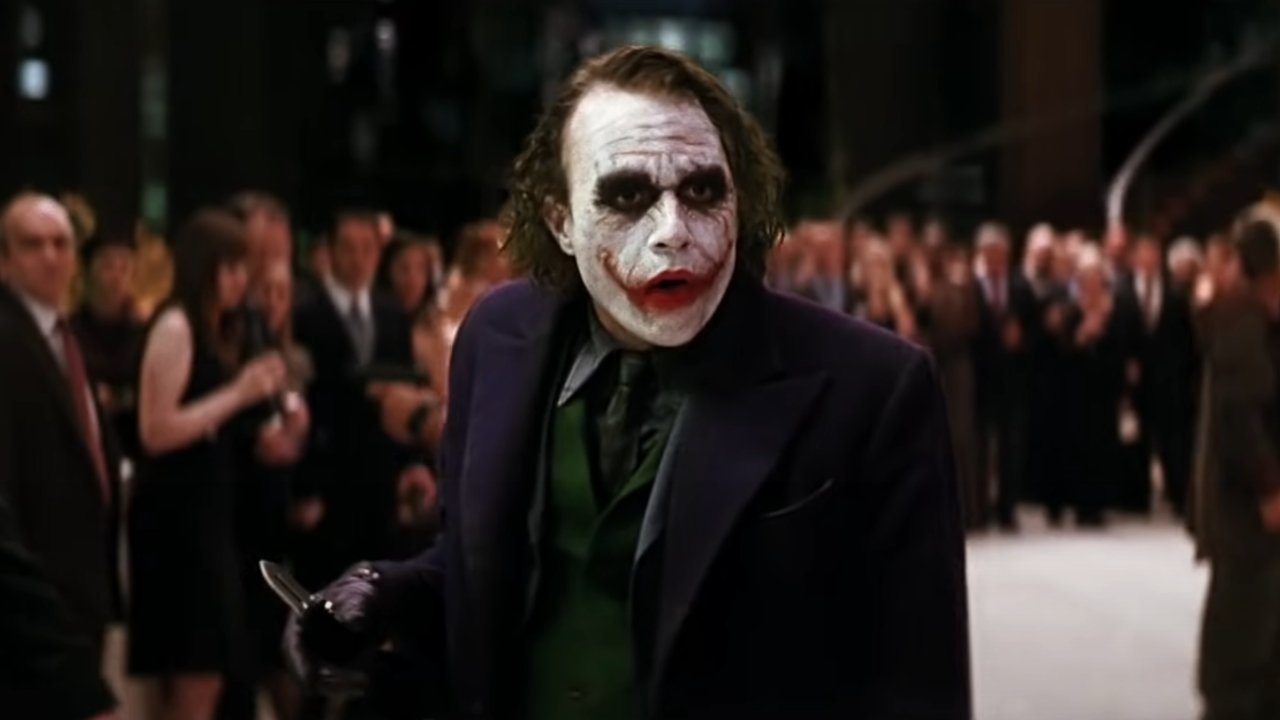
When you think of the greatest movie villains, Heath Ledger’s Joker is in a class by himself. With that smeared makeup and chaotic energy, he looks less like a comic book character and more like a psychological wound you can see. It has been eighteen years since ‘The Dark Knight‘ came out, and Ledger’s performance is still the gold standard, not just for superhero movies but for acting in general.
But where did this version of the Joker actually come from? It did not start with the comic books. It started with a painter from the 20th century and the ugly reality of gang violence.
The Painting That Inspired Christopher Nolan
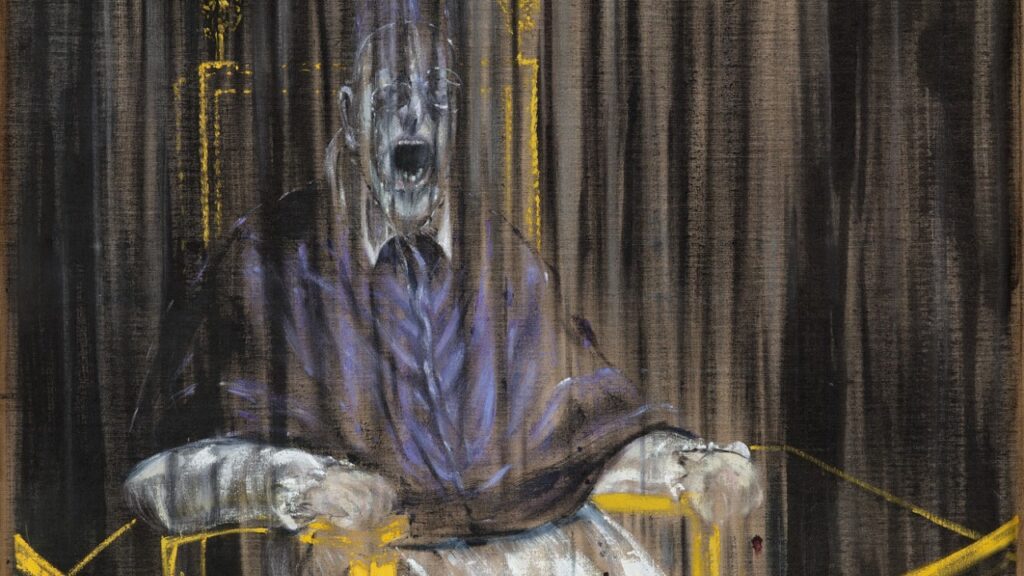
Christopher Nolan has always been drawn to the work of artist Francis Bacon. When he was a teenager, he picked up a poster from a Bacon show at Tate Britain, and he never let it go. He kept it with him for years, and it ended up “gracing various walls in different flats until it was a tattered mess.” When Heath Ledger started getting ready to play the Joker, Nolan knew exactly what to show him.
Related: The Unusual Way Christopher Nolan Wrote ‘Oppenheimer’ Took Matt Damon by Surprise
“Years later I showed the image to Heath Ledger while he was preparing to play the Joker, and he instantly sparked to its tortured and torturing humanity,” Nolan said. “It informed the makeup for the character in the most tactile of ways.”
Bacon’s paintings are full of distorted, streaked figures that seem to be in real agony. That look gave Nolan and Ledger a new way to think about the Joker, one that was stripped of any polish. Nolan talked about “corruption, this decay in the texture of the look itself” as being key to the character’s threat. “It’s grubby. You can almost imagine what he smells like,” Nolan said. In the end, the Joker did not feel like a creation from a comic book. He felt like something from a nightmare, built on that idea of “tortured and torturing humanity” that Ledger connected with right away.
The Real Life Glasgow Smile and Gang Violence Behind the Joker’s Scars
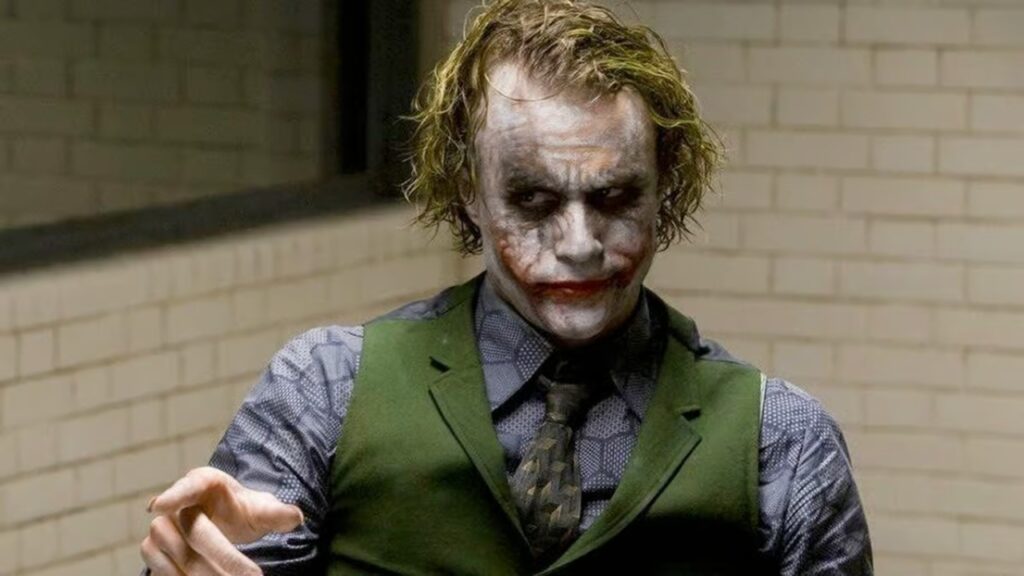
The Joker’s unsettling look also comes from a very real and violent place. Conor O’Sullivan, the prosthetics supervisor, was in charge of designing the character’s scars, the jagged cuts at the corners of his mouth that make it look like he is always smiling. To get it right, he looked to the violent subcultures of Britain.
In case you missed it: Christopher Nolan Helped Save ‘Donnie Darko’ When Hollywood Refused to Touch It
“I was never given a concept or reason for the scarring,” O’Sullivan said. “Once I had it in my mind that it was going to be scars, rather than a fixed smile, I immediately thought of the punk and skinhead era and some unsavoury characters I had come across during this time.”
The “Glasgow smile,” which is also called a “Chelsea smile,” goes back to the gang-filled streets of 19th-century Scotland. Thugs with razors would slash their victims from mouth to ear, leaving them with a permanent, horrifying grin. The term came back into use with football hooligans in the 1970s. O’Sullivan was so committed to getting it right that he had a strange encounter. He said, “A delivery of fruit machines was made to the estate near my workshop and the man delivering them had a Chelsea Smile. I plucked up the courage to ask him for a photo and he told me the story of how he had got his scars.”
Heath Ledger’s Isolated Preparation and Joker Diary for ‘The Dark Knight’
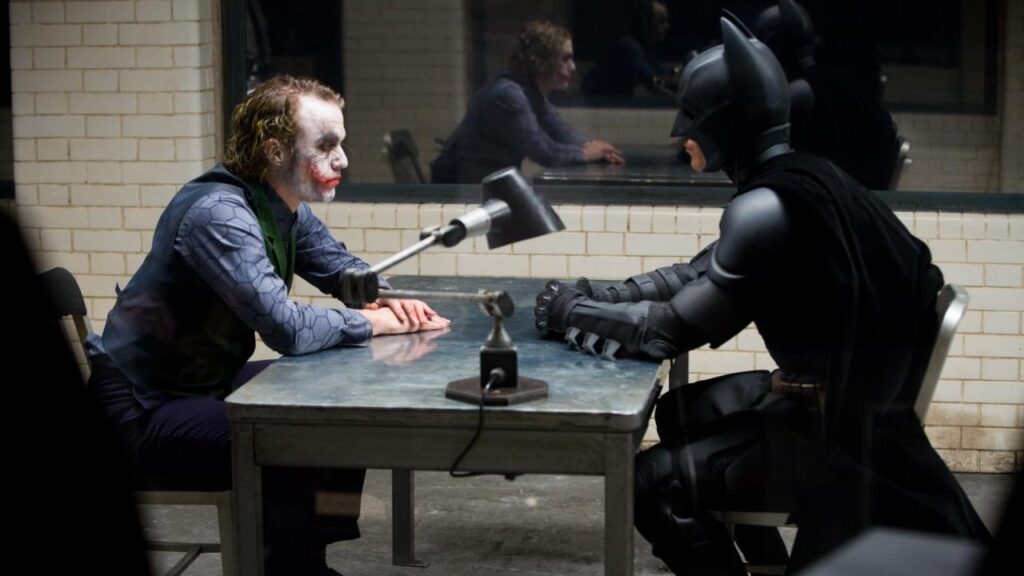
Ledger threw himself into the role with an obsession that showed in every scene. He spent weeks alone in a London hotel room, putting together a “Joker diary” full of disturbing images, comic strips, hyenas, and references to Alex from ‘A Clockwork Orange‘. The late actor scribbled words like “chaos” and “kill the Batman” on the pages. “He pretty well locked himself up in a hotel room for weeks,” his father, Kim Ledger, said. “He galvanised the upcoming character.”
The actor gave everything to the part. “I ended up landing more in the realm of the psychopath,” Ledger said. “He’s just an absolute sociopath, a cold-blooded, mass-murdering clown.” Nolan and Ledger both saw anarchy as the real threat, something Nolan called a “psychological concept” more than just a character. Nolan gave Ledger “free rein” and remembered that the actor would reveal his choices slowly, playing his cards “close to the chest.” That unpredictability became part of who the Joker was.
The final result was pure alchemy. Francis Bacon’s twisted humanity met the Glasgow smile’s brutal origins, and Ledger’s fearless performance brought it all to life. The Joker became something bigger than a role. He turned into a cultural scar, proof that the darkest parts of reality can give birth to the most unforgettable art.
You might also want to read: Christopher Nolan Sent ‘The Odyssey’ Cast to Sea for Months on a Real Viking Ship Instead of Using CGI