

Sir Anthony Hopkins’ legendary ability to completely disappear into his roles has earned him unprecedented acclaim, anchoring masterworks like ‘The Silence of the Lambs‘ and ‘The Father.’ For decades, the actor has seamlessly transformed into everything from terrifying cinematic villains to the mythic gods of Asgard. Yet, tracing the arc of his expansive career also reveals a stark evolution in Hollywood’s industry standards, bringing some of his past creative choices into sharp, modern relief.
Nowhere is this shift more striking than in 2003, when Hopkins took on the lead role in the film adaptation of Philip Roth‘s acclaimed novel, ‘The Human Stain.’ This highly controversial casting placed the white British actor at the center of a complex, delicate position regarding the representation of Black Americans.
Anthony Hopkins Defended His Role In ‘The Human Stain’
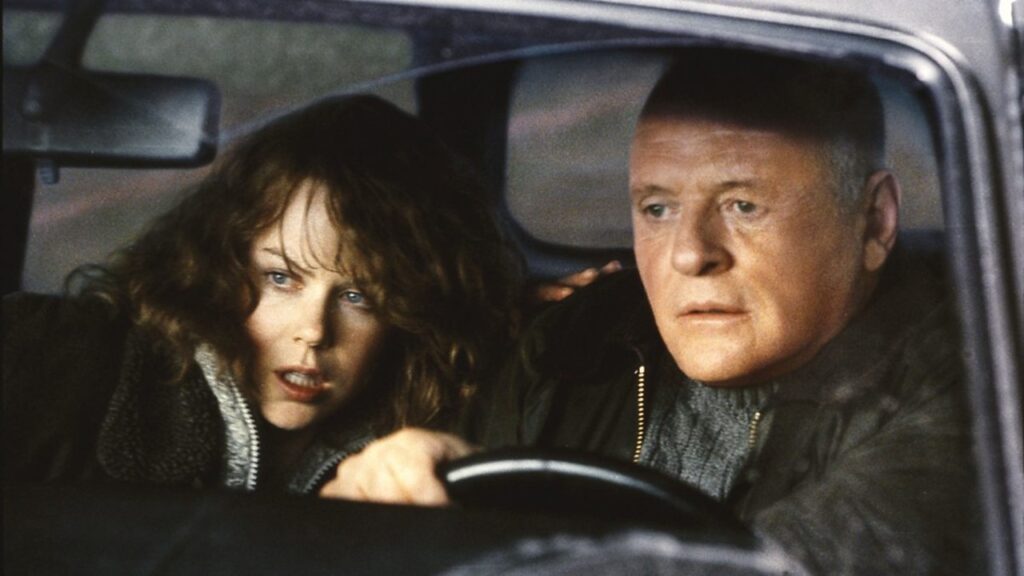
To portray the younger version of Coleman Silk, the filmmakers logically cast Wentworth Miller. This brilliant choice directly reflected Miller’s real-life heritage as the son of a Black father with African American and Jamaican roots, and a white mother—bringing an authentic layer of identity to a deeply complex role.
Consequently, his multi-racial background gave him a unique perspective on the film’s theme of racial passing. Meanwhile, Hopkins’s choice to play an older Coleman Silk sparked immediate controversy.
The thriller showed that Anthony Hopkins as Coleman Silk was actually a light-skinned, white-passing African American who had been pretending that he was a Jew all his life.
Related: 10 Most Controversial TV Shows Of The Decade
In response to critical questions about the casting, the experienced actor took a surprisingly cool attitude. Hopkins completely ignored all the discussions going on around him.
Moreover, he decided not to pay attention to the sociopolitical aspect of this casting. Thus, the seasoned performer focused solely on the technical aspects of the work, ignoring external factors.
A Failed Cinematic Experiment
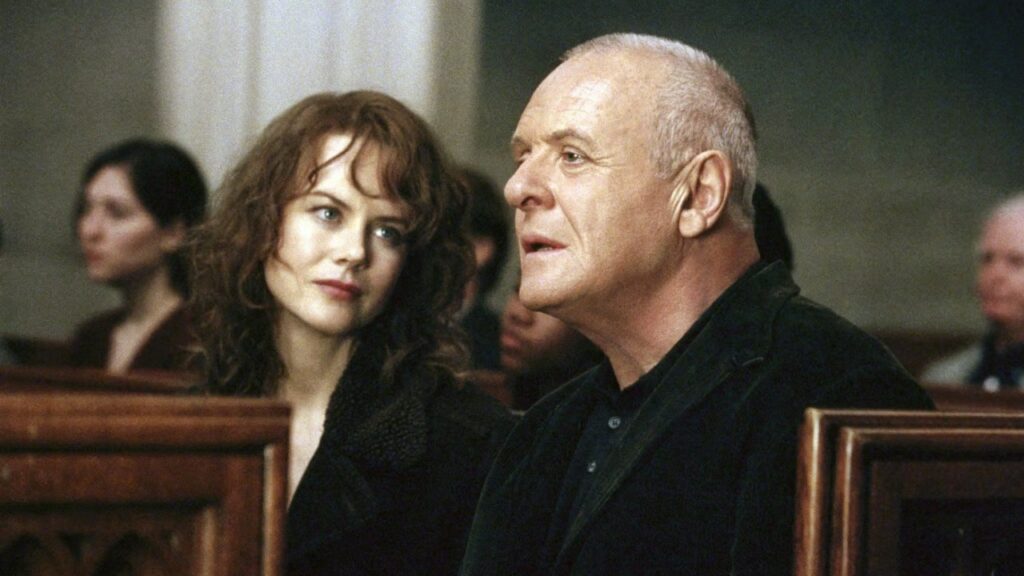
“There were some remarks that I wasn’t rightly cast,” the veteran star recalled. “I didn’t really care what I looked like. I thought I didn’t have time for that. I thought I did the best I could. I changed the color of my eyes.”
This minimalist approach was hardly able to please industry representatives. They claimed that an accent and colored contact lenses are not enough to reveal the protagonist’s deep pain.
In Case You Missed It: 20 Controversial Biopic Movies And TV Shows The Real People And Families Hated
Ultimately, the film failed to engage its audience and premiered to widespread indifference from major critics. Left without a narrative or emotional anchor, it was widely dismissed as a flawed and unsuccessful experiment.
Anthony Hopkins’ casting ultimately faltered due to a disconnect between his own sensibilities and the character’s specific cultural background. Yet, despite this central misstep, ‘The Human Stain‘ remains a fascinating artifact of early 2000s cinema. It stands as an unrepeatable phenomenon, capturing a highly unique moment in film history.
You Might Also Like To Read: The “Insulting” 2003 Action Film That Unknowingly Launched Charlize Theron’s Career