
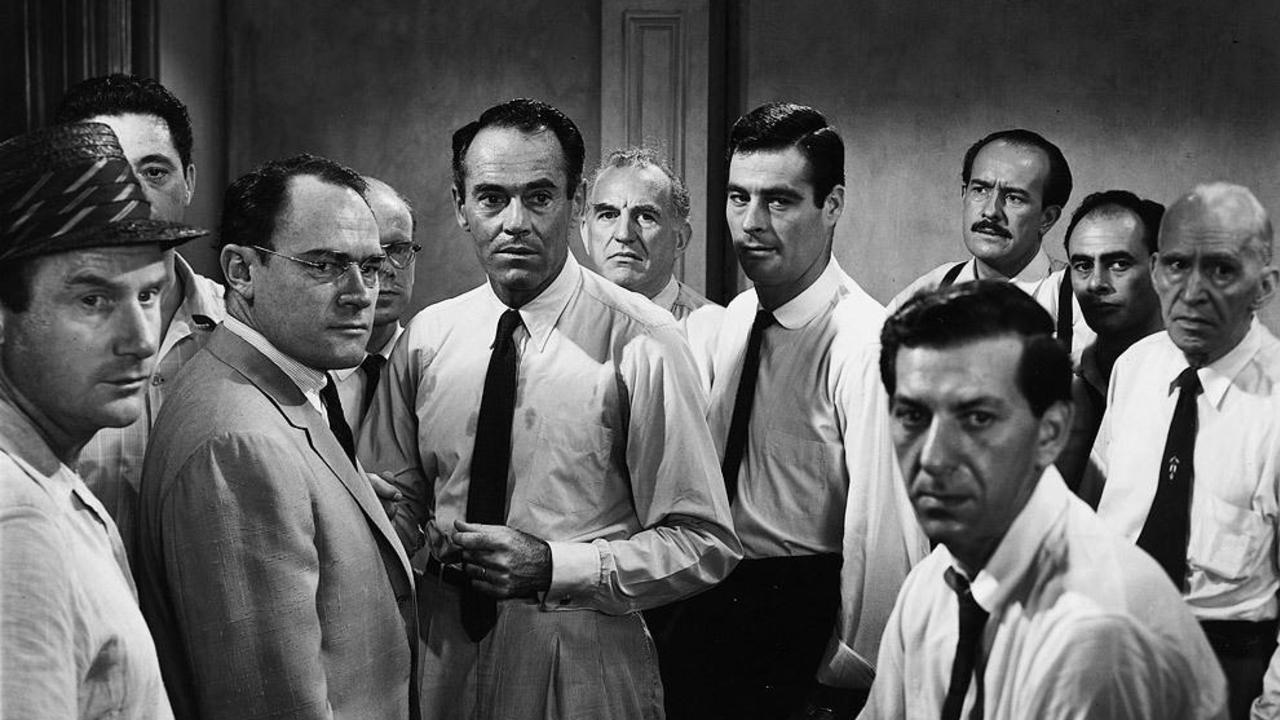
‘12 Angry Men,‘ directed by Sidney Lumet, is a legal drama film that clearly deserves all the praise. In a world of entertainment blanketed by legal dramas such as ‘Suits‘ and ‘The Lincoln Lawyer,’ this movie is a true masterpiece. It was a social commentary on the justice system as a whole.
Moreover, it sparked controversy with its thought-provoking themes. It mirrored the reality of the society with its take on mob violence. While it pointed at a flawed jury propelled by prejudice and hate, there are other reasons as well as to why it still stands as relevant in modern times.
A Jury Fuelled By Prejudice, Vitriol, And Personal Sentiment
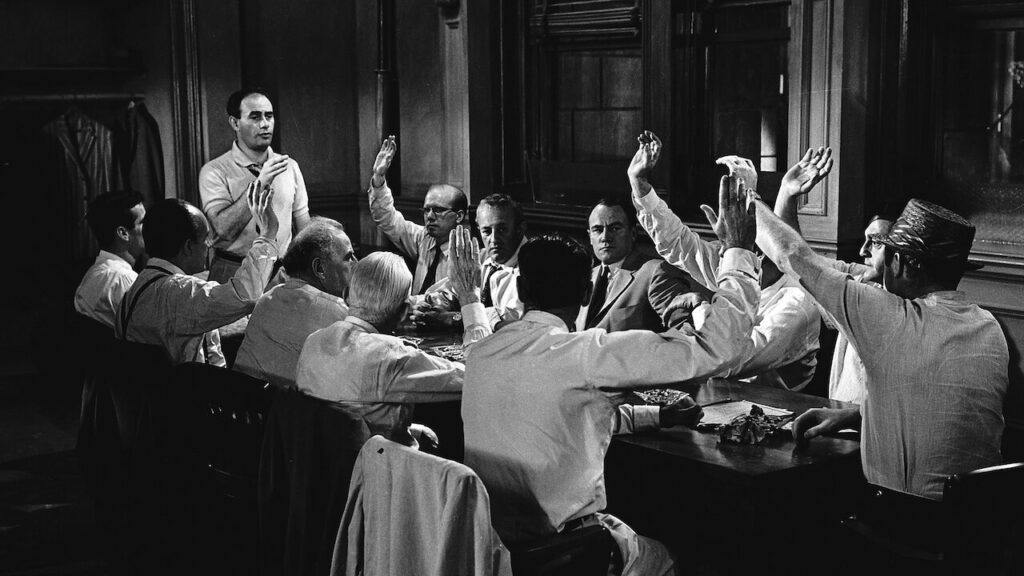
In the land of the blind, the one-eyed man is the king. This is an idiom that perfectly describes the entire plot of the movie. Juror 8, played by Henry Fonda, manages to turn the tables, quite literally.
The story follows the case of an 18-year-old man who is brought to trial in a court. He is accused of killing his father, and what follows is absolute mayhem. The courtroom is brimming with conundrums, especially with your approach.
Juror 8 seems the sensible one who thoroughly questions the allegations and accusations. The evidence becomes less coherent as the jurors display their personal sentiment. This is evident in how they respond to Juror 8’s statements.
While Juror 10 goes on to chant his divisive rant about people born in poverty, Juror 3 makes it worse.
He charges at Juror 8 and quite evidently makes a death threat. It all ties in well with their deep-seated hatred, prejudice, and vitriol against the boy’s social background. This is also one of the reasons why this movie is so relevant in modern times, and here’s why.
Related: Inside Marilyn Monroe’s Final Days and the Conspiracies That Never Went Away
12 Angry Men’s Relevance In Modern Times
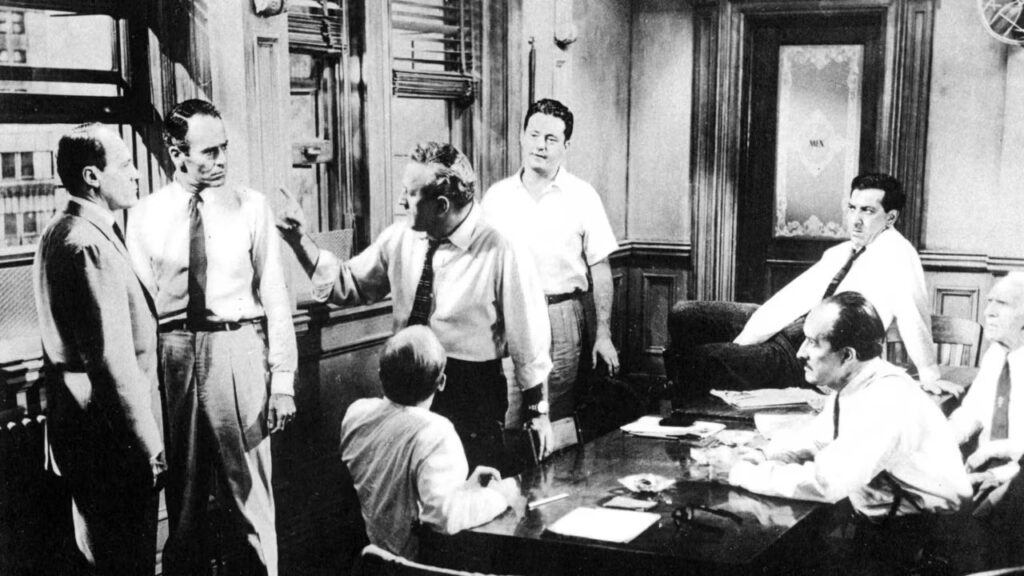
A failed judicial system, corrupt witnesses, and a judgmental society. ‘12 Angry Men’ precisely takes these themes and makes a mockery out of the flawed perceptions of society. The electric chair isn’t a motif of punishment but rather of oppression.
It would remind anyone of the gruesome George Stinney case that plagued the justice system for years to come. While it was a matter of race, here Sidney Lumet’s film contextualizes it within the space of poverty.
His “slum” background is brought into question, while most of the jurors ignore the motive behind the crime. The fact that it takes Juror 8’s reason and resilience is baffling. Many fans who come from legal backgrounds critiqued the other jurors’ behavior.
It stands as a masterpiece because of the rationale displayed by one juror. It’s a one-man versus all, and while 9:3 remained the last vote, we know one thing for sure.
This movie is deeply relevant to today’s day and age. It not only critiques the justice system but also what fuels it. The race, social background, gender, and even judges are fueled by personal sentiments.
Juror 3’s dysfunctional relationship with his own son leads him to act from a space of bias. He was willing to sabotage and jeopardize the young man’s life.
This points to a greater problem in society, which ‘12 Angry Men‘ brought to the surface. The movie isn’t about solving each and every issue, no. It acts as a mirror that reflects everything wrong with these institutions, and apathy is also one of them!
No wonder Lumet’s movie is considered an opus in the legal genre even to this date, and rightly so! It is a must-watch for everyone, regardless of their legal stance, especially if they love thought-provoking movies with hard-hitting truths!
You might also want to read: The One-Word Reply From Alfred Hitchcock That Took 40 Years to Understand