

Set in 1963, Goro Miyazaki’s ‘From Up on a Poppy Hill’ blends history and romance, rather perfectly. The film captures the essence of teen spirit through romance, but what it also does is reflect a national identity.
The movie solidifies the idea of a common identity, the need to preserve history, and standing together against all odds. Miyazaki does so through his characters Umi and Shun and their budding, slow-burning romance, and here’s a breakdown of how the movie actually strengthens a national identity through the teen romance.
Umi And Shun’s Shared Past

There’s a common Japanese folk legend of the red string of fate. Here, the red string that both characters share is of a common past. Umi’s father passes away during the Korean War when the ship sinks, and Shun’s father is also killed in an accident on a repatriation ship.
Yuichiro Sawamura, Umi’s father, ensures Shun’s safety and makes sure he doesn’t end up in an orphanage. Considering this was the 1940s, the war heavily affected families, and there were barely any survivors, especially in Shun’s case.
To tie all loose threads together, Yoshio Onodera acts as a common link between these two characters. He brings them together and helps in clearing the air regarding Shun’s real father, but that’s not all. The major driving force in the characters’ relationship is the Latin Quarter.
Related: 10 Deep Life Lessons Hidden in Studio Ghibli Films
Preservation, Reinvention, And Reimagination Of A Post-war Identity
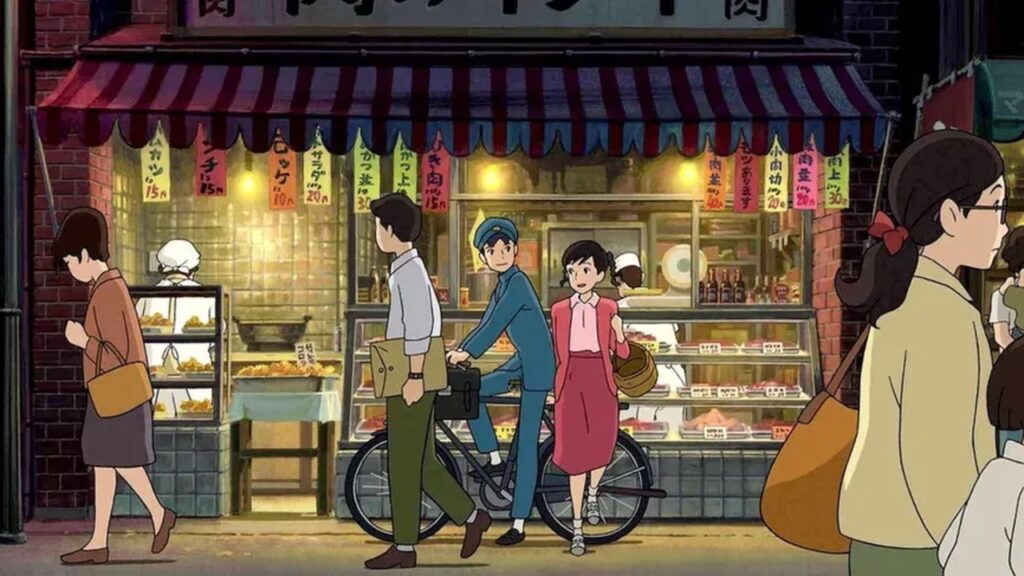
Umi and Shun are driven by the purpose to protect and preserve a space that is built by a community. While Shun provides the much-needed charisma, Umi symbolizes tact, will, and perseverance. The debate, the newspapers, and even the trip to Tokyo prove that the characters reshape and reinvent what a post-war youth should look like.
It’s dilapidated and shanty, but most importantly, the Latin Quarter holds utmost significance in Goro Miyazaki’s film. They say students would go so far as to even preserve the dust that settles down on the old railings and windows. A bit of an exaggeration, yes, but the building serves as a foundation for the romance and for the students’ legacy. There are philosophers, scientists, math nerds, weather forecasters, and aspiring journalists in the making.
The Latin Quarter is a space where they dare to dream, and it’s precisely this dream that they so much wish to save and preserve, not just the history. It is a hub of revolution, of ideas, and of a student movement. Although in shambles, the clubhouse brings both female and male students together, where the high school students help each other out. Together, they clean and rebrand the house instead of succumbing to the Board’s decision of demolition. Truly, this film is about preservation.
Where characters discussed democracy and freedom, Umi and Shun proved that individuals can reinvent and reimagine themselves through a shared goal and perspective while still holding on to the past. That they can rebuild a future and still honor what’s left of history.
You might also want to read: Top 10 Underrated Crime TV Series You Should Not Miss