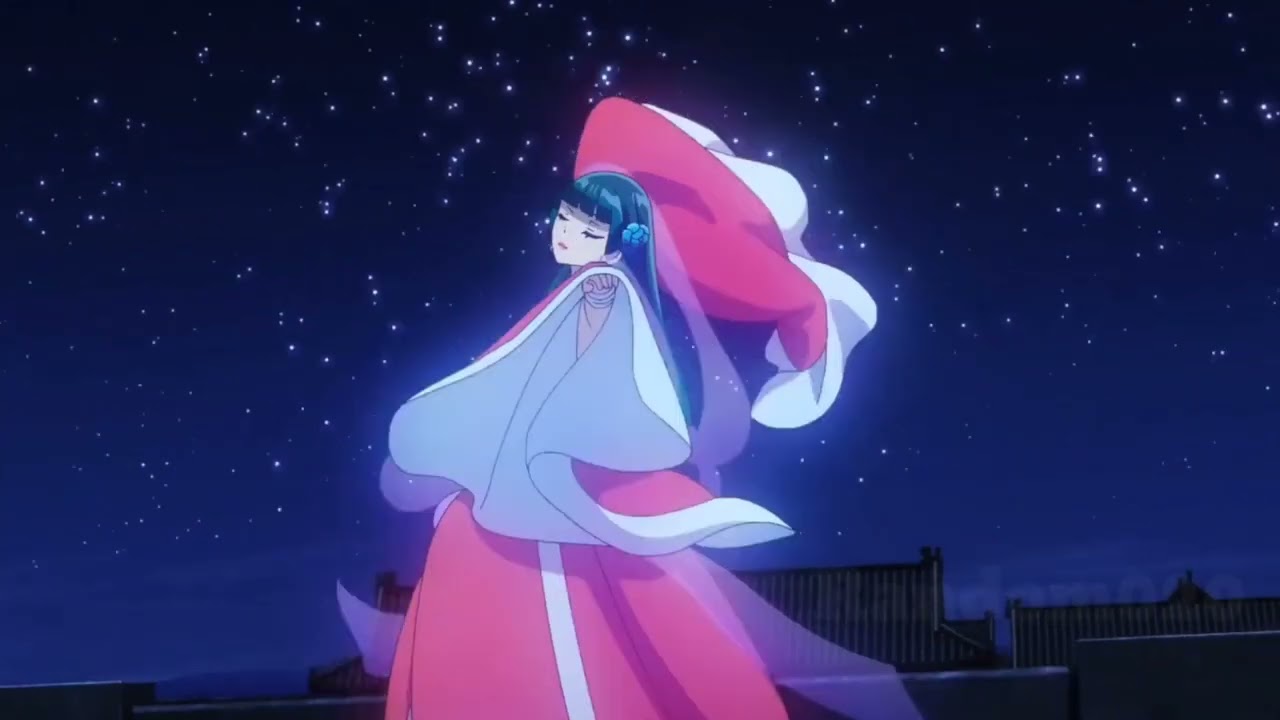
One of the greatest things about ‘The Apothecary Diaries,’ which navigates court politics and its conspiracies, is its approach to mystery. The seinen series also dives deep into character dynamics and inner turmoil, communicating them through one of the most vibrant and eloquent mediums: dance.
Natsu Hyuga’s masterpiece meets the finesse of the OLM studio that carefully choreographed these scenes. The dance sequences, which are craftsmanship at its best, aren’t merely aesthetic and ornamental. They are also essential narrative tools, and here’s how.
Fuyou’s Rooftop Dance: A Prayer For Her Lover
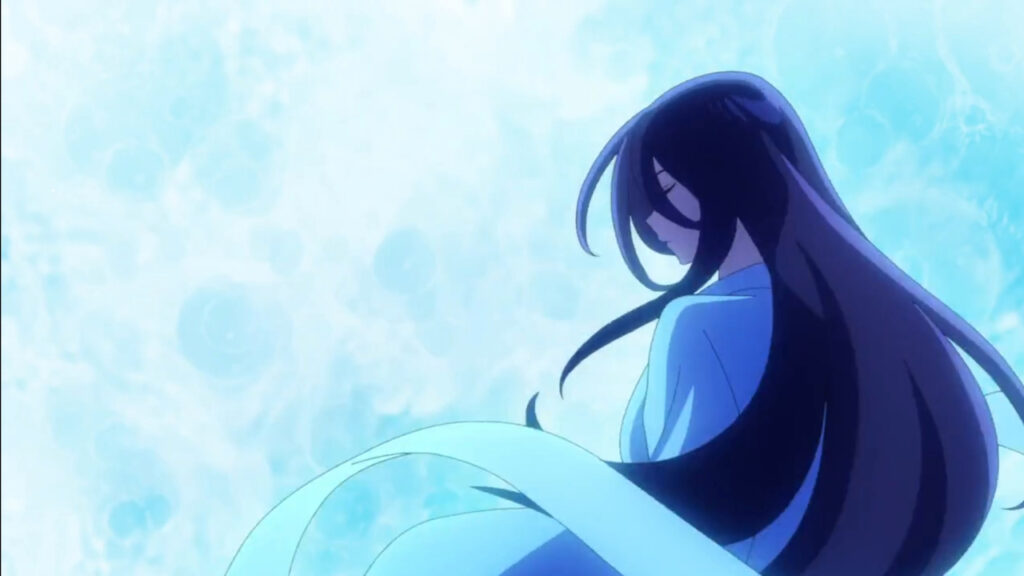
Lady Fuyou’s story is tragic, to say the least. She is the daughter of the King of Anan, a vassal state under the jurisdiction of the Li Empire. Her marriage to the Emperor comes purely against her own will. In reality, she harbors a love for her childhood sweetheart, who is in the military. It becomes evident in her attempts to distance herself from the Emperor.
For instance, she sabotages her dance performance by tripping, hoping he would lose interest in her. She also fakes the symptoms of a woman possessed by a ghost, who dances on the harem rooftop. Unsurprisingly, the movie terrifies almost everyone. But alas, in the first season’s third episode, Maomao uncovers the ghost’s true identity: Fuyou.
Related: The Tragically Dark Reality Hidden Behind Cocubine Loulan’s Introverted Persona
Turns out, she dresses in a pure white ensemble and dances away under the full moon. The apothecary also notices that the concubine resembles a cotton rose, especially in the anime’s English dub. But how does the dance become symbolic in this case? Well, Fuyou remains loyal and faithful to the military officer.
She prays for her beloved’s safety while staying with the Emperor and escaping his attention. She dances under the moonlit night, dressed in white, conveying her prayers for her safety. The last dance is her celebration, the presentation of her most authentic self.
The Imperial Palace eventually sets her free, and she finally reunites with her lover, who is now a high-ranking officer. OLM Studio has brilliantly portrayed the sequences through the color schemes. This applies to her clothing as well. As a consort, she wears aqua blue and pink, but transitions to stark white in her ghost form.
Maomao’s Courtesan Dance: A Symbol Of Fulfillment And Farewell
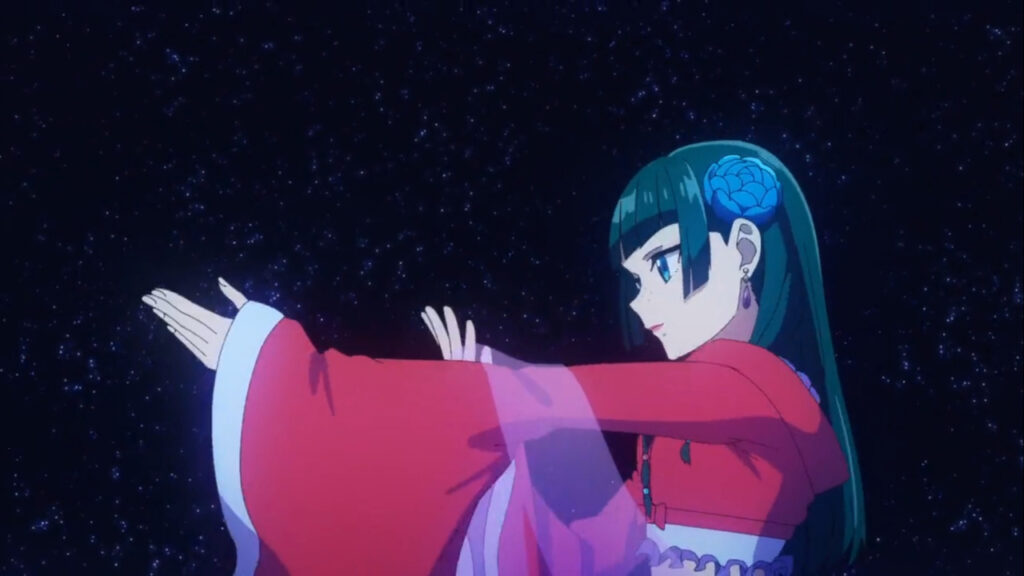
The 24-episode first season concluded on a high note, with the much-anticipated dance by Maomao. The anime had already foreshadowed it, hinting at it in the series’ openings. In the later episodes, the series underlined Fengxian’s fate and Meimei’s sendoff. As a customary ritual, Maomao danced on the rooftop to bid farewell to her sister Meimei, who will now be a protégé of the Emperor’s Go Sage.
In case you missed it: ‘Backrooms’ Creator Says The Hit Horror Is Just The Beginning Of A Much Bigger Story
It runs parallel to Fengxian, bought out by Lakan in a teary scene where he places the go pieces. Maomao’s dance thus becomes symbolic of her relationship with Meimei and a farewell to a mother figure. It is also an act of fulfillment where she carried out this ritual as her obligation. It is customary for other courtesans to dance whenever a high-ranking consort is brought out.
Her mother, Fengxian, spent her last days with Lakan, while Meimei found her abode in Go Sage’s company. It also represents the apothecary’s inner turmoil with her mother, most specifically her strained relationship. For Maomao, dance becomes a close link to both her mother and Meimei. The star provides a more emotional backdrop for the dance sequence, in which she comes to terms with her feelings for her mother.
Old Madam’s Dance: Where Finesse Meets Survival
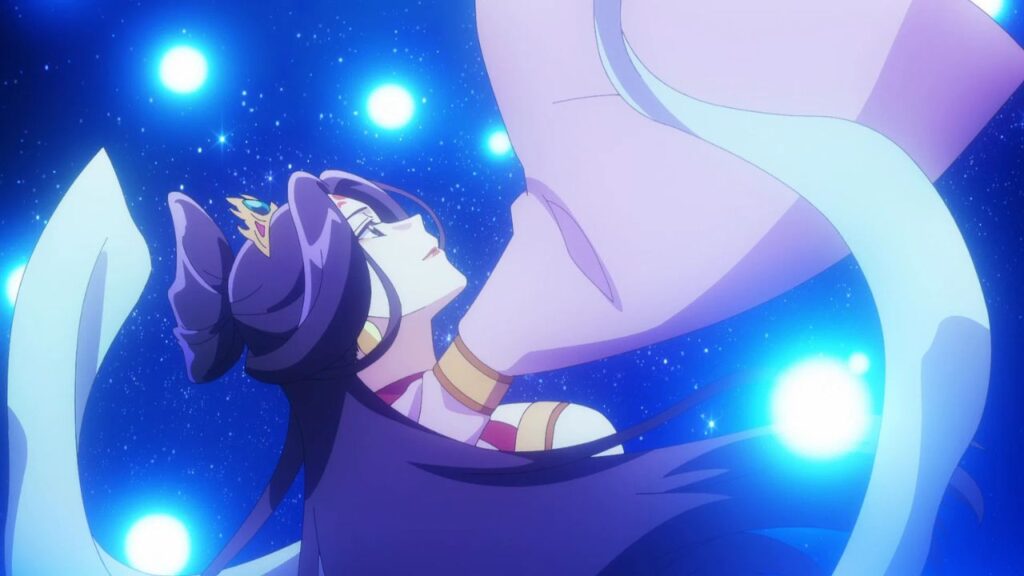
We know the Old Madam as a stingy, money-minded manager of the Verdigris House. Little do we know about her glorious days as a courtesan, highly regarded for her beauty. In her glorious days, she was a prime example of elegance and beauty, which is apparent in her dance. Her charm, wit, and intellect add to her grandeur as a courtesan.
But in reality, her circumstances shape her life. Old Madam’s dance at the Li Capital captivates foreign envoys, and the moths add to the allure. It thus earns her the moniker ‘Tears of the Pearl’ after she performs the mystical dance. She is a stunner with some rivals. One of them covers her dress with dead insects to sabotage her dance performance.
But guess what? The. move backfires, as the glowing of moths initiated the myth of the Moon Fairy. Her finesse came from all those harsh years she spent at the Verdigris House as a courtesan. Even as a high-ranking courtesan, she had no leeway, though she ultimately chose to become a manager.
Her dance signifies not only artistry but also the persistence and resilience she needed to survive. It also shaped her adult personality and thinking, prompting her to nudge Maomao and the three princesses to bring in wealthy clients.
Jinshi’s Moon Fairy: Mystique And Political Intrigue
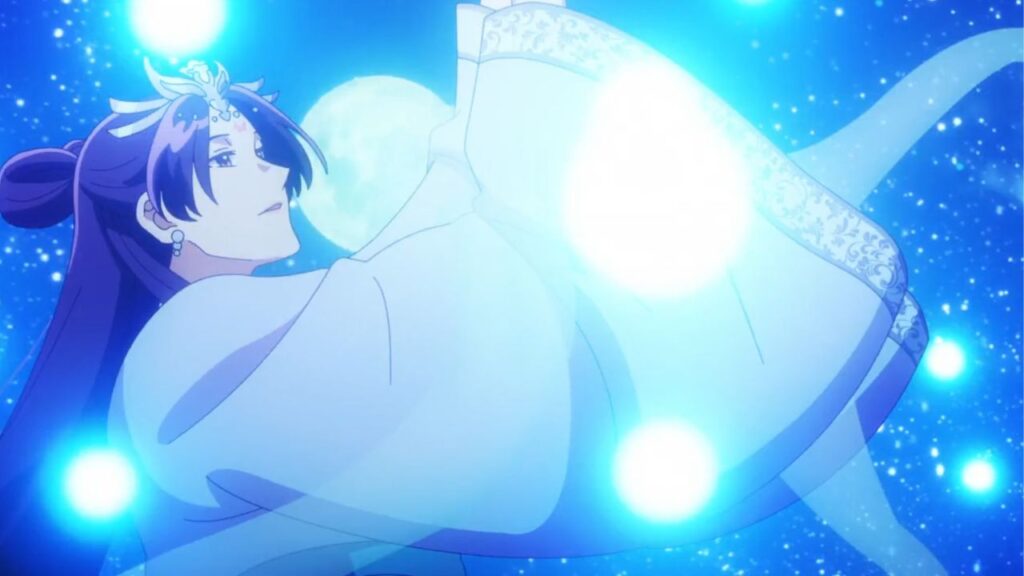
If there’s one scene in ‘The Apothecary Diaries’ that fans eagerly waited for, it was the Moon Fairy dance. It is magical, ethereal, and almost sublime, but there’s a catch. It is all about the mystique and the political intrigue played out perfectly by both Jinshi and Maomao. The show establishes that the lore of the Moon Fairy draws from Old Madam’s performance, which took place 50 years ago.
Maomao eventually cracked the mystery: it was her rival who had placed the dead insects, which turned out to be the glowing moth.
Jinshi fits the bill because of his build and his surreal beauty. Regarded as a eunuch, he has a separate fanbase for his beauty. It is also because of this charm that he can outmaneuver the political envoys, Ayla and Aylin.
The dance magnifies Jinshi into his most beautiful self, and OLM elevates the sequence’s magical nature. The blue clothes paired with the orbs (moths) are simply bewitching against the backdrop of the moonlit night. It is followed by Jinshi’s disappearance, which adds to the mystery and the myth of the fabled Moon Fairy as a whole. The dance also retains the Li Empire’s status as a culturally strong and potent nation rooted in elegance and grandeur.
Loulan’s Metamorphosis: Finding Liberation In The Final Dance
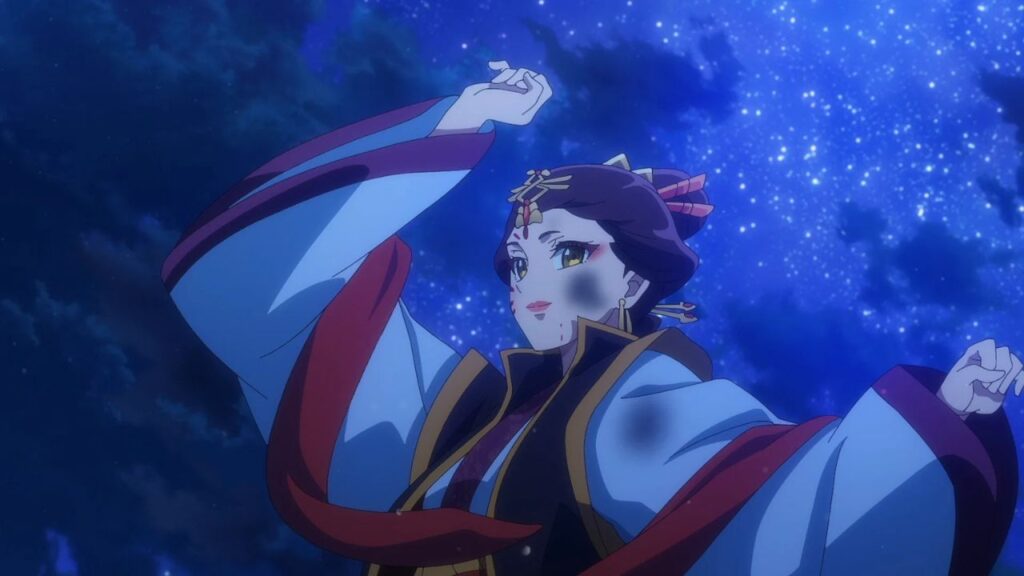
Of all the dances in ‘The Apothecary Diaries,’ Loulan’s dance is a major tearjerker. It closes the curtain on season 2 and gives a gut-wrenching farewell to one of the most memorable characters in the series. Loulan starts her journey in the Imperial Court as a pure consort of the Garnet Pavilion. It’s because of her lavish, luxurious taste that people often deem her haughty, unapproachable, and even intimidating.
But in reality, it’s a persona to mask her real intentions to save the Shi clan children and to hold her parents accountable for the betrayal. The rebellion would have resulted in the children ending up as collateral, so she used the resurrection drug. The dance becomes her breakaway, a moment where she is her authentic self. She dances, not out of obligation, nor to serve a political duty or a prayer.
It is a dance to express, not to impress, as evident in her movements. Loulan’s movements aren’t structured and calculated but free-flowing and liberated. This is after the death of her mother, father, and her carefully orchestrated scheme to save the Shi children. What amplifies the moment is Suirei’s helplessness as she watches her sister get shot in the end.
These symbolize her making peace with her fate before falling off the roof. The twirls and swirls symbolize her freedom, newfound identity, and liberation from the responsibilities of the Shi Clan. She dances to her heart’s content and is even seen laughing, which is a turning point in the story. All her life, her trajectory was marked by conformity, rules, and obligations.
In this case, she lets go of her life, only to adopt a new identity as Tamome. The dance is all about finding peace, self-discovery, and resolution, followed by rebirth. In conclusion, ‘The Apothecary Diaries’ weaves stories, emotions, and resolution all too well with several media.
There are flowers, myths, and lore, but dance tops them all. It is the beautifully articulated and curated dance that sets the series apart from other seinen anime. What’s your favorite dance from the series? Let us know in the comments below.
You might also like to read: The Forgotten Silent Film Star Who Inspired Charlie Chaplin