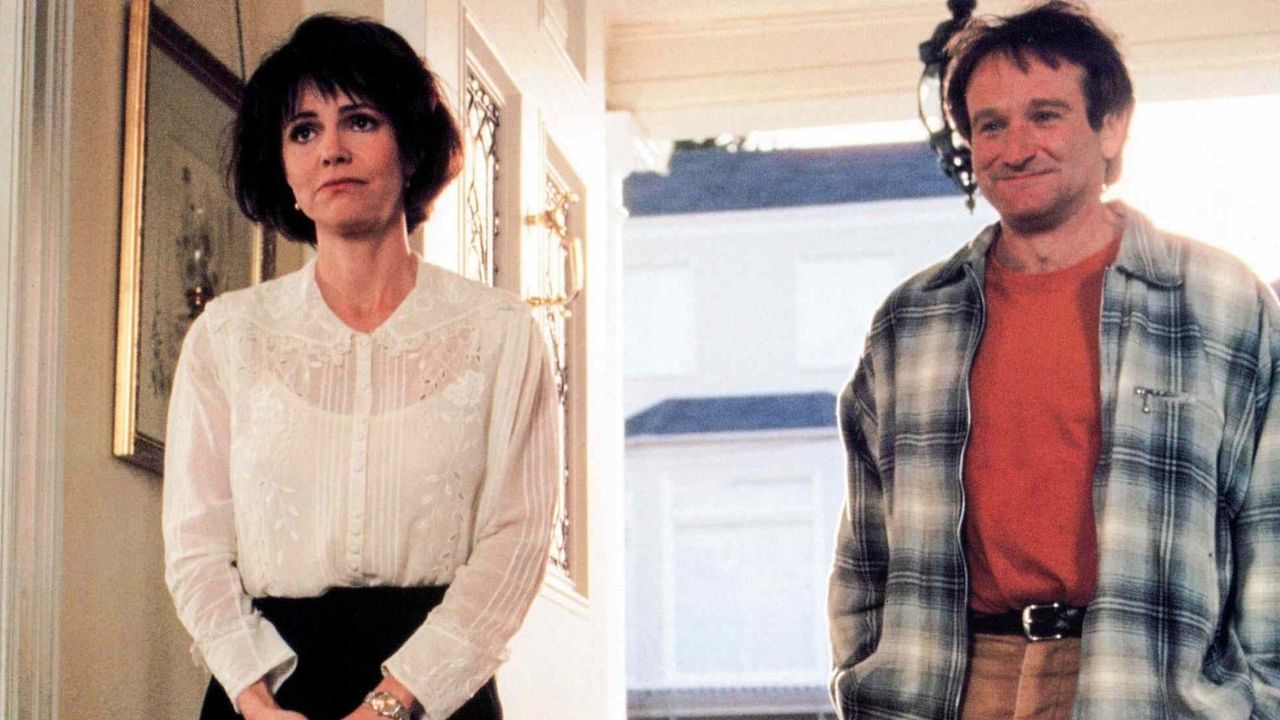
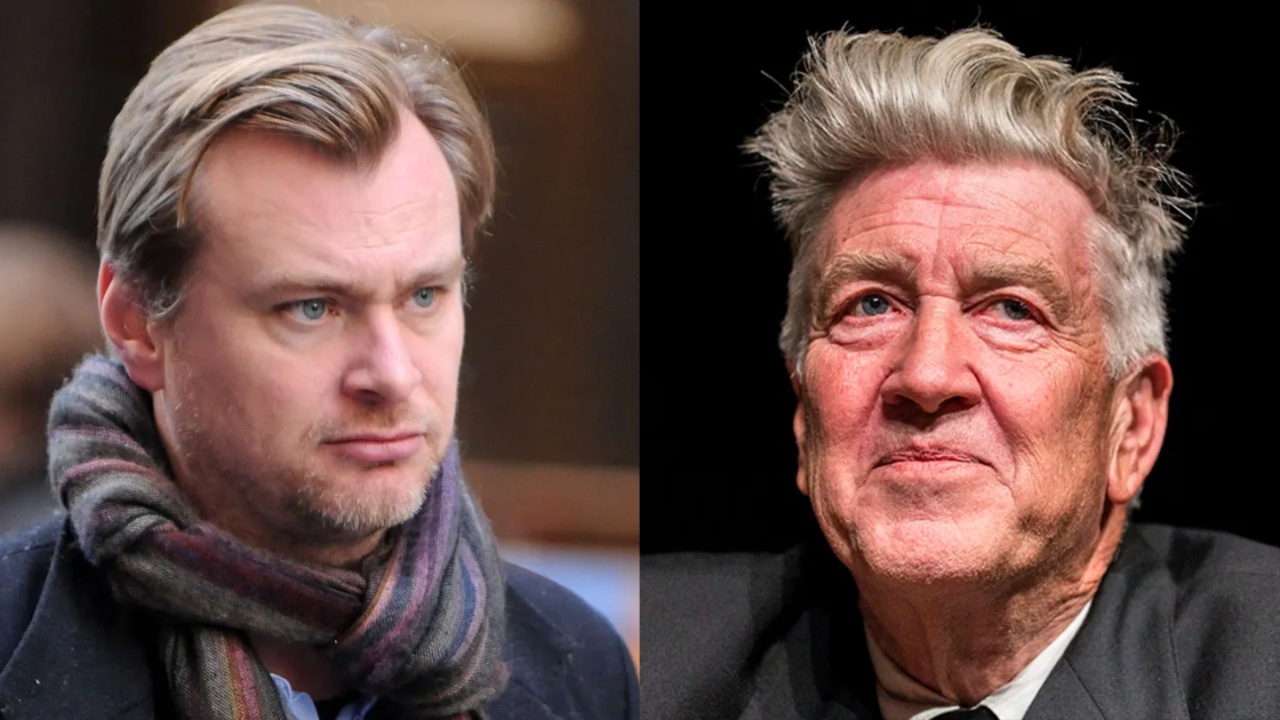
For the director of ‘Inception‘ and ‘Oppenheimer,’ the path to success was almost derailed by a 1997 surrealist noir. Christopher Nolan once revealed he nearly walked out of David Lynch‘s ‘Lost Highway,’ a film that ultimately rewired his brain and gave birth to his masterpiece, ‘Memento.‘
In the pantheon of modern cinema, Christopher Nolan is known for his icy control and architectural precision. David Lynch, by contrast, is the master of chaos, intuition, and the subconscious. Yet during an interview reflecting on his creative origins, Nolan confessed that his entire career trajectory hinged on a moment of profound confusion in front of a Lynch film.
Nolan’s Frustration with Lynch’s Psychogenic Fugue Narrative
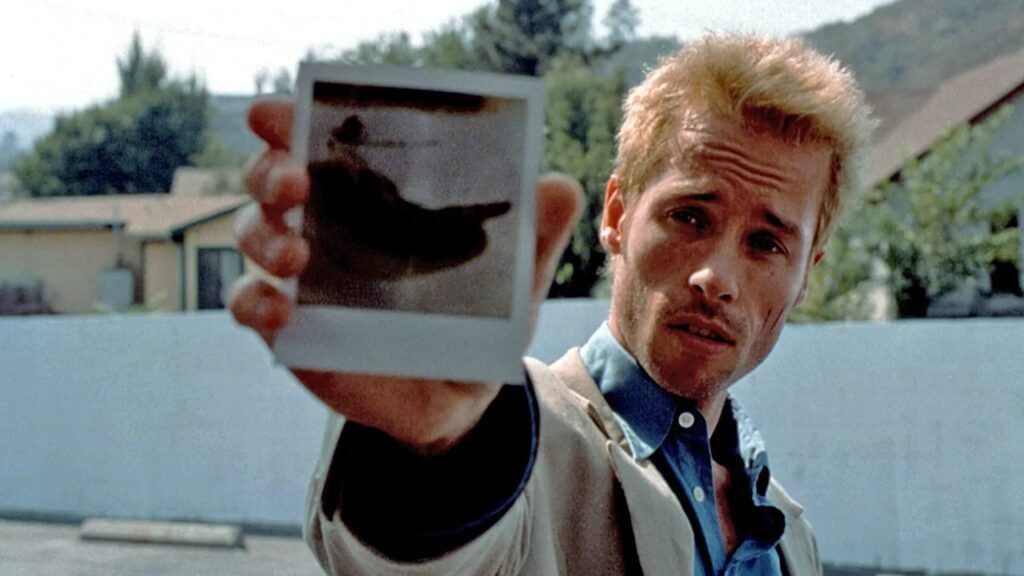
The year was the late 1990s. Nolan was an unknown struggling to break through, working on the script for what would eventually become ‘Memento,’ the film that would launch him into the stratosphere. To decompress, he threw on David Lynch’s ‘Lost Highway,’ a film notorious for its “psychogenic fugue” narrative where reality melts, identities swap, and logic takes a backseat to nightmare logic.
The result was not inspiration, but frustration. “I’m a Lynch fan,” Nolan admitted, “but I was left, like, ‘What the hell was that?’ It felt too strange, too long. I almost didn’t finish watching it.“
For a director like Nolan, who values clarity of mechanism even in the most complex timelines, the experience was jarring. He saw a puzzle box with no solution, a story that refused to obey the laws of cause and effect. He nearly ejected the tape, ready to dismiss the film as pretentious nonsense. Then something strange happened.
Remembering ‘Lost Highway’ Like a Dream
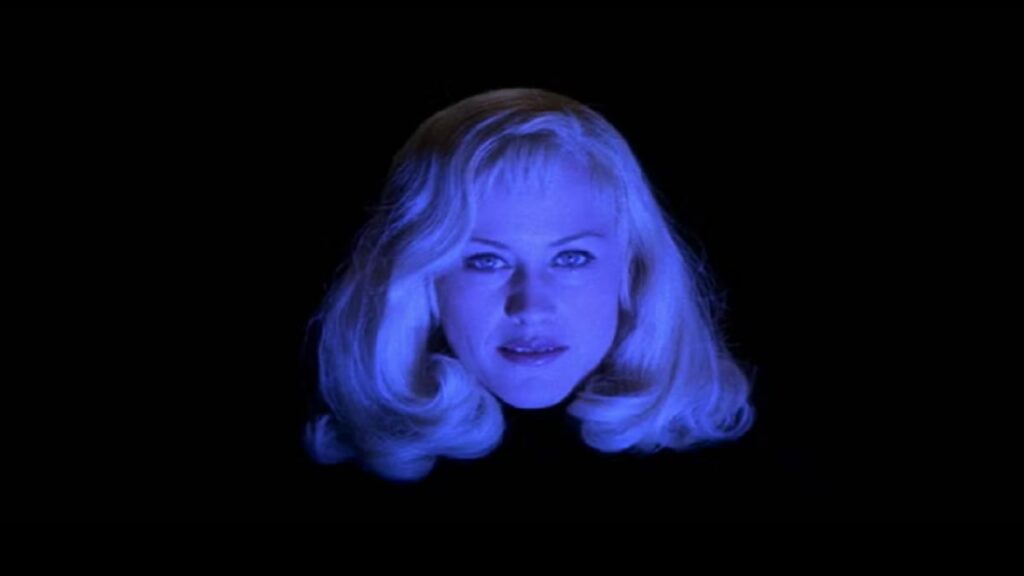
Nolan didn’t think about ‘Lost Highway‘ for a week. But when he did, he realised he wasn’t remembering the film as a sequence of scenes. He was remembering it as an experience. The plot points had faded, but the emotional geometry of the film, the disorientation, the paranoia, the feeling of occupying a fractured identity, remained lodged in his psyche.
“And then, about a week later, I remembered the film as if I were remembering one of my own dreams,” Nolan explained. “I realised that Lynch had created the shape of a film that would project a shadow in my memory, assuming the shape of a dream.”
In case you missed it: Matt Damon Says Even Tom Holland Was Jealous of Zendaya After Christopher Nolan’s Rare Praise on ‘The Odyssey’
This was the eureka moment. Nolan, who had been trying to write a straightforward thriller about a man with no short-term memory, realised he had been thinking about storytelling the wrong way. He had been trying to impose order on chaos. Lynch taught him that the chaos was the order.
He described this realisation using a geometric metaphor that is uniquely his own. “It’s like a hypercube, the shadow of a four-dimensional object in our three-dimensional world.”
How ‘Lost Highway’ Shaped the Structure of ‘Memento‘
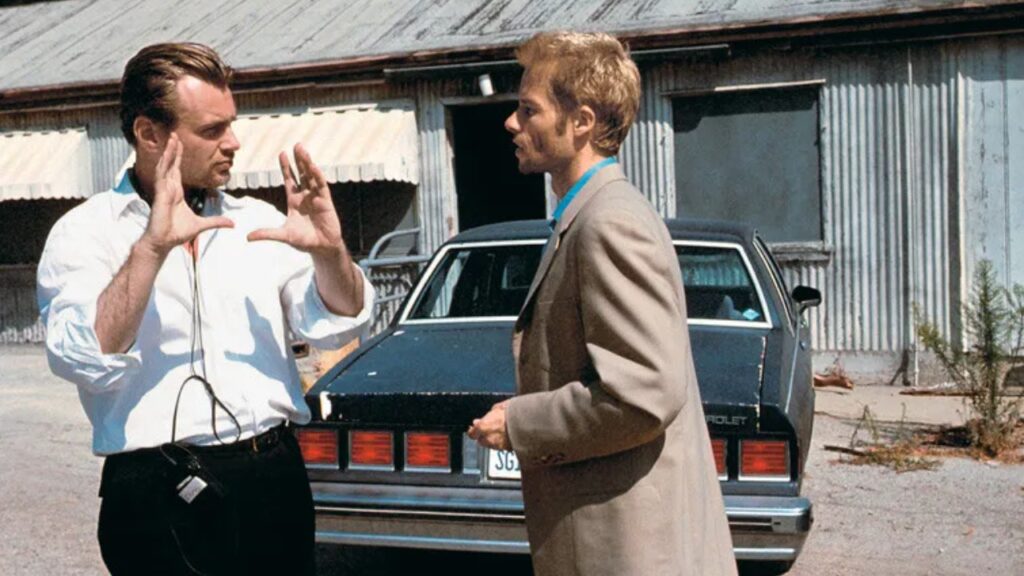
Where Eisenstein argued that montage, Shot A plus Shot B equals Thought C, was the highest aspiration of cinema, Nolan saw Lynch pushing beyond that boundary. Lynch wasn’t just building a narrative; he was building a three-dimensional object that the audience could only perceive through its shadow.
Armed with this new philosophy, Nolan rewired ‘Memento.’ He abandoned linearity not as a gimmick but as a narrative structure designed to project a shadow of confusion into the viewer’s memory. By telling the story backward, Nolan ensured the audience experienced the same temporal vertigo as the protagonist, Leonard, who cannot form new memories.
“Lost Highway was the film that let me understand that the shape of the film is what the audience takes home,” Nolan later reflected. The plot is forgotten, and the structure is felt.
When ‘Memento‘ was released in 2000, it became a cultural phenomenon, earning Nolan his first Academy Award nomination and cementing his reputation as an architect of the mind. While ‘Lost Highway‘ initially baffled critics and audiences, its structural DNA is visible in almost every Nolan film that followed, from the spinning totems of ‘Inception‘ to the time-bending handshake in ‘Tenet.’
Nolan’s near walkout serves as a lesson in artistic digestion. He almost rejected one of the most challenging films of the 20th century because it didn’t make sense. But by letting it sit, by allowing the shadow to form, he learned that sometimes the most logical way to depict a confused mind is to abandon logic entirely.
In the end, ‘Lost Highway‘ didn’t tell Nolan a story. It gave him a blueprint for a dream.
You might also want to read: Why Christopher Nolan’s ‘The Odyssey’ Black Armor May Be More Historically Accurate Than Fans Think