
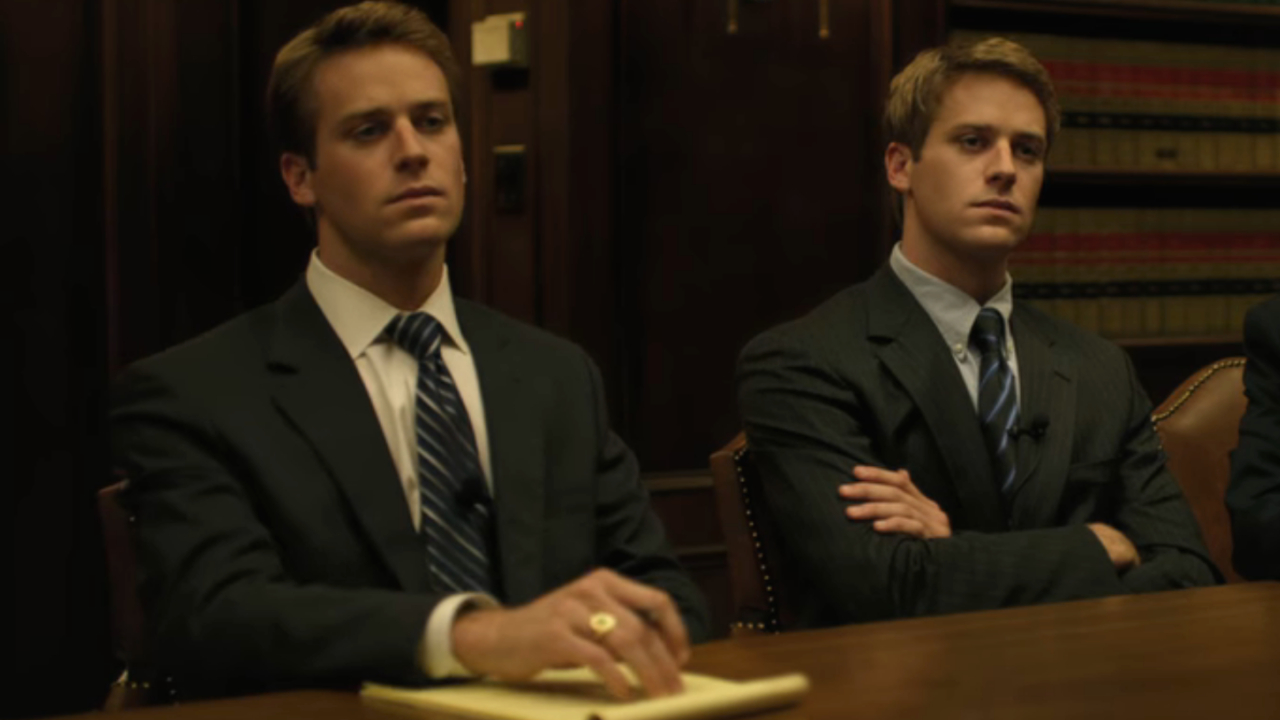
It’s easy to assume Cameron and Tyler Winklevoss were played by real identical twins in ‘The Social Network.’ The Harvard rowers share the screen throughout the film, moving, speaking, and interacting so naturally that the illusion never draws attention to itself. But the truth is far more unusual.
The flawless portrayal of the Winklevoss twins to life required months of preparation, an actor whose face audiences rarely saw, and visual effects that quietly changed what filmmakers could do with twin performances.
Josh Pence Spent Months Becoming Unrecognizable Winklevoss Twins
Finding actors who could convincingly play the Winklevoss twins proved far more difficult than it first appeared. Director David Fincher wanted both brothers to interact naturally on screen rather than rely on traditional split-screen shots, which often limited movement and camera angles.
Related: ‘The Social Reckoning’ Reveals The Fallout ‘The Social Network’ Never Explored
After struggling to find identical actors who fit the roles, the production took a different approach. Armie Hammer brought the voice, facial expressions, and personality needed for both brothers while Josh Pence supplied the physical presence.
Standing 6-foot-5 with a similar build, Pence played one of the twins throughout filming while Hammer played the other. Every conversation, handshake, rowing sequence, and shared scene depended on Pence delivering a complete performance opposite Hammer.
Making the illusion believable required far more than wearing matching clothes. Before cameras rolled, Hammer and Pence spent nearly ten months studying each other’s movements, posture, walking style, and speech patterns.
They worked until their performances became nearly identical, allowing either actor’s body language to match the other’s seamlessly. Pence accepted the unusual assignment, knowing audiences would never recognize most of his work.
Once post-production began, the visual effects team digitally replaced Pence’s face with Hammer’s. The arrangement even earned him an unusual distinction in entertainment circles as “the guy in the Facebook movie without a face.”
Despite that, his performance remained essential because every interaction between the brothers depended on his physical presence.
Visual Effects Refined The Duo’s Performances
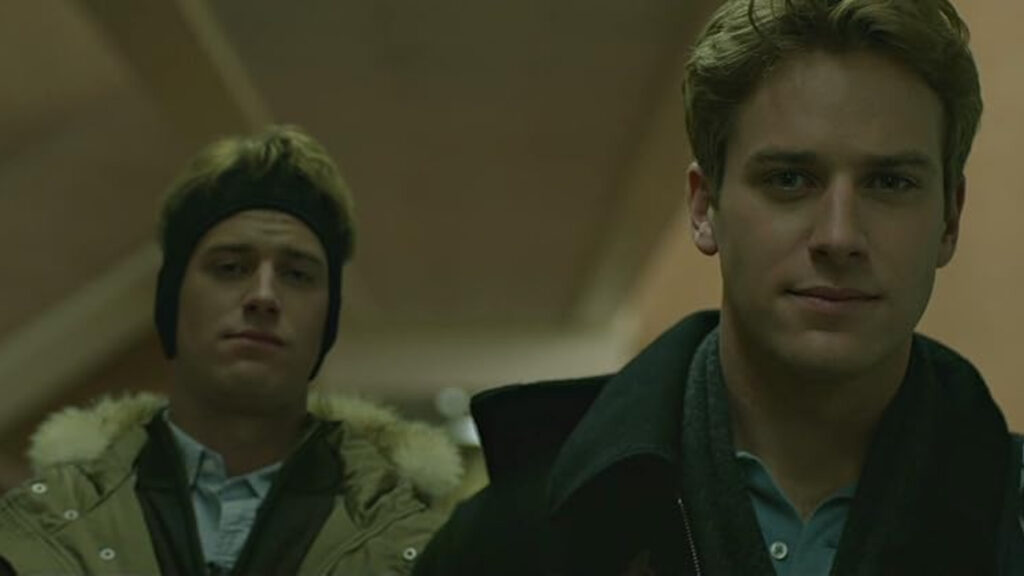
Once filming wrapped, Fincher’s visual effects team began combining the two performances. Simpler scenes used familiar split-screen techniques whenever only one twin faced the camera.
In Case You Missed It: When Andrew Garfield And Jesse Eisenberg Were Convinced ‘The Social Network’ Was A “Bad” Movie
Those shots let Hammer perform each role separately before the visual effects team combined both takes into a single image. More complicated scenes demanded a far more advanced solution. Whenever both twins faced the camera together, visual effects artists digitally replaced Pence’s head with Hammer’s.
To make that possible, Hammer performed every scene twice. After finishing the live-action shoot, he entered a motion-capture studio, sometimes called a “volume,” and recreated the second brother’s facial performance while carefully matching Pence’s original movements.
Fincher had used similar visual effects in ‘The Curious Case of Benjamin Button,’ where artists digitally mapped Brad Pitt‘s face onto a much smaller body. However, ‘The Social Network’ took that technique a step further.
Cameron and Tyler could walk side by side, exchange objects, argue face-to-face, and even row together. The illusion looked so seamless that most audiences never questioned how the scenes were filmed. Fincher still found a small way to acknowledge Pence’s contribution.
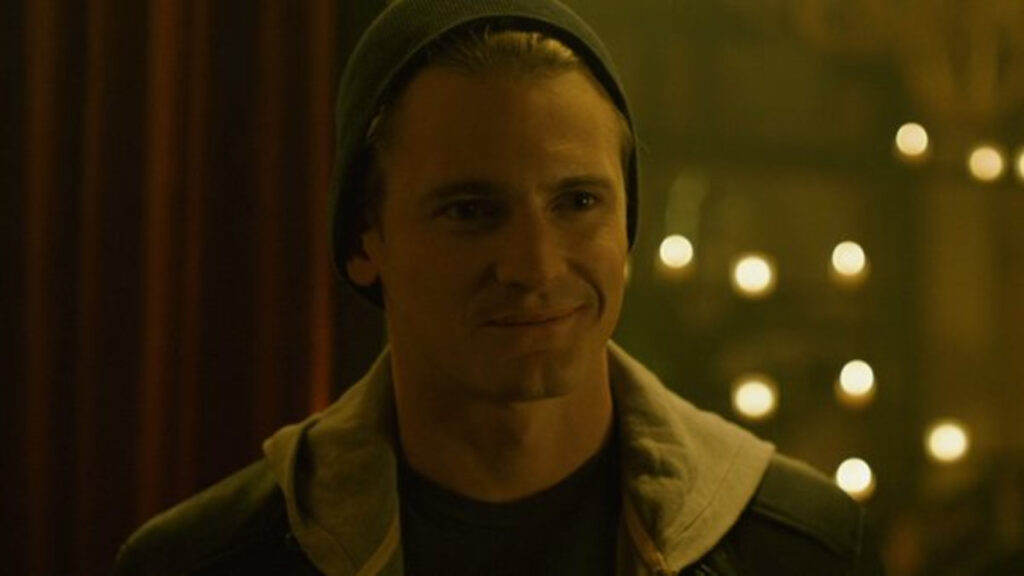
Pence appears during a later party scene when Jesse Eisenberg‘s Mark Zuckerberg and Andrew Garfield‘s Eduardo Saverin force a man out of a bathroom before using it themselves. That frustrated partygoer is none other than Pence, featuring briefly with his own face intact.
Over a decade later, many viewers still believe the Winklevoss twins were played by identical brothers. That lasting illusion says as much about Pence’s unseen performance as it does about Hammer’s work and Fincher’s groundbreaking visual effects.
You Might Also Like To Read: How A Five-Artist Team Pulled Off The Oscar-Nominated VFX Of ‘Everything Everywhere All at Once’