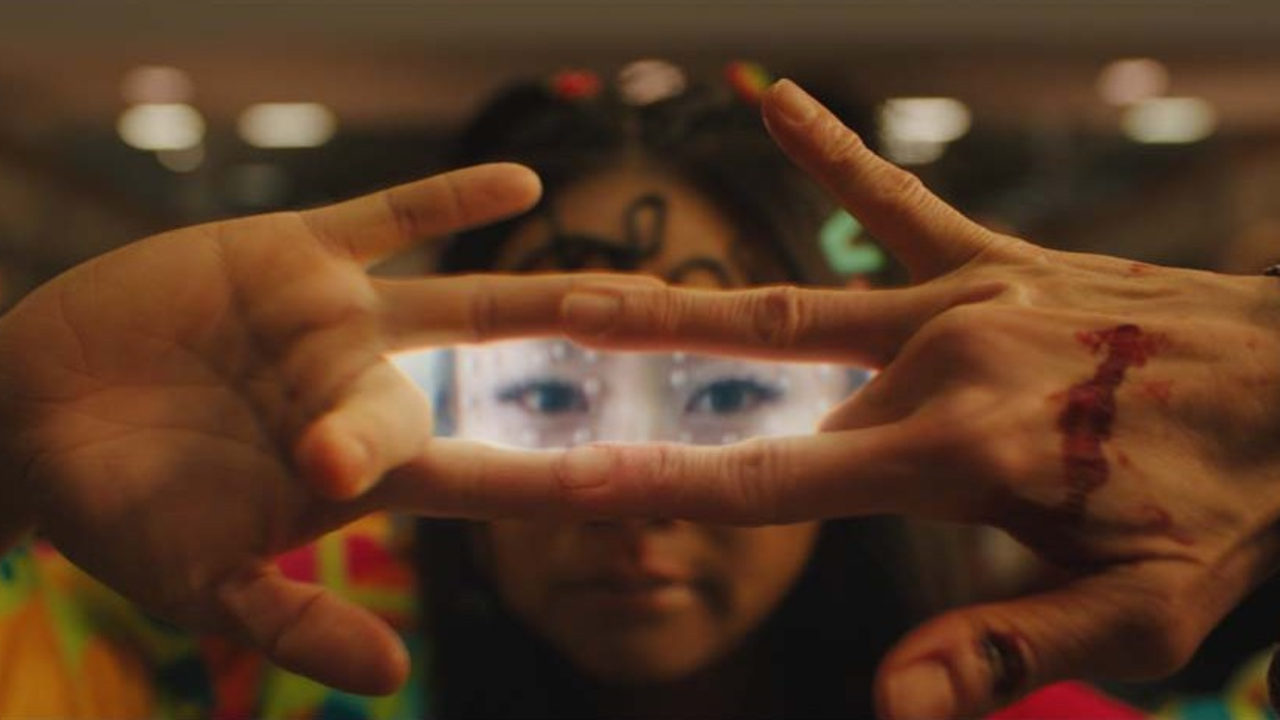
Watching ‘Everything Everywhere All at Once‘ (2022) you could never guess that most of its visual effects came from a handful of people working from home. The film jumps between dozens of universes, packs more than 500 VFX shots into its runtime, and looks every bit as ambitious as a major studio blockbuster.
Yet the people behind those visuals didn’t work inside major Hollywood visual effects studios. Instead, the Daniels, an American filmmaking duo, built a tiny team of longtime collaborators and trusted them to bring one of the decade’s most imaginative films to life.
The Daniels Chose Close Friends Over A Massive VFX Studio
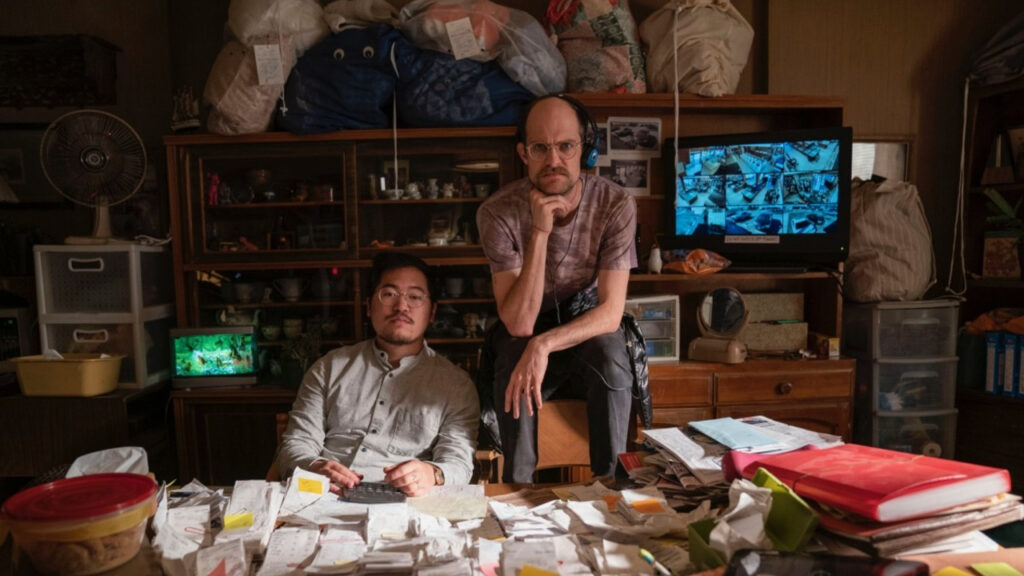
Rather than handing the project to a large visual effects company with hundreds of specialists, Daniel Kwan and Daniel Scheinert aka the Daniels assembled a small team of people they had known for years and had already collaborated with them on music videos, short films, and independent projects.
Related: The Hilarious Reason Justice Smith Secretly Sabotaged The ‘Dungeons & Dragons’ VFX Team With These Wild Hand Gestures
That familiarity mattered because the movie constantly shifted between comedy, martial arts, science fiction, and surreal fantasy. Zak Stoltz stepped in as visual effects supervisor despite never having supervised a feature film before.
He assembled a group that included Ethan Feldbau, Benjamin Brewer, Jeff Desom, Evan Halleck, and Matthew Wauhkonen. Together, they jokingly called themselves Pretend VFX, an artist collective that approached every shot as a creative challenge instead of following a rigid studio pipeline.
Feldbau first met the Daniels at Emerson College, where both had their films selected for the school’s Los Angeles film festival. Their friendship continued after graduation through music videos and smaller productions, eventually culminating in ‘Everything Everywhere All at Once.’
“The Daniels really wanted to staff up with friends they had previously worked with,” Feldbau explained. “But there was definitely a learning curve taking on such a large project.” Meanwhile, Desom’s connection began through Vimeo after Dan Kwan discovered one of his music videos.
The two later met at a Vimeo awards ceremony and quickly developed a close working relationship. Desom even recalled spending a week “locked in an apartment with them…sleeping under the desk while projects were rendering.” Years of collaboration created the trust needed to tackle over 500 visual effects shots with such a small crew.
Working From Home Changed Everything
Production was underway just as the COVID-19 pandemic reshaped the film industry. Instead of gathering in a single visual effects facility, the team spread across different locations and completed the movie from bedrooms and home offices.
In Case You Missed It: Top 10 Underrated Sci-Fi Movies That Have A Massive Cult Following
Creating the effects was only part of the challenge. Every artist also needed constant access to updated edits, assets, and renders while working remotely. Stoltz designed an affordable workflow that kept everyone connected throughout post-production.
The team relied on a Dropbox alternative that automatically synchronized each day’s work across everyone’s computers overnight. “It wasn’t the most exciting or romantic technique,” Feldbau admitted, “but I cannot believe we were able to do what we did without being under one roof.”
The artists also avoided the expensive infrastructure usually associated with major visual effects productions. Instead of relying on massive render farms, the team used Blender, Cinema 4D, Adobe After Effects, and Red Giant tools. Every artist handled multiple responsibilities rather than focusing on a single specialty.
That flexibility helped them solve problems quickly without waiting on another department. Looking back, Feldbau considered the remote workflow one of the production’s biggest achievements. “In reality, we used every old trick in the book, but we did it remotely.”
“We made a 4K movie from home because of the pandemic,” he added. Desom credited the team’s versatility for making that possible. “Every one of us is kind of a jack of all trades. All of us could really be our own mini post house.”
The Bold VFX Choice That Made The Movie Feel Real
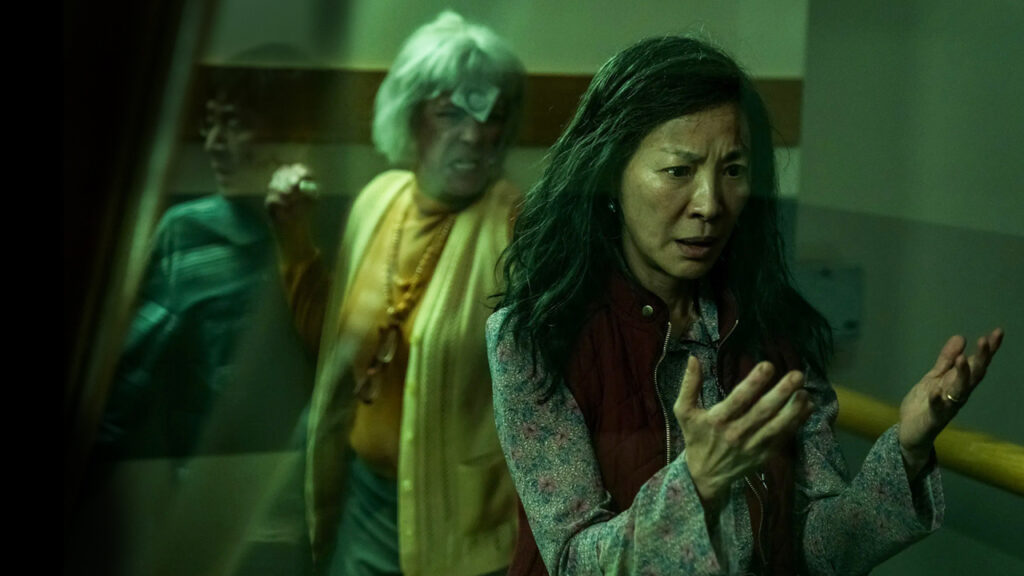
Before post-production began, the Daniels gave the visual effects team one simple creative direction. They didn’t want glossy effects that dominated every frame. Instead, they wanted the movie to feel tactile, grounded, and surprisingly practical, even when impossible things unfolded on screen.
Feldbau said the goal was to create something “more physical, more practical, and more photographic/in-camera than most contemporary VFX-heavy films.” That philosophy influenced every creative decision.
Rather than defaulting to fully digital solutions, the artists continually sought ways to blend practical photography with subtle digital enhancements. The “Everything Bagel” perfectly demonstrated that approach.
Instead of immediately building everything in 3D, the team photographed real bagels hanging from strings after painting them black. They also created a digital version in Blender before comparing the two approaches.
The final shot blended practical photography, CGI, lighting effects, and distortion so seamlessly that audiences couldn’t tell where one technique ended and another began. The same thinking shaped the memorable “Raccacoonie” sequence.
Instead of creating fully digital vegetables, Feldbau suggested solving the problem with simple 2D animation. “We could have gone full CG and 3D modeling, but I proposed doing it in 2D.” Desom used Adobe After Effects to draw and animate the vegetables rather than construct detailed three-dimensional models.
The solution proved faster, cheaper, and more convincing for the style the Daniels wanted. Feldbau later described the experience as “a valuable lesson” because “full 3D might sound like the best solution, but it isn’t the only solution.”
That creative flexibility ultimately became Pretend VFX’s greatest strength. Every member brought experience as a filmmaker, designer, or director. They approached each effect as a puzzle and chose the technique that best served the scene rather than following a predetermined pipeline.
Their work helped ‘Everything Everywhere All at Once’ earn an Academy Award nomination for Best Visual Effects while competing against blockbuster productions with bigger budgets. More importantly, the film proved that creativity, trust, and a small team of passionate artists could rival Hollywood’s biggest visual effects houses.
You Might Also Like To Read: Stanley Kubrick Almost Took On One Of Disney’s Most Beloved Classics ‘Pinocchio’