
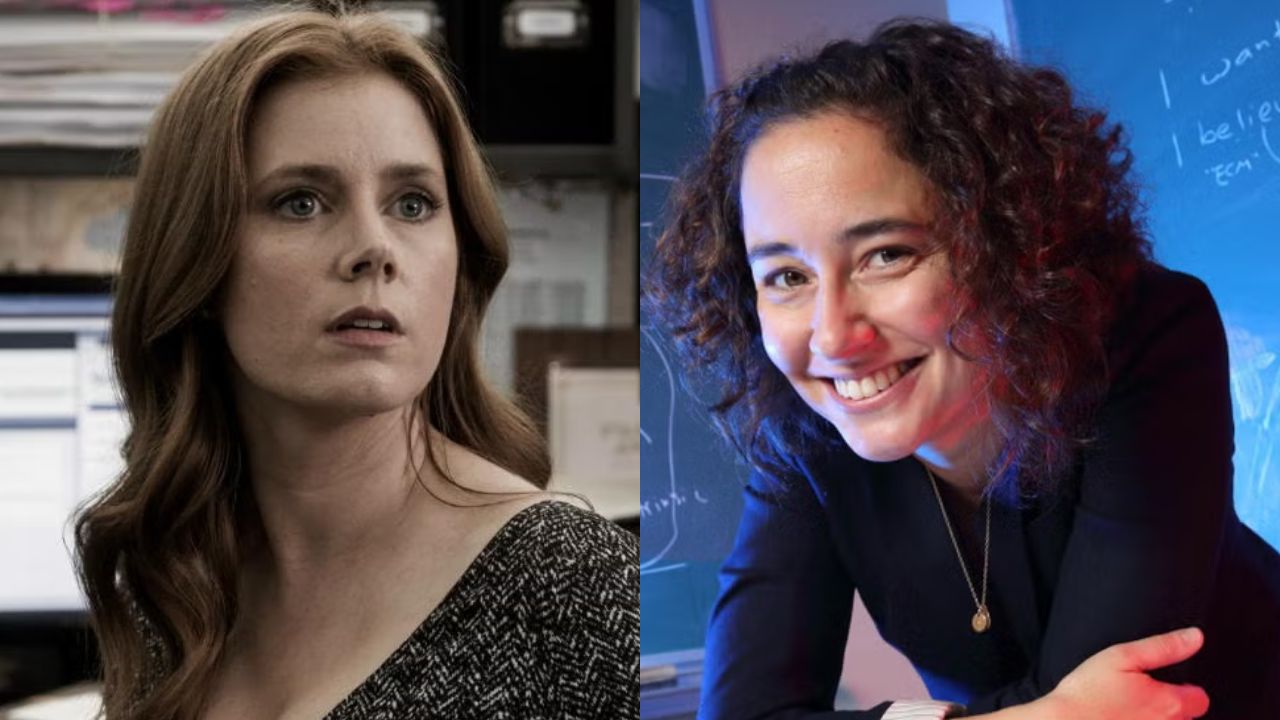
There’s absolutely no denying that Amy Adams has totally nailed the art of communicating with aliens in the 2016 sci-fi thriller ‘Arrival.’ As linguist Dr. Louise Banks, she takes on the complicated task of decoding the heptapods’ mysterious written language. Rather than rushing toward answers, she starts by understanding the basics. The process feels so convincing that many viewers assumed the filmmakers had invented a believable system for the story, but they didn’t.
Instead of developing a new one, the filmmakers brought in a real linguist, Dr. Jessica Coon. Her research focused on languages most people have never heard or spoken. The advice she shared shaped the movie’s key moments. It gave the authenticity that continues to earn praise from the linguistics community.
Dr. Jessica Coon Helped ‘Arrival’ Treat Linguistics Like Real Science
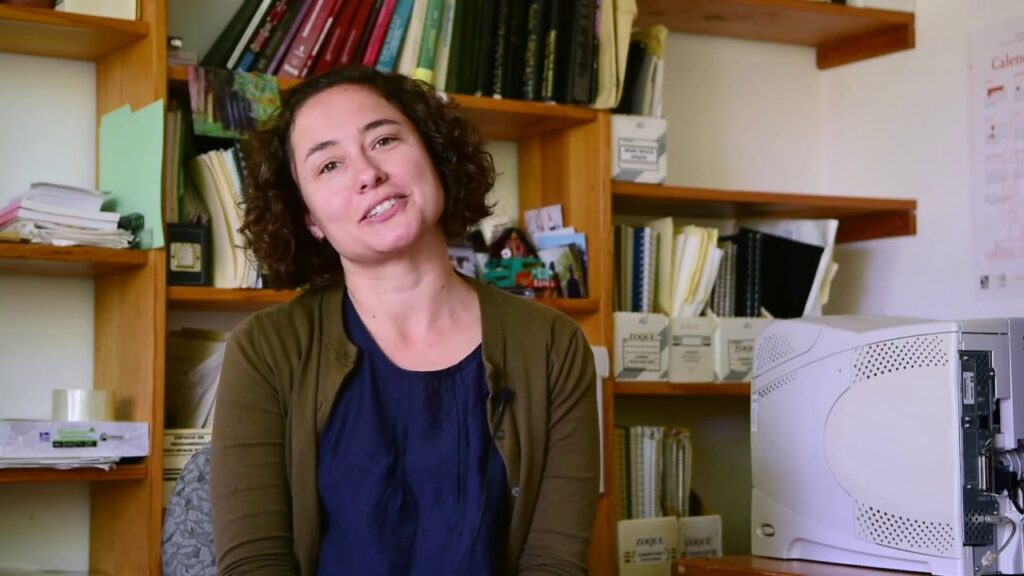
Long before getting involved with ‘Arrival,’ Coon had spent years studying less-studied languages, particularly Mayan languages spoken in Central America. Her research focuses on syntax and language structure, often involving fieldwork with communities whose languages remain underdocumented.
Related: ‘Enchanted’ Star Amy Adams Reveals How A Medical Drama Role Helped Her Save A Stabbed Victim in Real Life
Speaking with Amy Adams about her work, Coon joked that it was probably “the most glamorous thing” she would ever do in her academic career. Reading the screenplay immediately caught the linguist’s attention because it approached first contact in a different way.
The movie didn’t introduce a magical device that instantly translated an alien language. Instead, the story showed a linguist building communication from scratch. Coon found that idea far more believable because it reflected the way linguists approach an unfamiliar language in the real world.
She explained that even if someone encounters a language with no dictionaries or grammar books, human languages still share recognizable patterns. That gives linguists somewhere to begin. An alien language would be a completely different challenge because “we just have no idea.”
At the same time, she argued that any civilization capable of reaching Earth in a spacecraft would almost certainly possess complex communication systems. “There are going to be patterns there, and there are going to be points in common,” she said.
That perspective helped ground one of the biggest ideas in ‘Arrival.’ Instead of treating the language of heptapods like an impossible mystery, the film presents it as a scientific puzzle. It treats it like a mystery that demands patience, observation, and careful analysis before anyone can hope to decipher it.
Amy Adams’ Research Started With The Basics
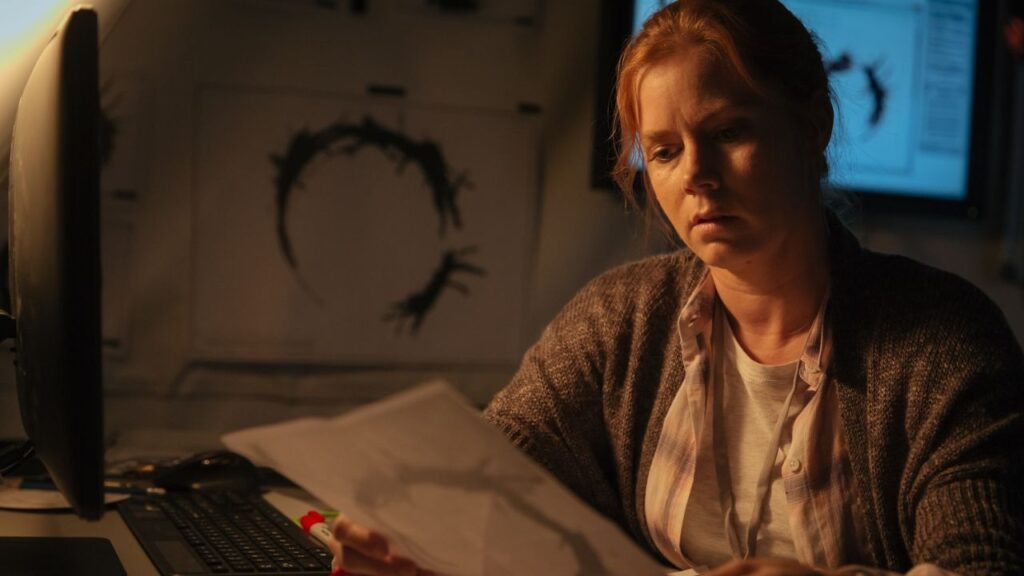
One of Coon’s biggest contributions involved the way Louise Banks approached the heptapods. Throughout the film, military officials repeatedly pressure her to ask why the aliens have arrived. Banks refuses because she knows the question comes far too early.
In Case You Missed It: “I Used To Pretend To Be Her”: The Childhood Icon Amy Adams Now Regrets Playing
Before discussing purpose or intention, she has to establish a shared vocabulary. Coon praised that approach because it mirrors real linguistic fieldwork. “We can’t go straight to the enormous theoretical question,” she explained.
“We have to make sure we’re starting on a solid foundation of simpler things.” Asking an unfamiliar species “What is your purpose?” sounds straightforward, but even a word like “you” could carry completely different meanings.
It might refer to one individual, an entire species, or everyone standing in the room. Moreover, Coon’s advice extended beyond dialogue. She reviewed the screenplay and suggested changes to the linguistic terminology. She also helped fill Banks’ office with authentic textbooks, syntax diagrams, and homework from her own students.
Those details appear only briefly on screen, but they helped create the feeling that Banks was working like a real scientist instead of a movie genius making impossible breakthroughs overnight. Coon admitted there was one small detail she would have changed.
Early in the film, Forest Whitaker’s character introduces Louise Banks as someone at the top of the government’s list for translation. Coon pointed out that linguists are often mistaken for translators, even though the disciplines are very different.
Apart from that, she believes ‘Arrival’ captured the scientific process remarkably well. Nearly a decade after its release, the film remains one of the few Hollywood productions that earned widespread praise from the linguistics community.
You Might Also Like To Read: Why James Cameron Thought Marvel Was Getting Wolverine Wrong In ‘X-Men: Days of Future Past’