Tom Cruise has shared the screen with enough screen legends to recognize genius when he sees it. So when he labeled Jack Nicholson a true “wordsmith” last year while reflecting on ‘A Few Good Men,’ it was an appreciation for absolute precision.
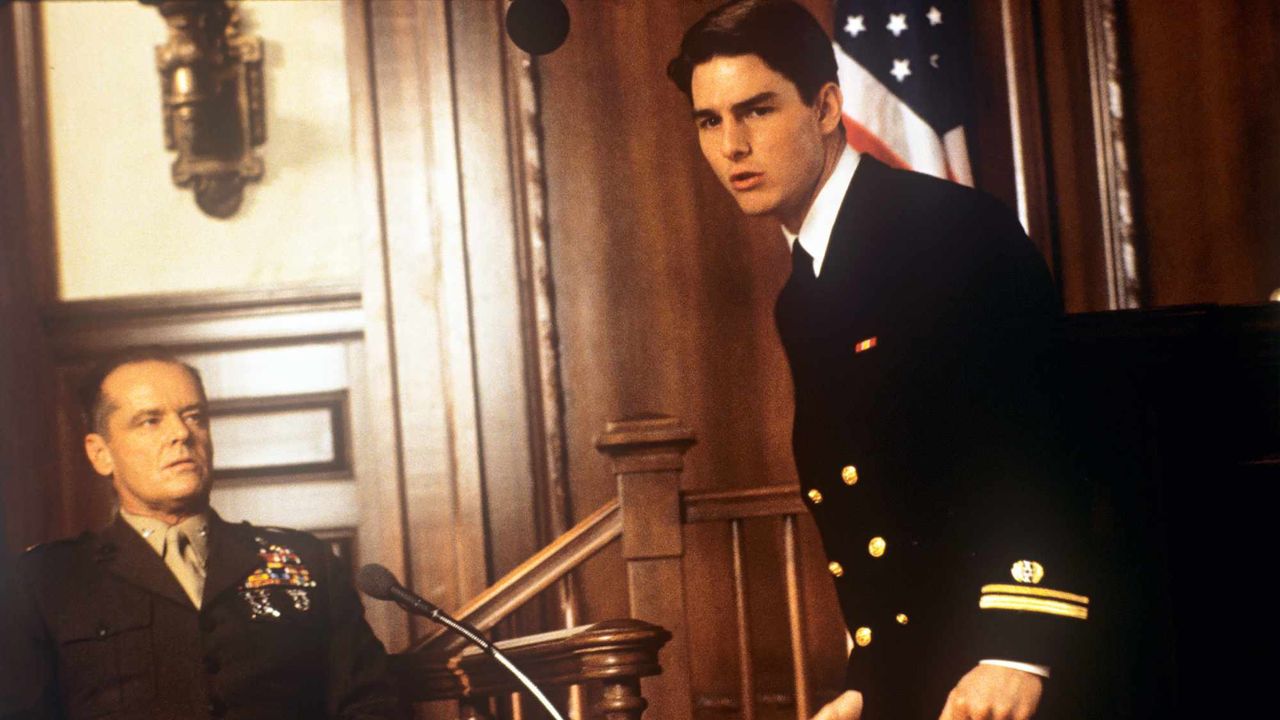
Speaking at a British Film Institute event, Cruise revisited the intense courtroom showdown between his Lt. Daniel Kaffee and Nicholson’s Col. Nathan R. Jessup. For Cruise, the brilliance of that iconic confrontation went far beyond the pitch or menace of “You can’t handle the truth.” It was about the way Nicholson shaped Aaron Sorkin’s dialogue, controlled the scene’s rhythm, and made every line feel as if it belonged to him alone.
Tom Cruise Watched Jack Nicholson Wielding Sorkin’s Words
Cruise said the famous courtroom sequence felt special while it was being filmed. He recalled looking around the set and seeing the rafters packed with people who had come just to watch Nicholson and Cruise play out the scene.
Related: How Tom Cruise Rebuilt His Career After Scientology Nearly Destroyed It
As soon as the word spread about the filming of the showdown sequence, people flocked in to see it in person. What stood out most to Cruise was the way Nicholson handled screenwriter Aaron Sorkin’s language, which was fast, sharp, and heavily stylized, and could sound stiff in the wrong hands.
Cruise said Nicholson attacked it like a performer who knew exactly where to place every beat, comparing him to “a great crooner” who could carve up a monologue and make it sing. That is when Cruise called Nicholson a true “wordsmith.”
He didn’t suggest that Nicholson rewrote the material but meant that the actor knew how to break open a speech, stress the right words, and bend the rhythm of a line without losing its meaning. Instead of simply reciting Sorkin’s dialogue, Nicholson turned it into something that sounded lived-in and dangerous.
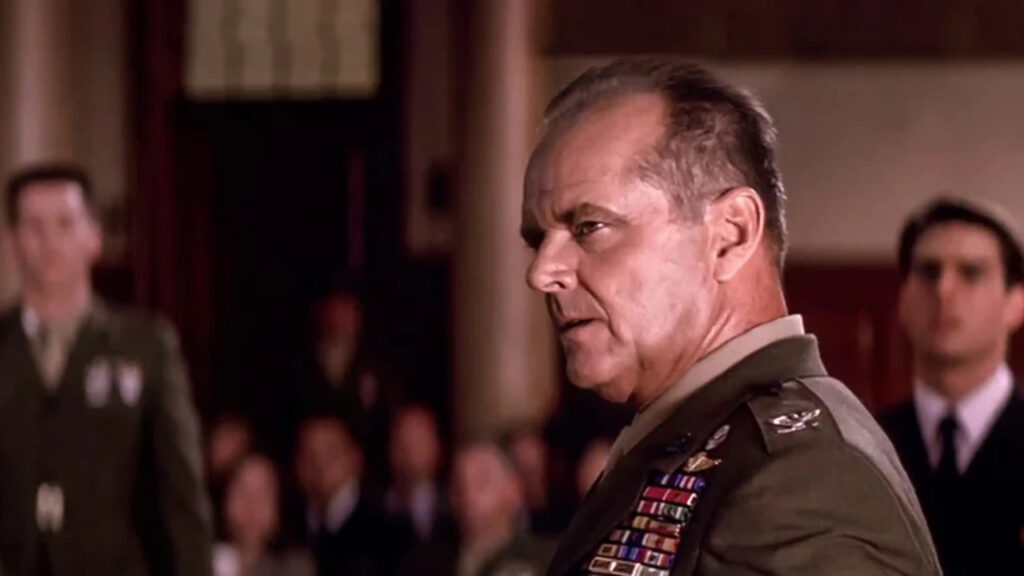
Cruise watched that happen from only a few feet away. As Kaffee pushes Jessup toward the truth, Nicholson builds the speech piece by piece, tightening the pressure until the outburst lands. Cruise’s point was that Nicholson did not just deliver the monologue but shaped it.
Nicholson Found Power In Stillness While Cruise Kept Moving
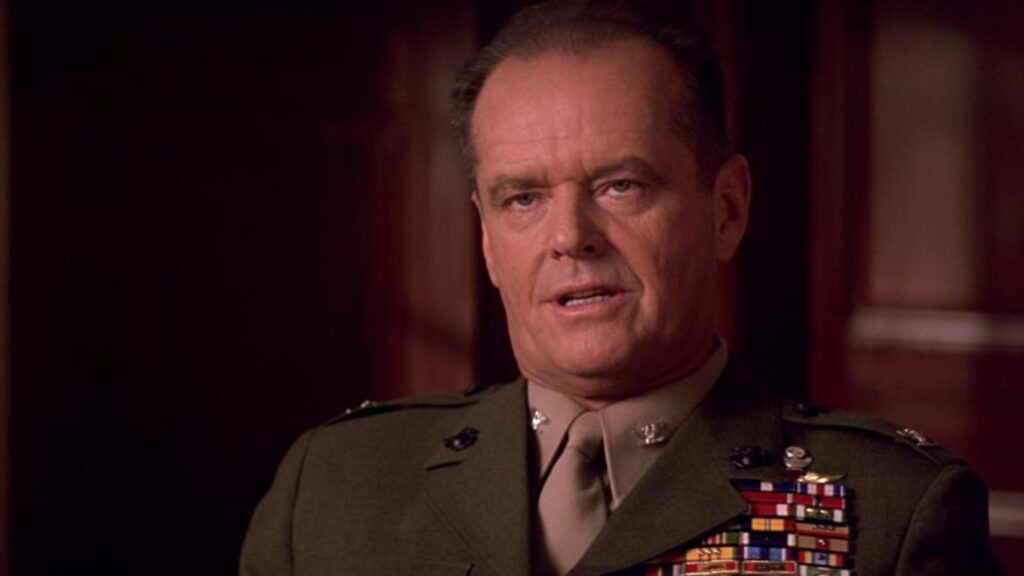
Cruise also pointed to Nicholson’s physical control in the scene. While Kaffee moves around the courtroom, trying to push Jessup into a mistake, Nicholson remains planted in the witness stand. Cruise said Nicholson found enormous power in that stillness, and it made the colonel feel even more imposing.
In Case You Missed It: Tom Cruise’s New Role Puts Global Power In The Hands Of An Oil Magnate
That choice mattered because the scene works as a clash of energies. Kaffee is pressing, circling, and building momentum while Jessup barely needs to move. Nicholson lets the tension build in his face, his voice, and small physical details rather than in broad gestures.
Cruise noticed the restraint and saw how much authority it gave the character. He also remembered Nicholson’s use of props and posture. Cruise specifically mentioned the way Nicholson held his military hat in his lap, keeping it taut as he sat.
It was a small choice, but it gave Jessup a visible edge of control and tension, as if the anger was already there long before the speech exploded out of him. That is what Cruise meant when he praised Nicholson’s command of the camera. Nicholson understood how little he needed to do for the lens to pick up everything. He did not waste movement. He let the camera come to him.
Nicholson Was Just As Brilliant Off-Camera
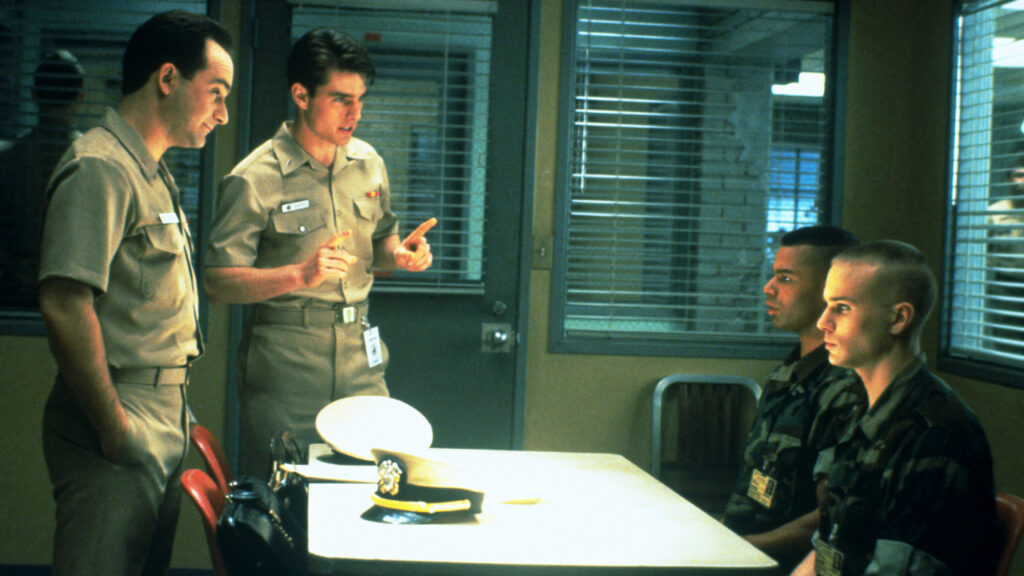
Cruise’s praise did not stop with Nicholson’s work in front of the camera. He also described him as an “actor’s actor” because of the way he handled the scene when the camera was turned away from him. During Cruise’s close-ups and reverse shots, Nicholson still delivered the lines with full force.
That mattered because Cruise needed the same pressure in those takes that audiences would later see in the finished scene. Nicholson gave him that. According to Cruise, he stayed fully engaged off-camera, feeding him lines with the same intensity and making sure the confrontation’s energy never dropped.
Between takes, though, Cruise said Nicholson became warm and encouraging. He remembered him offering quick notes and support, telling him when he liked a take and nudging him toward the next one. Cruise recalled Nicholson praising him with lines like, “That was a good take, Tommy.”
Nicholson used those small moments to keep Cruise confident. That generosity helped explain why Cruise still talks about the performance with such admiration. Nicholson gave him a masterclass in handling dialogue, controlling a frame, and supporting a scene partner at the same time.
Calling him a “wordsmith” was Cruise’s way of naming that skill. Nicholson did not just speak Sorkin’s lines in ‘A Few Good Men.’ He knew exactly how to wield them.
You Might Also Like To Read: Why Paul Newman Secretly Despised Being Hollywood’s Golden Boy