
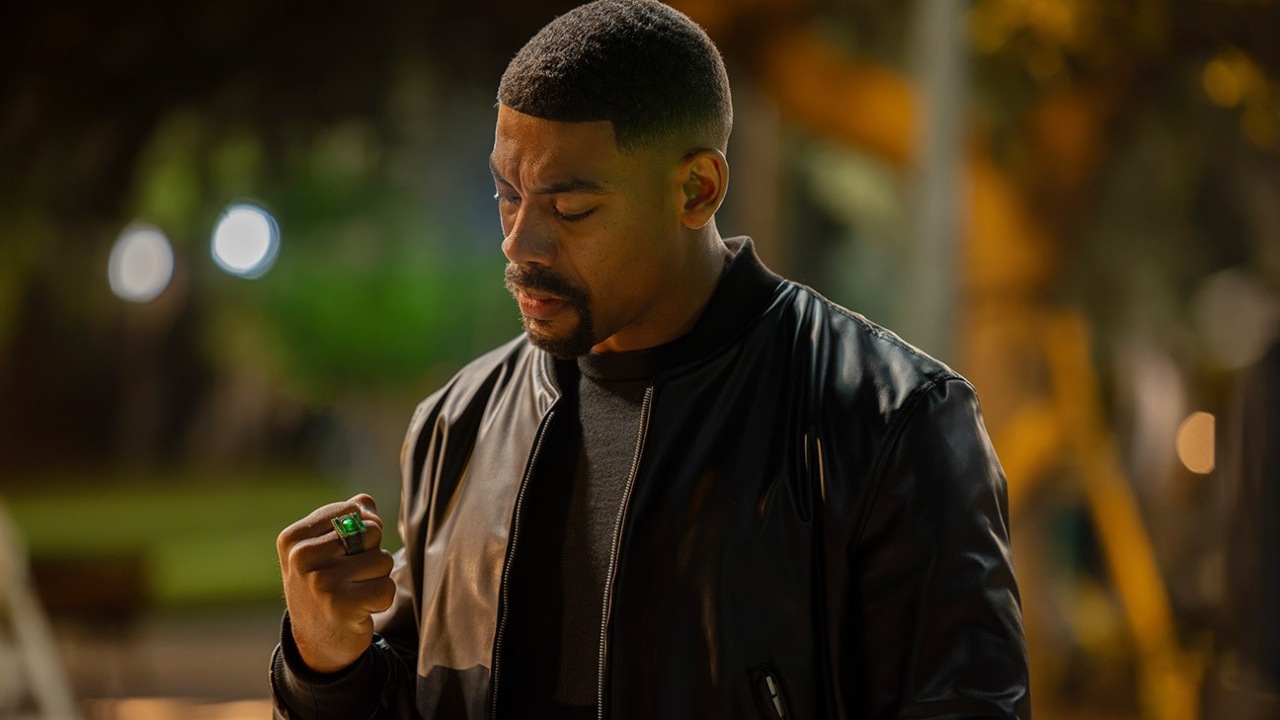
‘Lanterns’ doesn’t end with John Stewart simply becoming another Green Lantern. Instead, the finale takes a deliberate swing at the mythology by making his relationship with fear part of his new identity.
Tom King has confirmed that John’s ring contains yellow, that his oath had to be different, and that he isn’t completely aligned with the traditional Green Lantern Corps. It’s an interesting idea on paper, but the execution makes the finale feel less like an evolution of the mythology and more like a rejection of what makes Green Lantern special.
John Stewart’s New Oath Changes Everything

The biggest clue comes when John recites his new oath: “I will embrace my fear, I will do what is right.” That’s a dramatic departure from the classic Green Lantern oath, which is built around overcoming fear through willpower and refusing to let evil escape your sight. That distinction matters.
Related: ‘Lanterns’ Just Dropped A Huge Clue About Where DCU Is Really Heading
The Green Lantern mythology has always treated fear as something that can be confronted and overcome. The Sinestro Corps, meanwhile, embraces fear as its weapon. So when John’s new ring literally contains yellow and his oath tells him to embrace fear, ‘Lanterns’ is intentionally blurring the line between the two philosophies.
John isn’t supposed to be a traditional Lantern. He’s operating outside the Guardians’ authority and carrying a battery connected to Sinestro. But after spending an entire season introducing viewers to this world, ending with such a fundamental change feels jarring. John isn’t simply inheriting Hal’s legacy. He’s transforming it.
Hal Jordan’s Legacy Becomes John’s Burden

That’s even clearer in Hal’s final storyline. Hal spends the season imprisoned, hated by the people he tried to protect and eventually killed by Kerry Kane. John then chooses to cover up what happened, recording Hal’s death as a heroic sacrifice rather than exposing the truth.
In case you missed it: John Stewart Could Become One Of DCU’s Most Important Heroes After ‘Lanterns’
It’s a heartbreaking decision because John isn’t just losing his mentor. He’s deciding what Hal’s legacy will become. The 2006 version of Hal shown through the old recording feels almost like a glimpse of the hero he could have been.
By the finale, that version is gone, and John’s new oath effectively replaces the mythology Hal represented. The final words about serving the “light of your lantern” therefore carry a different meaning. John isn’t serving the Guardians or blindly following the Corps. He’s carrying Hal’s memory forward.
That’s a fascinating direction for the character, even if the execution isn’t convincing. ‘Lanterns’ clearly wanted to make John Stewart something different. The question is whether changing the foundation of Green Lantern mythology makes the character more interesting, or simply makes him feel less like Green Lantern.
You might like to read: ‘Lanterns’ Already Has A Season 2 Plan That Could Change DCU’s Future