
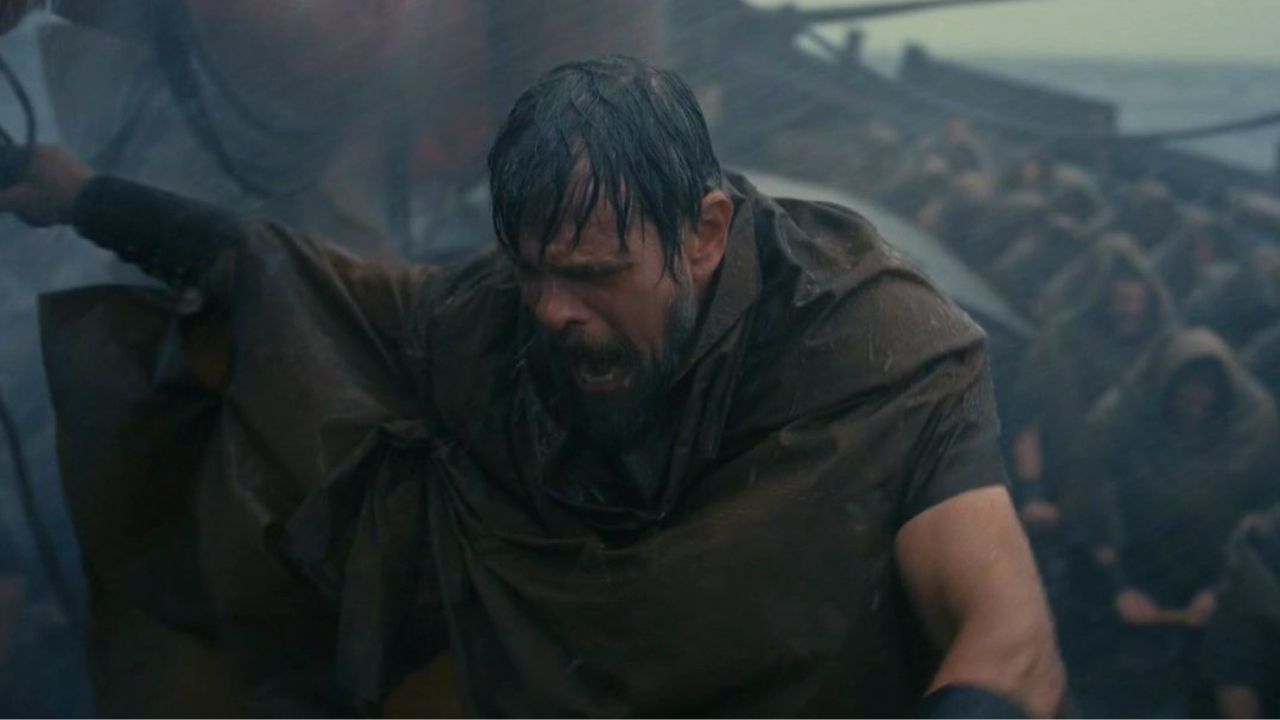
Christopher Nolan‘s ‘The Odyssey‘ builds toward an ending many fans of Homer’s epic think they already know. Instead, the Oscar-winning filmmaker takes the classic story in a different direction and changes several important scenes.
Those bold choices have quickly become one of the biggest talking points surrounding the film. But the changes do not stop with the final scene.
Nolan Gives The Final Act Of ‘The Odyssey’ A New Meaning
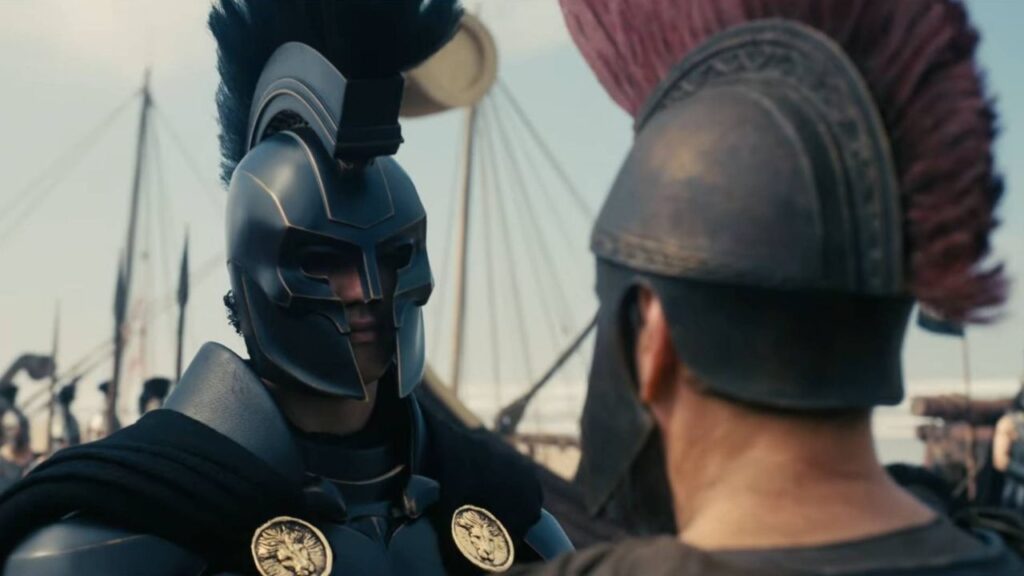
Christopher Nolan changes several important events during the closing part of ‘The Odyssey‘. After finally getting his memories back, Odysseus leaves Calypso on a raft made from the remains of his ship. Advice from Agamemnon, whom he meets in the Underworld alongside fallen warriors, pushes him to return to Ithaca disguised as an old beggar. Instead of announcing his return right away, he quietly watches what has happened to his kingdom before revealing who he really is.
Trouble has taken over Ithaca during his long absence. Many suitors hope to marry Penelope and claim the throne. After saving Telemachus during an attack planned by Antinous and the other suitors, Odysseus tells only his son who he really is. Both decide to keep the secret until the right time.
One of Nolan’s biggest additions comes during a conversation between Odysseus and Penelope. While pretending to be one of the king’s former soldiers, Odysseus remembers the fall of Troy and admits he broke Zeus’ sacred law of hospitality.
He says, “We violated all that’s sacred between people.” Another memory shows his men killing a young woman, played by Zendaya. Nolan never clearly explains whether she is Athena appearing in human form or only a vision created by Odysseus’ guilt. Soon after, Penelope delivers one of the film’s most powerful lines when she tells him, “You’re the people from the sea.”
Related: The “Absurd” Reason Christopher Nolan Banned Ugg Boots From ‘The Odyssey’ Set
Several Famous Scenes End Very Differently
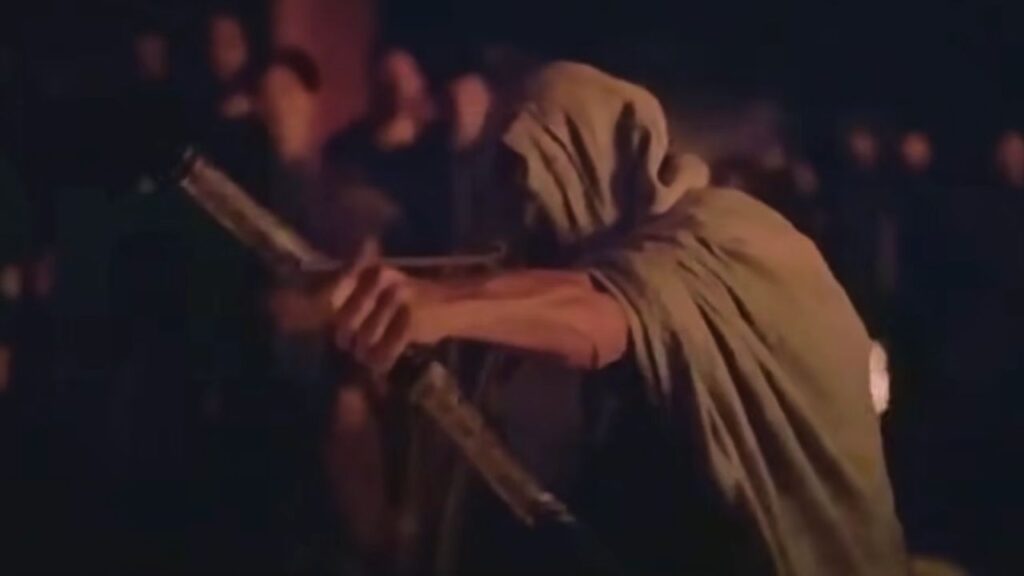
Penelope also recognizes her husband in a completely different way. Homer’s poem uses the famous olive-tree bed to prove his identity. Nolan removes that scene. Instead, Penelope announces a contest where every suitor must string Odysseus’ bow and send an arrow through 12 crossed axes. Every suitor fails.
Odysseus succeeds with ease before showing Penelope the golden Athena pin she gave him before the Trojan War. Only then does she know her husband has finally returned home. A violent battle breaks out after his identity becomes known. Odysseus and Telemachus kill the suitors, but Nolan changes another major part of the ending by leaving Odysseus badly injured.
Rather than ending the story inside Ithaca, Nolan sends Odysseus and Penelope away together. Both sail west so Odysseus can honor the men he lost during the war, while Telemachus becomes the kingdom’s new ruler.
Homer’s ending takes a different path. Family members of the dead suitors prepare for revenge until Athena appears and orders both sides to stop fighting under Zeus’ command.
The poem ends with the lines, “He was glad to obey her. Then Athena made the warring sides swear solemn oaths of peace for future times — still in her guise as Mentor.” Nolan also removes another controversial part of the original poem where Telemachus orders the hanging of 12 enslaved women accused of helping the suitors.
In case you missed it: “The Greatest Arms I’ve Ever Seen”: Matt Damon Clears Up Viral ‘The Odyssey’ Physique Praise With Surprising Stunt Double Reveal
Nolan Adds New Ideas To The Classic Story Of ‘The Odyssey’
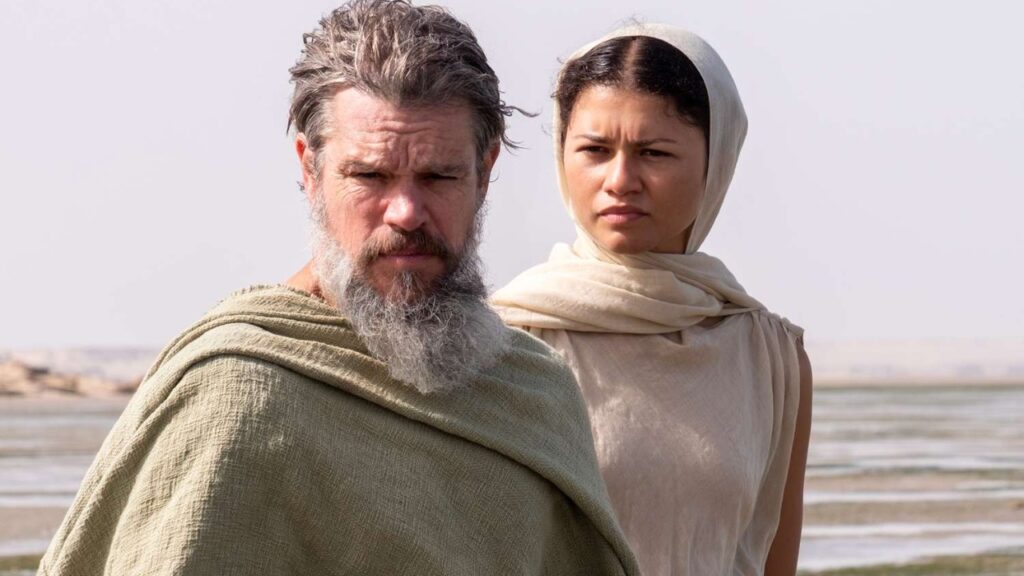
Changes continue beyond the ending. Greek gods receive a much smaller role throughout the film. Zeus, Poseidon, Hermes, Helios, and several other gods are mentioned, but they never physically appear on screen. Athena remains the only exception, although Nolan leaves viewers wondering whether she truly appears or exists only inside Odysseus’ troubled mind.
Nolan explained his creative approach during an interview with Empire: “One of the things I needed to crack was how to approach mythological elements in a sort of real-world way. The big breakthrough creatively in thinking about the gods was that everything that is now explained by science was once supernatural. Lightning, thunder, earthquakes, volcanoes… people are literally seeing gods everywhere; not even the evidence of gods, they’re seeing the actions of gods.”
Another fresh idea comes through the mysterious “people from the sea,” which never appears in Homer’s original poem. Nolan also introduces Sinon, a character borrowed from ancient mythology and Virgil’s ‘Aeneid‘. Speaking to Vulture, Nolan said, “The people from the sea are essentially these marauders who some believe brought about the collapse of civilization, but nobody knows their lost history. Nobody knows who they were, and there’s not a lot of information about it. There’s a lot of speculation.”
He added, “It’s a pretty credible interpretation of history to say that the people from the sea didn’t really exist. And that it was really just a socioeconomic evolution.” Nolan also connects the ending to the Dark Ages that followed the Bronze Age. During the final scenes, Odysseus says stories about Troy will be “sung.” Penelope asks why he uses that word instead of saying they will be written. He replies, “Because songs will be all they have to remember those of us who could write.”
Nolan later explained, “There’s about 400 years of darkness where language is lost. Homer is speaking about 400 years after these events. Ish. It’s all a bit vague.” A final scene reminds audiences why ‘The Odyssey‘ survived for thousands of years. People passed the story through songs long before anyone wrote it down.
You might also like to read: How Samantha Morton’s Scene-Stealing Circe Performance In ‘The Odyssey’ Became “A Rebirth” For Her Career