
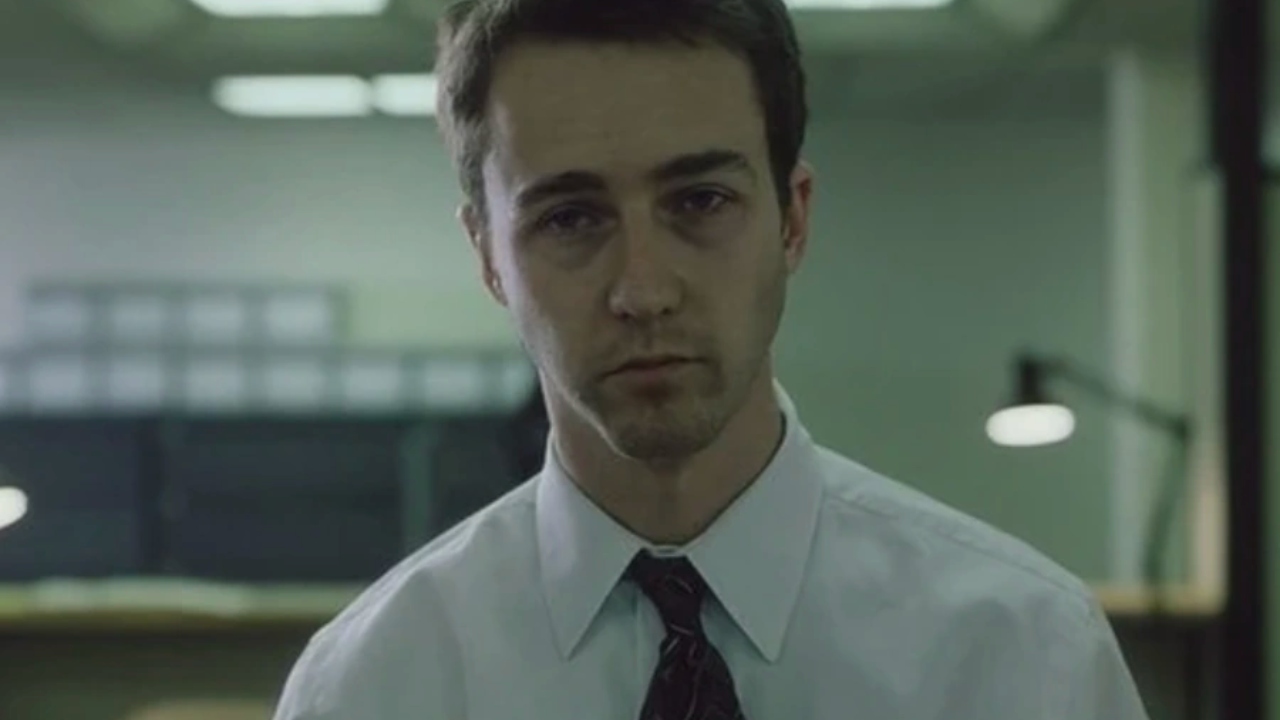
Discussions of ‘Fight Club’ often focus on masculinity. The bare-knuckle brawls, Tyler Durden’s orations, and the rage of men living normal lives make the film appear like a story of men regaining control.
However, beneath the violence and rebellion, ‘Fight Club’ is about something much more universal and painful: the fear of becoming invisible.
A Man Lost Inside His Own Life
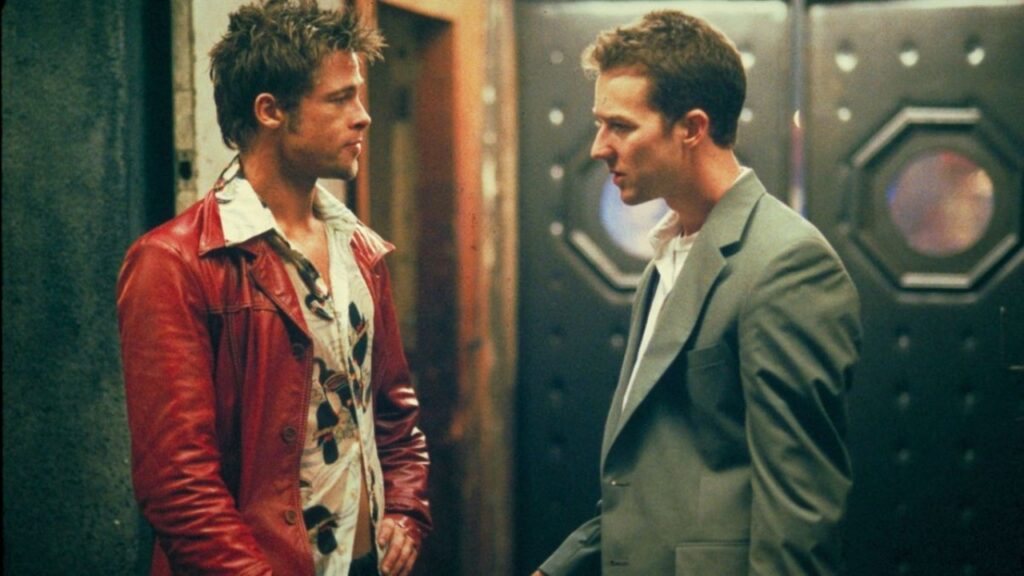
The 1999 movie, directed by David Fincher, is about a man who has all the things that modern life offers to make him happy: employment, a house, and money. However, he is still feeling empty. He walks through life unseen, disconnected from other people, even from himself. The film’s most heartbreaking truth is not that men feel powerless; it is that people can be surrounded by things, routines, and crowds while still feeling completely invisible.
Related: Top 25 Thriller Series Of All Time, Ranked
The story’s loneliness is subtly hinted at in the opening scenes before the arrival of Tyler Durden. The narrator has been plagued by insomnia, so bad that days merge into one. He has a lot of expensive furniture and selected products in his apartment. As the famous IKEA sequence demonstrates, these things are used as a substitute for real human connection.
One of the most powerful moments comes when his doctor dismisses his suffering and tells him to visit a support group for men with terminal illnesses. There, surrounded by strangers facing death, the narrator finally feels seen. He cries for the first time in years in the arms of Bob, a former bodybuilder who has lost much of his identity since his cancer treatment.
That scene is important because it’s not about strength or masculinity. It’s about recognition. Someone finally knows his pain. Someone is finally listening. Tyler Durden comes out of this emptiness as a response to invisibility.
Tyler is loud, fearless, and can’t be ignored. He says all the things the narrator would like to say. In many respects, Tyler is not just a personality, but also the desperate attempt of the narrator to become visible in a world where he feels erased.
Why ‘Fight Club’ Still Feels So Relevant
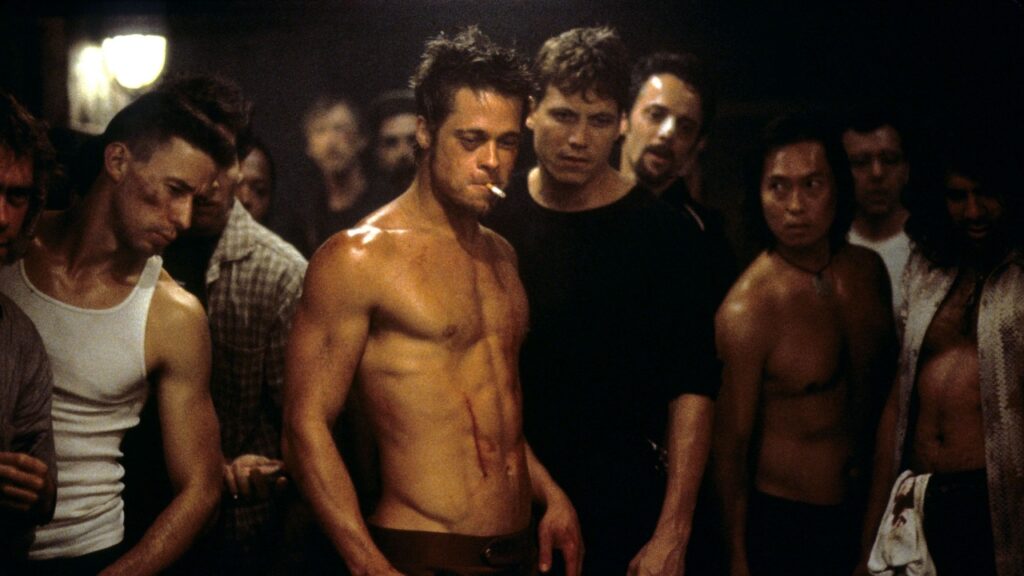
The fight club is frequently misinterpreted. The men who meet in basements are looking for violence, but not violence only. They’re looking for purpose, community, and validation of their existence. One of the most emotional moments in the film is after Bob’s death.
In case you missed it: 25 Most Groundbreaking Movies Championing The Female Narrative
Members of Project Mayhem coldly insist that “in death, a member of Project Mayhem has a name.” The line reveals the heart of the tragedy at the core of the narrative. Bob mattered as a person, yet the group reduces him to an idea. Even rebellion can become another system that makes people invisible.
The movie concludes with the narrator rejecting Tyler and grabbing Marla’s hand as the buildings collapse. An unexpectedly human ending. What is left after all the chaos, destruction, and anger is connection. That could be the true message of Fight Club. Individuals suffer not just from a lack of power. They feel unseen, unheard, and forgotten, and that hurts them. That quiet sadness still hits as hard as a punch.
You might also like to read: Top 25 Movies Based On Books, Ranked