
North Korea has long kept a tight grip on what its citizens can watch. State television is built around government-approved programming and heavily restricting foreign media. Yet against all the odds, the 2002 British hit ‘Bend It Like Beckham‘ made history in December 2010 as the first Western film ever broadcast on North Korean state TV. How did the creators pull if off?
Well, the screening did not happen by accident. British diplomats helped make it happen, marking a decade of formal ties between the United Kingdom and North Korea. Moreover, the film’s football story gave it the perfect edge to bypass the country’s strict censors.
The Broadcast Was Tied To A Diplomatic Anniversary

The premier of ‘Bend It Like Beckham’ in the North Korea was part of a diplomatic effort rather than a sudden cultural opening. In 2010, the British Embassy in Pyongyang wanted to mark 10 years of diplomatic relations between the UK and the Democratic People’s Republic of Korea.
Related: 30 Best Sports Movies Of All Time, Ranked
Rather than holding a gesture that stayed inside embassy walls, officials looked for something that could reach a wider North Korean audience. British diplomats worked with Koryo Tours, the Beijing-based travel company known for organizing trips into North Korea, to put the plan together.
The idea was to offer a piece of British entertainment that felt accessible and engaging without appearing openly political. That balance mattered in a country where the state tightly controls what enters public view.
A film screening made sense because it could package everyday life, family tension, and sport into something easier to accept than a blunt statement about Western culture. The embassy needed a title that might clear North Korea’s approval process while still carrying some value as a cultural exchange.
That search led them to ‘Bend It Like Beckham,’ Gurinder Chadha’s sports comedy about an 18-year-old British-Indian girl who wants to play football despite her parents’ objections. It was not the sort of movie anyone would have predicted as a diplomatic tool, but it offered just enough familiar ground to make the gamble worthwhile.
‘Bend It Like Beckham’ Had A Better Chance Than Most Films
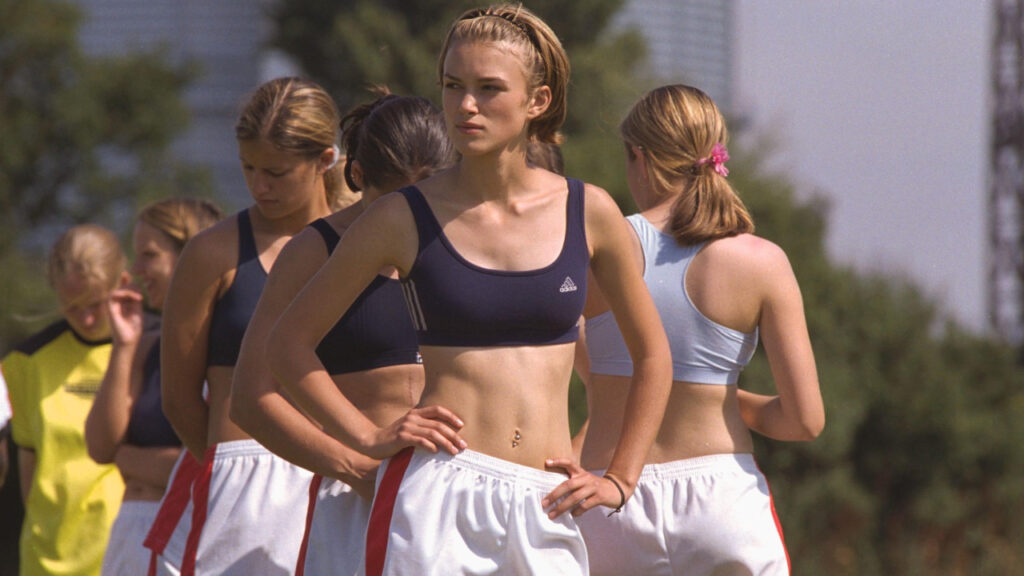
The film’s strongest advantage was football, which has long enjoyed huge popularity in North Korea. It gave ‘Bend It Like Beckham’ an entry point that many other Western films would not have had.
In Case You Missed It: Top 25 Highest-Grossing Sports Movies of All Time
A film about a young woman fighting for a place on the pitch could pass first as a sports story, even though it carried other themes beneath the surface. That mattered even more because women’s football held real weight in North Korea.
The country’s women national team has often enjoyed more success than the men’s, so a film centered on a female footballer did not feel completely alien to local audiences. At its core, the story also dealt with pressure from family, generational expectations, and the struggle between duty and personal ambition.
All these themes could travel more easily across borders. Additionally, the film also had one important thing working in its favor: North Korean officials had already seen it before. ‘Bend It Like Beckham’ was screened earlier at the 2004 Pyongyang International Film Festival.
It reportedly sold out its run and even picked up a prize for its music. This earlier approval likely helped reassure officials that the film could be managed for television. However, none of that meant the movie fit neatly within North Korean rules.
It still contained elements the state would not welcome, including interracial romance, religion, and references to s–uality. But its football focus, family story, and prior festival history gave it a path that most Western films simply did not have.
North Korean Viewers Did Not See The Global Version

When ‘Bend It Like Beckham’ finally aired on December 26, 2010, North Korean viewers did not receive the same version seen by cinema audiences elsewhere. The film went through censorship before broadcast, though accounts differ over how much was actually removed.
At the time, some reports claimed censors had drastically shortened the 112-minute film, with one South Korean monitoring account saying it ran for only about an hour. Other accounts offered a less dramatic picture.
Peter Hughes, who served as Britain’s ambassador to North Korea, later said the cuts amounted to roughly eight minutes rather than a wholesale rewrite. Whatever the exact number, the logic behind the edits was clear.
Material involving homosexuality, interracial relationships, religion, and other politically or socially sensitive topics would never have passed untouched through North Korean state television.
The version that aired had to fit the regime’s boundaries, even if that meant stripping away some of what made the original film distinctive. Still, the broadcast stood out as a rare breach in North Korea’s media wall.
For viewers in Pyongyang, it offered an unusual look at life, fashion, and sport outside the country’s borders without arriving in the form of overt political messaging. This alone made it historic. ‘Bend It Like Beckham’ did not change North Korean censorship, but for one night in 2010, it became the Western film that bypassed the country’s notorious rules.
You Might Also Like To Read: “We’re Looking For A Pretty Girl”: Kathie Lee Gifford Recalls the Brutal ‘Charlie’s Angels’ Rejection That Almost Knocked Her Confidence