
One’s connection with religion and personal philosophy may greatly determine the course their creative output will take. For an imaginative director with a unique aesthetic sense and a penchant for dark folklore and elaborate creature design, adapting such a popular form of children’s literature as fantasy into film demands strict thematic compatibility. Refusing to work on a colossal Guillermo del Toro fantasy blockbuster project due to philosophical and religious differences illustrates how often narrative fidelity comes first, despite all other considerations, in discussions of faith adaptations in Hollywood.
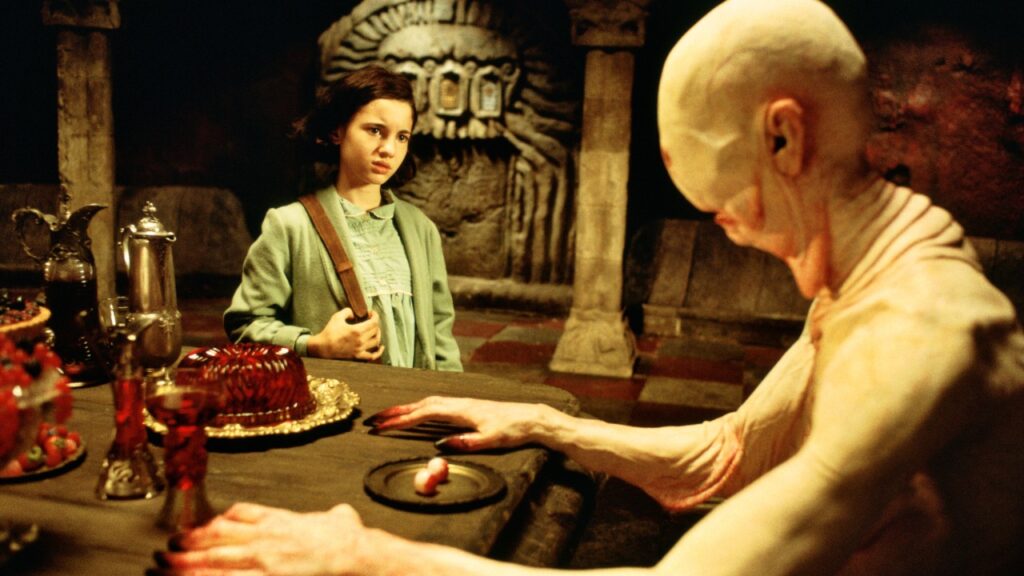
Once approached by the studio to direct the most profitable literary adaptation, a multiple Academy Award winner declined the offer due to a loss of faith. Refusing to abandon his personal philosophy of human-driven plot in exchange for a spectacular movie with a divine message, the man decided to create his own award-winning ‘Pan’s Labyrinth‘ about people’s free will.
Guillermo del Toro’s Philosophical Disagreement With ‘The Chronicles of Narnia’

By the early 2000s, Hollywood began seeking profitable fantasy concepts similar to those of the ‘Lord of the Rings‘ and ‘Harry Potter‘ movie franchises.
After a long search, Walden Media and Disney found their next target and released ‘The Chronicles of Narnia: The Lion, the Witch and the Wardrobe‘ in 2005. This film, directed by Andrew Adamson, grossed $745 million worldwide and was nominated for three Academy Awards.
Nevertheless, a film of much greater dramatic potential could have emerged if a director whose creative output relies heavily on philosophical and religious elements had taken on the project.
Related: Top 10 Fantasy TV Series Led By A Female Protagonist
Raised in a pious environment and constantly employing allegorical stories with spiritual themes, the person found himself deeply estranged from Lewis’s traditional theology as an adult.
Explicit comparisons between the sacrifice made by lion Aslan and Christ’s resurrection seemed to pose an ideological boundary too hard to overcome for del Toro, as he said, “I’m not proselytizing anything about a lion resurrecting.”
Swapping ‘Narnia’ For ‘Pan’s Labyrinth’
While refusing to take the most commercially rewarding role, the man sought to avoid cinematic persuasion that might change their personal beliefs.
Even though he greatly respects literature and finds it inspiring, he found the idea of directing a massive machine to endorse certain political and religious teachings too difficult to stomach.
In Case You Missed It: 10 Fantasy Movies With Brutally Best Final Battles
Refraining from crafting a fantastic story about divine creatures performing resurrections, the director chose to shoot his personal parable, focusing on disobedient humans in the context of war-torn Spain.
According to him, he is not “trying to sell you into a point. I’m just doing a little parable about disobedience and choice. This is my version of that universe, not only Narnia, but that universe of children’s literature.” A refusal to accept a highly lucrative offer led to the world receiving a critically acclaimed masterpiece of dark fairy tales.
Even though the film adaptation of Lewis’s book earned the studio significant profits, the director’s uncompromised vision provided the movie industry with yet another outstanding example, demonstrating that sometimes great achievements stem from a decisive refusal to accept what is personally unacceptable.
You Might Also Like To Read: “Only My Head Would Do”: Harrison Ford Demanded A ‘Star Wars’ Co-Star Be Fired On The Spot