Traditionally, the topic of homesickness in cinema is presented as merely a slight discomfort, cured by a return ticket home. However, with his 1983 cinematic masterpiece ‘Nostalgia,‘ legendary director Andrei Tarkovsky turns it into a lethal and stunning illness of the human soul.
Filmed in the breathtaking medieval landscapes of Tuscany, Italy, this mesmerizing film focuses on exile as not only a physical but primarily an existential one. Through Tarkovsky’s harsh perspective, longing is portrayed as a never-ending maze that steadily drains a person’s soul of all vital energy.
‘Nostalgia’ Is The Haunting Architecture Of Exile
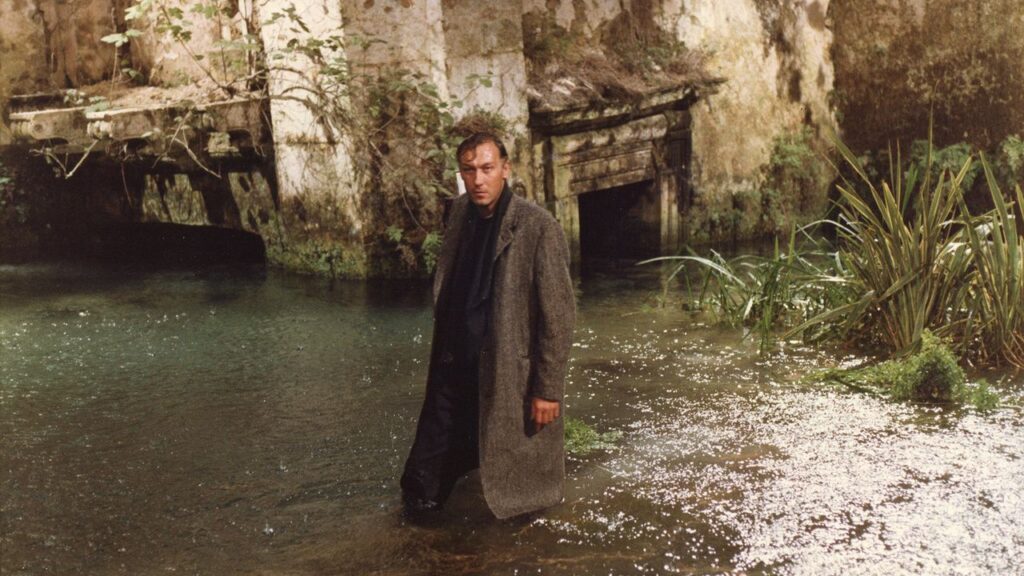
‘Nostalgia‘ follows Andrei Gorchakov (Oleg Yankovsky), a gloomy Russian writer who researches an 18th-century composer who killed himself after returning home.
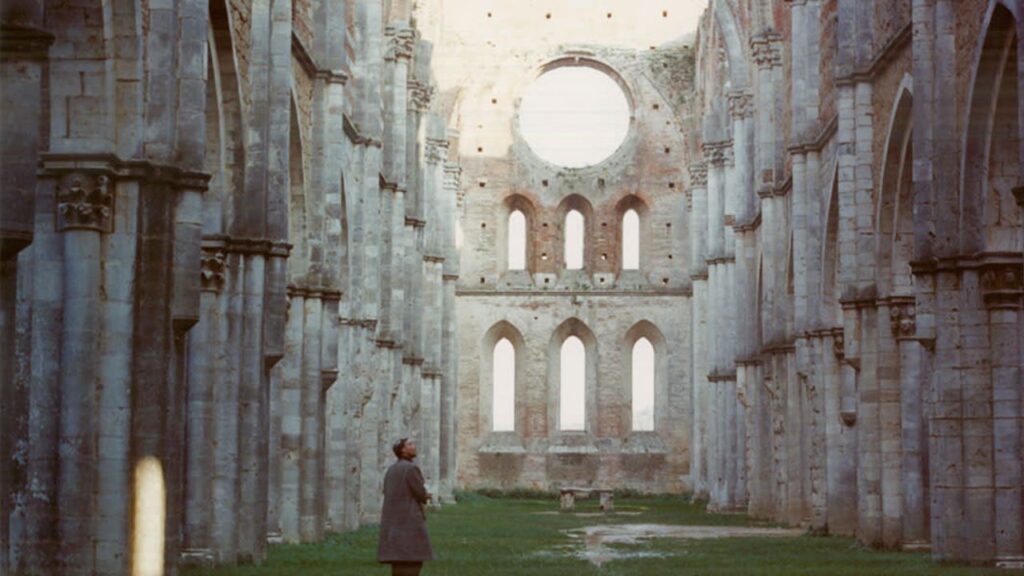
Assisted in his mission by his attractive but impatient Italian translator, Eugenia (Domiziana Giordano), Andrei moves through collapsing villas, flooded churches, and steam-filled baths of natural water. Despite the magnificent Mediterranean nature that surrounds him, he suffers from the painful inability to interact with reality.
Related: The One-Word Reply From Alfred Hitchcock That Took 40 Years to Understand
In addition, Andrei is unable to return to the idealistic and black-and-white image of his native land. His isolation intensifies dramatically when he meets an eccentric, fragile man, Domenico, played by Erland Josephson.
According to his legend, this “holy fool” locked up all of his relatives for seven years in order to protect them from the coming apocalypse. Andrei finds in this person a brother in spirit, a fellow traveler who suffers from the same deadly desire for the perfect purity of the soul.
Tarkovsky, who wrote the script with acclaimed Italian screenwriter Tonino Guerra, brilliantly portrays the protagonist’s psychological detachment through long, rhythmic tracking shots and heavy desaturation.
Furthermore, as this film reflects his lived experience as an exile in Italy, the filmmaker shows how different the cultural backgrounds of Russians and Italians really are.
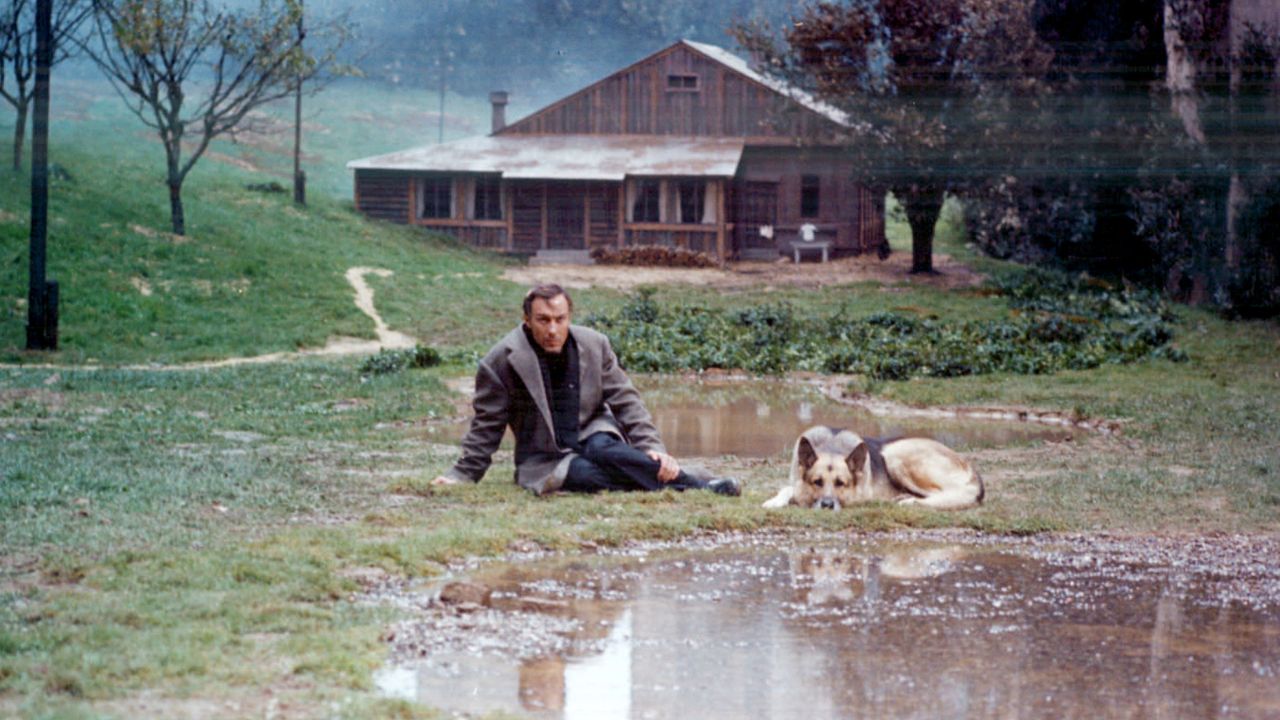
The director has captured this difference through scenes filled with dull sepia tones depicting images of Russian rural life. They sharply contrasted with picturesque, damp, dilapidated Italian buildings.
The Ultimate Sacrifice Of A Candle
Undoubtedly, the movie’s exceptional concept brought it critical success. It earned Tarkovsky multiple awards, including Best Director, FIPRESCI, and Ecumenical Jury awards at the Cannes Film Festival in 1983.
However, its fame lies in its unique nine-minute penultimate scene, filmed by Giuseppe Lanci in a single shot. Just before committing self-immolation on a statue in Rome, Domenico gives an impossible mission to Andrei: to cross the ancient Bagno Vignoni sulfurous pools while carrying one burning candle.
In case you missed it: James Cameron And CM Punk Headline A-List Crowd For Ronda Rousey’s Epic 17-Second MMA Return
It is an incredible test of man’s endurance and dedication. Throughout his journey, the audience sees Andrei protecting the weak flame of hope with his coat, falling down from exhaustion several times, and starting over.
This unforgettable performance is a metaphor for the struggle of a flickering flame, symbolizing faith’s attempt to survive the harsh reality of this world. Eventually, the concept of exile is reflected in the tragic events of Tarkovsky’s personal life.
Indeed, ‘Nostalgia’ became a permanent monument to this idea. The director died of cancer shortly after the release of the film in Paris.
When the last image of a traditional Russian dacha merging with the abandoned ruins of an Italian church appears on-screen, it leaves us with the tragic realization that longing has no geographic cure.
You might also like to read: “That Was the Right Choice”: Nicolas Cage Explains Why He Rejected the Green Goblin in Sam Raimi’s Spider-Man