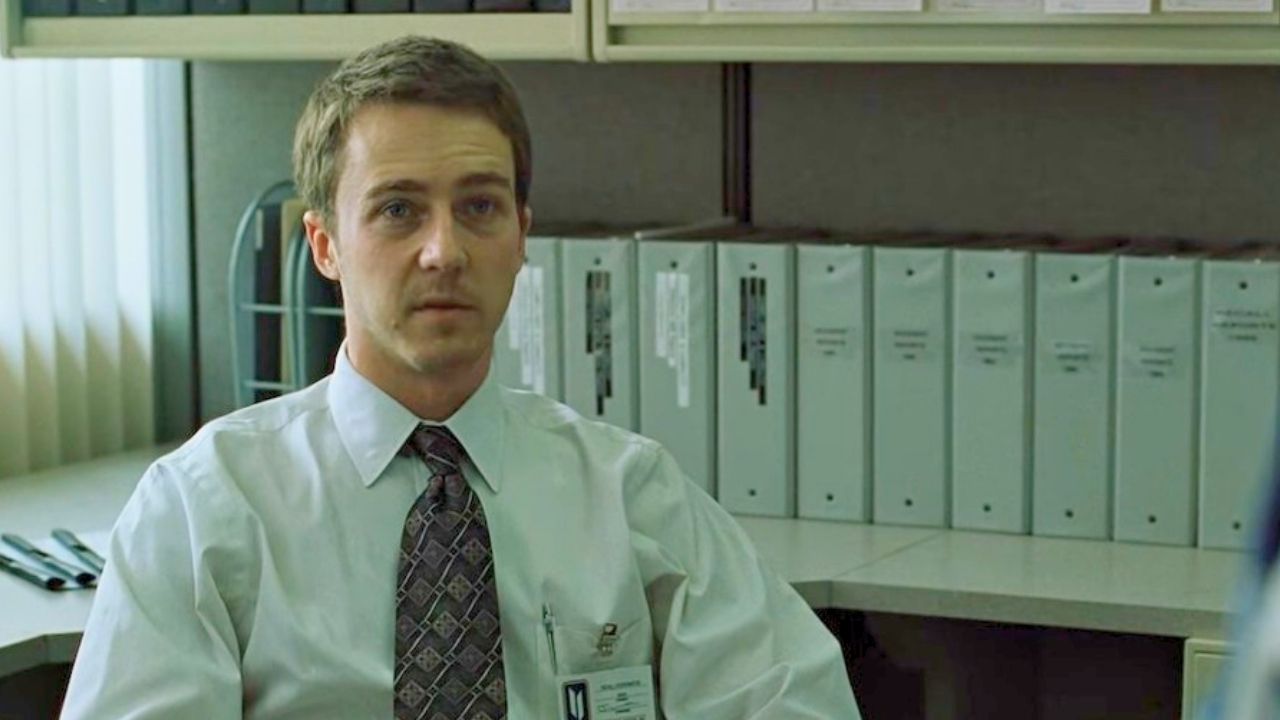
We’re about to break the first rule of Fight Club because yes, we’re talking about ‘Fight Club.’ More specifically, we’re talking about one of David Fincher’s sneakiest running jokes in the film: the Starbucks cups hidden all over the place. It turns out, they were not random props, nor were they there because the studio wanted a little product placement.
Fincher put them there because Starbucks had become exactly the kind of thing the 1999 movie was tearing into. By the late 1990s, the coffee chain had gone from a smart idea to a corporate giant, and Fincher decided to turn that into a visual gag. So if you look closely, there is a Starbucks cup or logo somewhere in almost every scene of the movie.
David Fincher Saw Starbucks As A Perfect Symbol Of Corporate Sprawl
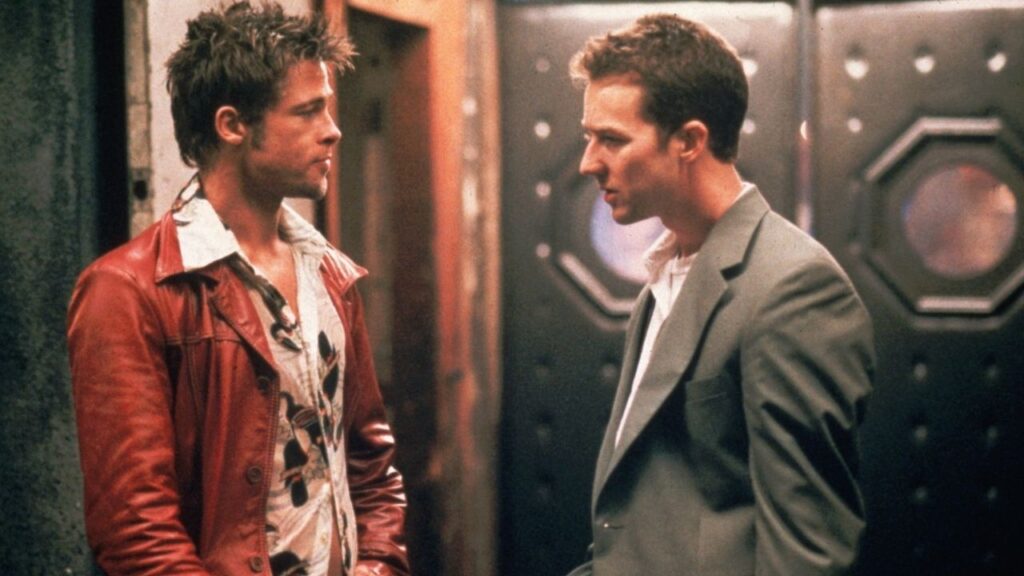
The joke stemmed from the fact that how quickly Starbucks had taken over Los Angeles. Fincher had watched the chain go from a place that sold decent coffee to a brand that seemed to be on every corner.
Related: ‘Fight Club’ Lives On With Two Sequels You Might Have Missed
This made it a natural fit for a film obsessed with consumer culture, corporate sameness, and the feeling that modern life had become one long shopping catalog. He weighed in on this in an interview with Empire. “When I first moved to L.A. in 1984, you could not get a good cup of coffee in Los Angeles to save your life,” Fincher said.
“Then Starbucks came out, and it was such a great idea: good coffee. And when it became successful, there were like two or three on every block. It’s too much of a good thing.” That was enough for Fincher. He took one of the most visible brands in America and started sneaking it into the movie’s background.
Once you know it is there, you cannot help but spot the cups everywhere, in the office scenes, in public spaces, and around the Narrator’s world like little reminders that the same corporate clutter keeps turning up no matter where he goes.
It also fits the movie almost too well. This is a film about a man drowning in advertising, catalogs, office culture, and empty consumer identity. Hiding Starbucks cups in nearly every frame is not exactly subtle, but subtle was never really the point.
Starbucks Figured It Out, And This Is What They Did
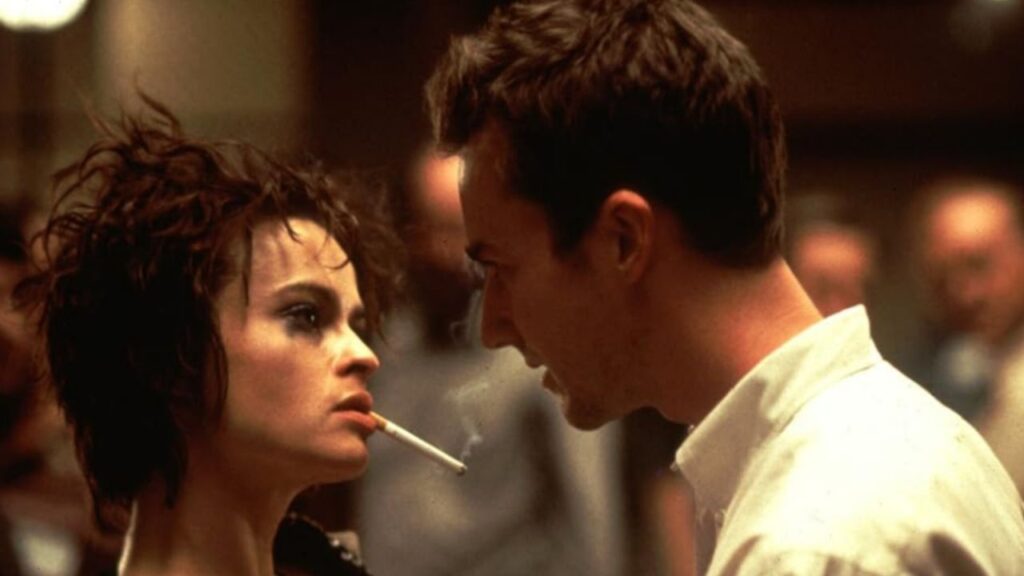
The funny part is that Starbucks was not blindsided by any of this. Fincher has said the company read the script, knew the film was using the brand as part of a joke, and still agreed to let the production use its cups and logos.
In Case You Missed It: How Judy Garland Inspired Helena Bonham Carter’s Marla Singer For ‘Fight Club’
“But [Starbucks] read the script, they knew what we were doing, and they were kind of ready to poke a little fun at themselves,” Fincher told Empire. It allowed the film to keep dropping the logo into the frame again and again without having to hide what it was doing.
The company did have one limit. Fincher said Starbucks refused to let the production use its name on the coffee shop that gets smashed near the end of the film by a giant piece of “tragic corporate art.” So the movie uses a fake name there instead. Starbucks was happy to be used as a joke, just not the building getting destroyed.
Just One More Reason People Keep Rewatching ‘Fight Club’
‘Fight Club’ is packed with little details people love to hunt for. Tyler Durden flashes onscreen before he is properly introduced. Tiny visual clues keep pointing toward the twist. The Starbucks cups fall into the same category of detail that makes viewers go back and check the frame again.
And once you know the cups are there, they become hard to ignore. They turn up so often that the joke starts feeling like part of the movie’s wallpaper, which is exactly why it works. The film is about corporate branding swallowing everything in sight.
So, Fincher picked one of the biggest brands of the moment and made sure it was always lurking somewhere in the background. He also made clear that this was not some personal vendetta against the coffee chain.
“I don’t have anything personal against Starbucks. I think they’re trying to do a good thing,” he said. “They’re just too successful.” That is pretty much the entire ‘Fight Club’ Starbucks gag in one line. The company became so big, so visible, and so unavoidable that Fincher turned it into one of the film’s best background jokes.
You Might Also Like To Read: George Clooney Once Changed Matt Damon’s Entire Shooting Schedule For The Most Ridiculous Reason Ever