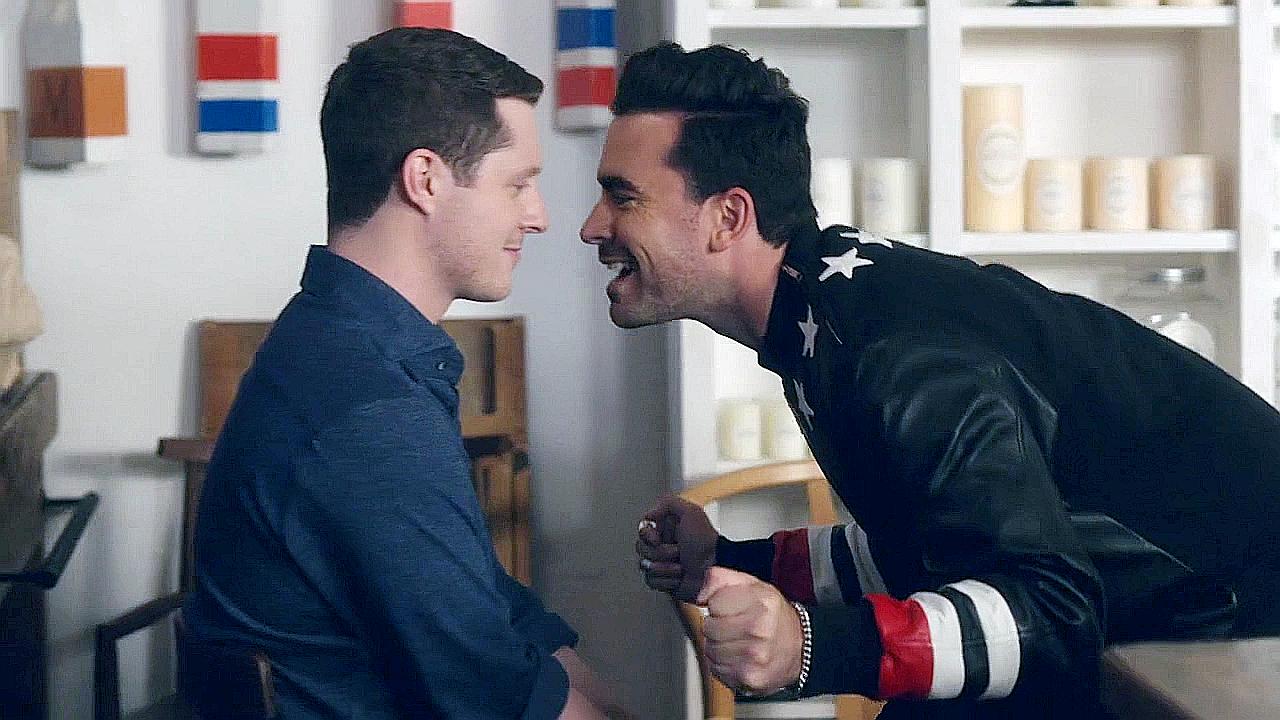
It’s got sass, it’s got sarcasm, and most importantly, it’s got the hook. ‘Schitt’s Creek‘ had most viewers glued to their seats for many reasons. It’s got a refreshing take on humor, family, and friendships, but that’s not all.
Eugene and Dan Levy’s show is celebrated and cherished by the LGBTQ+ community to this date. It ended on a high note in 2020, but there’s one thing it did brilliantly; it revolutionized how the community was portrayed and posited in popular media.
‘Schitt’s Creek’ Perfected Unproblematic, Healthy Queer Dynamics
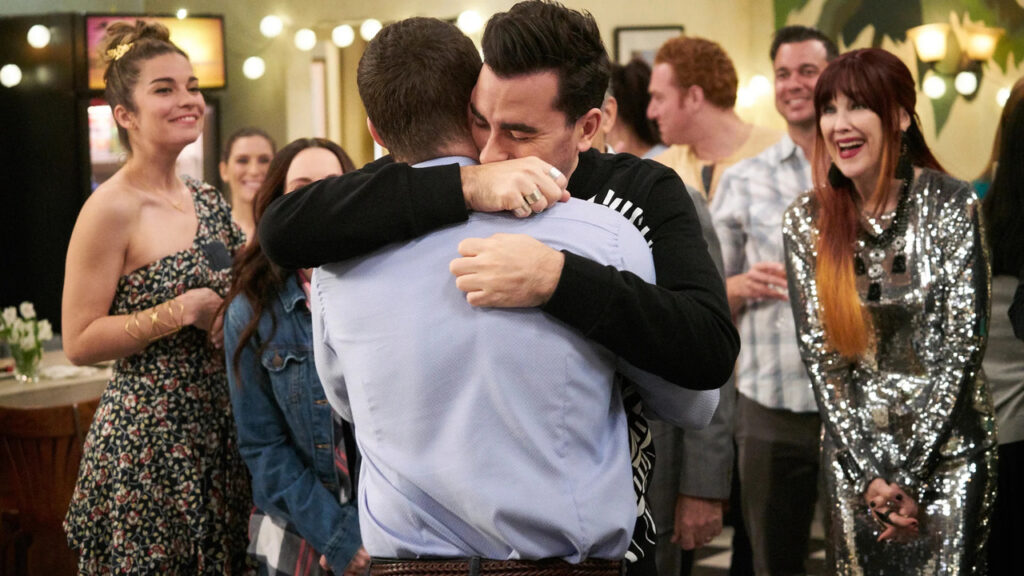
If there’s one thing ‘Schitt’s Creek‘ did best, it was to not boil the characters down to stereotypes. There are complicated relationships, but they do not entail toxicity per se.
The most common stereotypes about gay people being promiscuous and predatory have no space here. It is also interesting how David used the metaphor of wine to explain his orientation to Stevie in one of the show’s most memorable scenes. He tells her he drinks red wine, but also white. Sometimes he also has a penchant for trying out chardonnay and rosé.
Related: 20 Best Shows That Honor Queer Voices
Other than that, this sitcom doesn’t succumb to the archetype of queer people being necessarily mean. Rather, David Rose is portrayed as a complex character with fears and phobias of his own. The humor and bluntness thus become his coping mechanism. His dynamic with others is also tested, especially with the throuple incident with him, Stevie, and Jake. They part ways, but it doesn’t end with Stevie ousting him publicly.
Another refreshing thing? Neither did the men become a part of a hate crime, nor were they shunned and mocked by society. This brings us to the concept of acceptance and openness as a central theme of the series.
Authenticity And Acceptance Take Center Stage In ‘Schitt’s Creek’
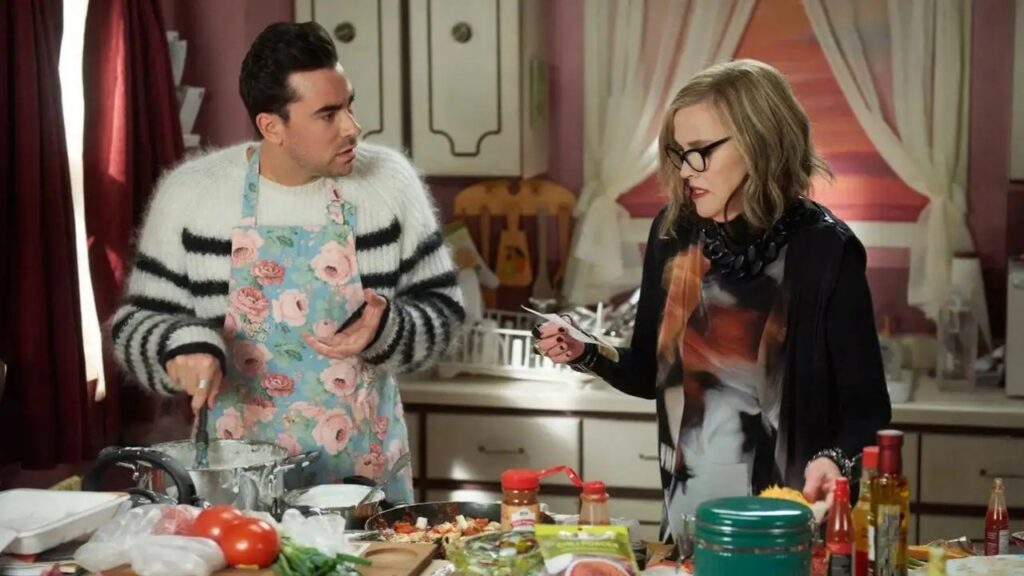
FX’s ‘POSE’ showed the brutal reality of the LGBTQ community in ballroom spaces in the 80s. ‘Schitt’s Creek,’ on the other hand, thwarts and rejects hate crimes. This is also because of Dan Levy’s disdain for homophobia, as he mentioned in several interviews. The show creates a utopian society where acceptance and authenticity take center stage.
In case you missed it: Top 10 Most Unconventional Romance Movies
Queer, as a term, was initially used to define something as strange and peculiar, but here’s the thing: the characters embrace and imbibe it as a part of their authentic self. Moira’s eccentricity also mirrors her acceptance of David’s orientation. This also holds true for Johnny Rose, who often uses humor to bond with his son.
It is also evident in Patrick’s parents, especially when he comes out to them. In that very moment, we see parents accepting their children for who they are. It provides relief and normalcy and also tugs at the viewers’ heartstrings. This is a pivotal moment in understanding ‘Schitt’s Creek’s relevance and importance.
In Ronnie’s case, too, the show didn’t succumb to stereotypes. While David and Patrick end up together, Ronnie prioritizes career and self-growth. She also doesn’t symbolize a typical butch lesbian. Rather, she loves to see herself as Patti LaBelle. It’s a scene cherished by fans. It most certainly is a novel portrayal, to say the least.
Well, ‘Schitt’s Creek‘ is celebrated for achieving something rare: redefining queer stories by treating them with warmth, dignity, and love rather than trauma or spectacle. It presents every kind of sexuality as ordinary and joyful, never tragic, and that may be its most meaningful cultural revolution of all.
You might also want to read: 10 TV Shows That Perfectly Match ‘Rivals’ Vibe