
One of the scariest villain turns in movie history is Joaquin Phoenix as Emperor Commodus in Ridley Scott’s ‘Gladiator‘. He’s whiny, jealous, and completely unstable, but behind the scenes, Phoenix almost ruined his own performance after receiving a blunt piece of feedback when someone told him he was starting to look like a rodent.
The story of the “fat hamster” is now legendary. During the tough shoot of the 2000 movie, Ridley Scott reviewed the daily footage and noticed something was wrong. The young, thin actor he hired was changing. Phoenix, who was always Scott’s first choice for the part, made a deliberate choice; he was putting on weight.
Why Joaquin Phoenix Got Called a “Fat Hamster”
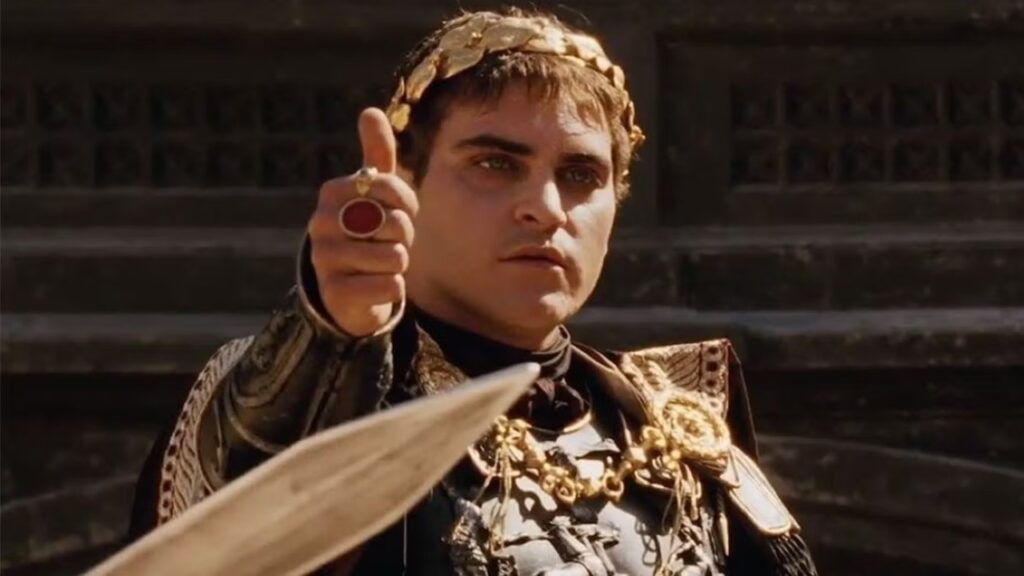
These days, actors bulk up with muscle for historical roles. Phoenix, however, went a different way. He thought Commodus, a spoiled, power-hungry heir who ruled Rome from 176 to 192 AD, should not look like a warrior. He should look soft, pale, and rotten.
“To start with, I was toned. But I made him flabbier, to show how this scrawny prince had kinda ripened into an emperor,” Phoenix later said. “I discovered the child in him… the guy’s father ran the Roman Empire, which is like the biggest multinational ever, and Commodus just hates the f***ing suit and tie they make him wear.”
Ridley Scott’s Brutal Weight Criticism on Set

Scott did not see a smart acting choice; he just saw a bloated lead actor. According to IMDb and other sources, Scott did not talk to Phoenix directly. Instead, he spoke to a line producer, who then walked up to the 24-year-old actor and gave him some harsh honesty. He said, “Ridley says you’re fat.”
In case you missed it: Joaquin Phoenix’s Joker Will Never Be Gotham’s Clown Prince Of Crime. Here’s Why
That comment hit Phoenix hard, but he did not go quietly to a dietitian. He got angry. The next day, in a moment of brave fury, Phoenix walked onto the set in his full emperor costume. He stood up to Scott and defended himself. “I hear I look like a little fat hamster,” Phoenix told Scott. “But I thought it was the right thing to do. I’m the Emperor of Rome. Why wouldn’t I look a little more debauched?”
It made sense. The real Commodus was a glutton who thought he was a god. He was not a chiseled statue; he was a party animal. But logic does not always win in movies.
According to reports, when Phoenix confronted him, Scott did not engage in a deep discussion about Roman aesthetics. The director reportedly didn’t even look at him. The message was clear: lose the weight.
How Starvation and an Intervention Saved Joaquin Phoenix’s Performance
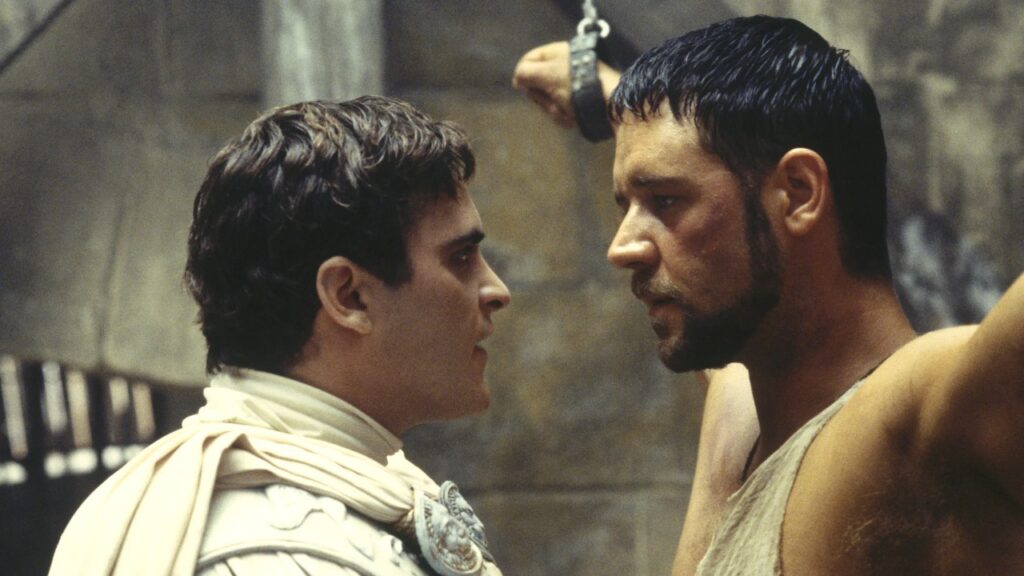
Feeling humiliated, Phoenix switched his plan. If he wasn’t allowed to look “debauched,” he would look skeletal. He simply stopped eating.
For weeks, the actor drastically restricted his caloric intake. The dedication, however, came with a dark side. As he got thinner, his nerves completely fell apart. He got so jittery and anxious that he could barely act. He felt lost in the stress of the huge production.
It got so bad that his co-stars stepped in. The late Richard Harris, who played Marcus Aurelius, and Russell Crowe held an intervention. Harris observed the young method actor’s spiral and offered an ancient cure: alcohol. Harris and Crowe took Phoenix out, got him “roaringly drunk,” and took the edge off his anxiety. It worked; his nerves calmed down, and the performance fell into place.
The Legacy of the Little “Fat Hamster” Who Bit Back
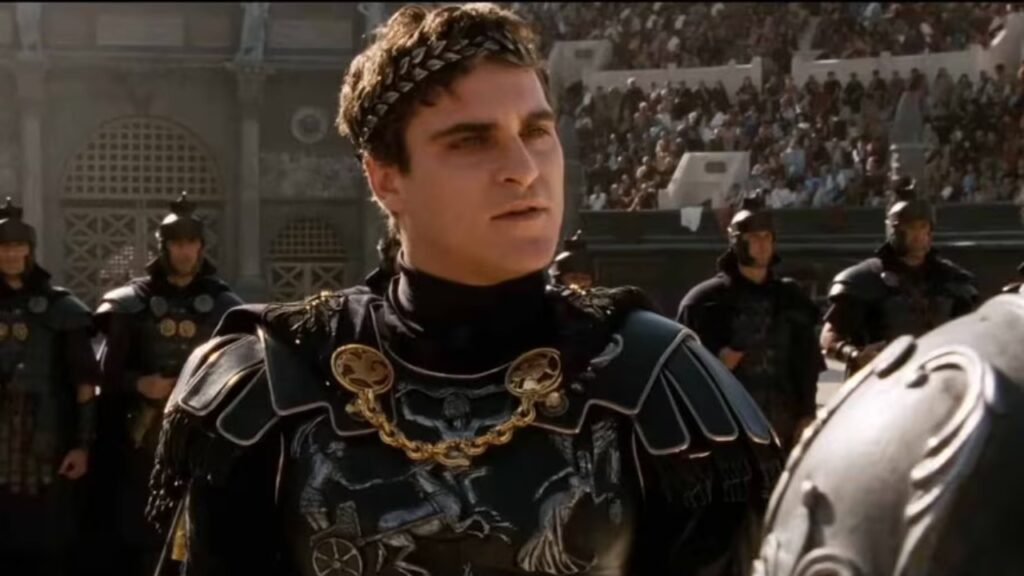
Looking back, the “fat hamster” insult turned out to be a strange blessing. Phoenix earned an Academy Award nomination for Best Supporting Actor, and his changing weight became a subtle part of the story. If you watch closely, in early scenes, his cheeks are fuller. In later scenes, he looks gaunt and starved.
Even after all that, Phoenix later admitted that Scott’s pressure was exactly what he needed. On another tough night, Phoenix refused to act because he “wasn’t feeling it.” Scott lost his temper, kicked Phoenix’s chair away, and screamed at him. “That was the fire I needed,” Phoenix said.
Twenty-six years later, we still remember Commodus; not because he was a hero, but because he looked like a real villain. A petty, whiny, slightly chubby villain. A little “fat hamster” who bit back.
You might also want to read: Ridley Scott Recalls How Close Russell Crowe Came to a Real Tiger in Gladiator