

Making comedy out of the darkest chapters of history isn’t everyone’s cup of tea. It certainly wasn’t in 1967, when Mel Brooks released ‘The Producers‘ and caught audiences off guard by turning Adolf Hitler into a musical laughingstock.
It wouldn’t have been much of a surprise had the film bombed at the box office, but it didn’t. The Gene Wilder-starring movie proved to be a success, establishing the Jewish filmmaker’s fearless cinematic tone. So, when a certain section of society flooded his mailbox with angry letters, Brooks didn’t issue an apology. He clapped back in his own way.
Mel Brooks Stood Firm Against The Critics
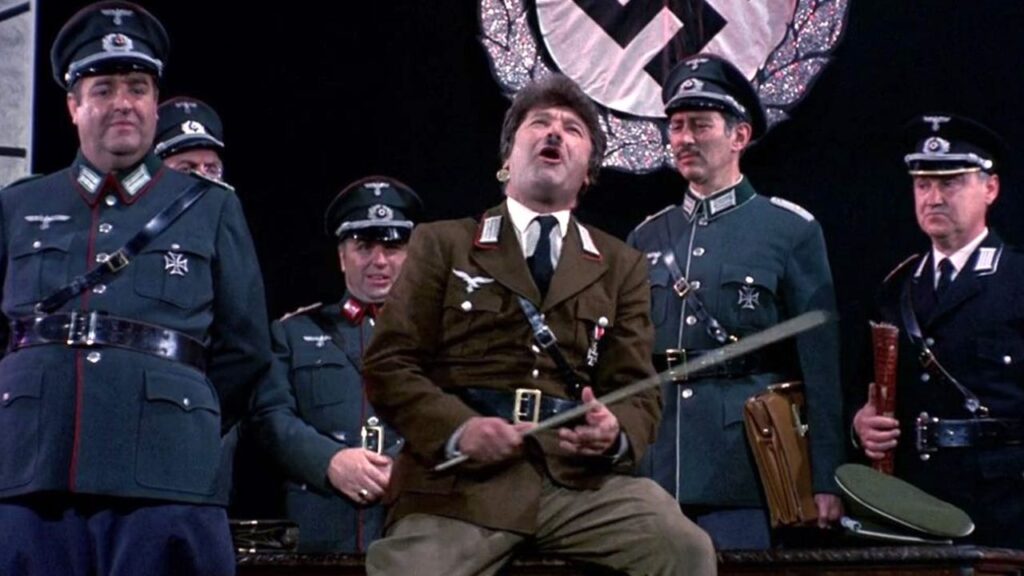
Written and directed by Mel Brooks, ‘The Producers’ depicts Adolf Hitler as an absurd and incompetent buffoon rather than a menacing figure. The character played by actor Dick Shawn appears in a play-within-a-play called ‘Springtime for Hitler: A Gay Romp with Adolf and Eva at Berchtesgaden.’
Related: How George Lucas Ruined The Biggest Joke In Mel Brooks’ ‘Spaceballs’
Brooks explained that he wanted to demystify the dictator by mocking him rather than giving him importance by expressing direct outrage. The story did just that with the small details that served as subtle humiliation while cracking people up.
For instance, the play creators cast a naive, peace sign-wearing hippie called Lorenzo St. DuBois, with a stage name of “LSD,” in the role of Hitler. Rather than an intimidating tyrant, the character becomes a comical strutting rock star.
Instead of performing a menacing song to evoke dominance and terror, this version of Hitler sings an upbeat jazzy tune, turning a misinterpreted N— propaganda song into an unintended avant-garde comedy routine. And guess what? Brooks himself wrote and composed the track ‘Springtime for Hitler.’
After the movie’s release, Brooks received lots of letters from almost every Rabbi in New York. They criticized the movie for its portrayal of the German political leader, asking the comedy legend to think twice before making a similar movie again.
Brooks wrote to each Rabbi in turn, saying, “You can’t get on a soap box with Hitler. You’ve got to ridicule him. You got to bring him down with laughter. There is no way to get even.” In fact, he wrote letters trying to explain the true meaning of his play and the song.
After a few weeks, the director received a few responses from the Rabbis, with one of them saying, “Maybe you’re right, you know? It was OK.” While Brooks managed to put his thoughts across clearly, that didn’t stop other critics from bashing his satire.
The Polarizing Reception Of ‘The Producers’
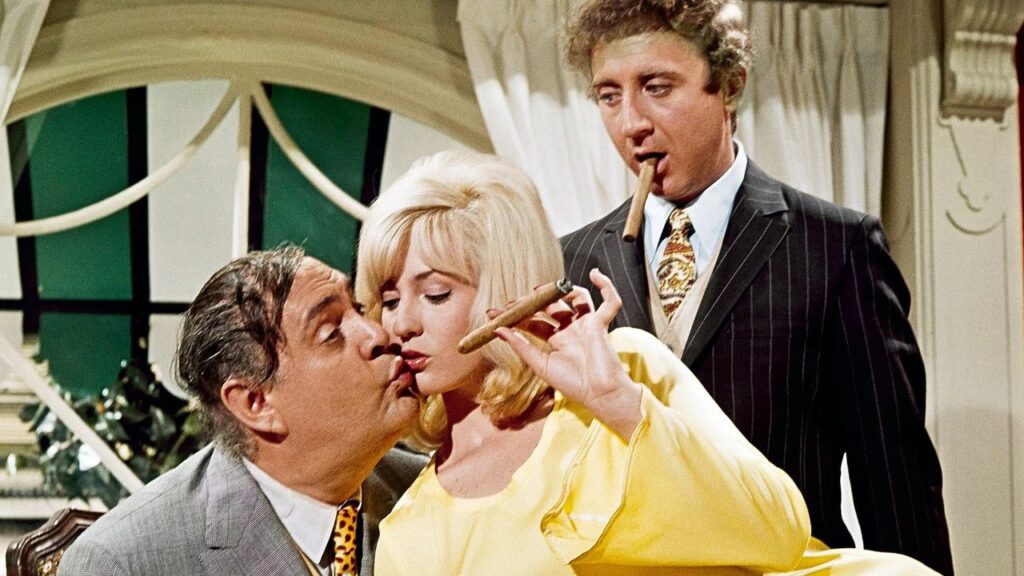
Upon its release, ‘The Producers’ received a mixed response, including some extremely negative reviews. However, others believed it was a real success. One of the mixed reviews comes from film critic and journalist Renata Adler of The New York Times.
In Case You Missed It: How Leslie Nielsen Inspired Mel Brooks to Revisit Horror Comedy With ‘Dracula: Dead and Loving It’
“The Producers, which opened yesterday at the Fine Arts Theater, is a violently mixed bag. Some of it is shoddy and gross and cruel; the rest is funny in an entirely unexpected way,” she stated.
Meanwhile, Pauline Kael called the movie “amateurishly crude” for its depiction of show-business Jewish humor considered too specialized for movies. “Screenwriters used to take the Jewish out, but now that television comedians exploit themselves as stereotypes, screenwriters are putting the Jewish in,” she added.
Over the years, the film has gained prominence for its hilarity and fearless writing. On Rotten Tomatoes, the film boasts a 91% positive rating based on 76 reviews with an average rating of 8.2/10.
“A hilarious satire of the business side of Hollywood, The Producers is one of Mel Brooks’s finest, as well as funniest films, featuring standout performances by Gene Wilder and Zero Mostel,” the website’s critical consensus reads.
As for accolades, Brooks won the Academy Award for Best Story and Screenplay – Written Directly for the Screen, while Gene Wilder received a nomination for Best Supporting Actor.
Ultimately, Brooks used absurdity to demystify a tyrant, proving that comedy can be a powerful tool for historical justice. Over time, the industry has embraced this brilliant act of audacity, cementing ‘The Producers’ as a classic in satirical warfare.
You Might Also Like To Read: Neil Patrick Harris Thought ‘How I Met Your Mother’ Was Dead on Arrival. Here’s Why