
When Christopher Nolan built Gotham for ‘The Dark Knight‘ trilogy, he made sure it felt grounded and believable, modeling it after cities like Chicago with towering skyscrapers and busy intersections. Yet despite all that realism, his Gotham often felt strangely lifeless.
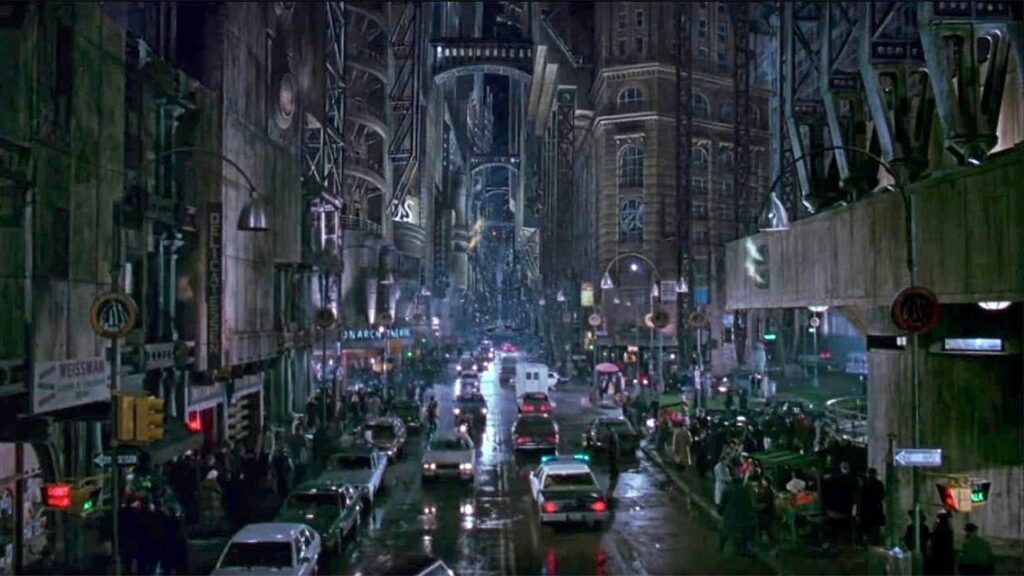
Matt Reeves took a very different path in ‘The Batman‘, crafting a Gotham that embodies danger and fear. In his version, the streets are perpetually wet, and flickering lights create an atmosphere thick with wrongdoing. The difference between Reeves and Nolan isn’t just in what we see, it’s in the emotions it evokes.
Of course, this isn’t about declaring one Batman universe better than the other. Both filmmakers built fundamentally different versions of Gotham to serve their vision of the Caped Crusader. This is purely about how the city feels as a lived-in space.
Why Christopher Nolan’s Gotham Felt Like a Stage, Not a City Like ‘The Batman’

In ‘The Dark Knight’ movies, Gotham primarily serves as a backdrop for ideological conflict: Batman as order, the Joker as chaos. Although corruption exists, it remains peripheral, and much of the city appears normal in daylight.
As a result, the sense of danger feels distant, almost theoretical. Nolan has often been lauded by many for placing Batman in the real world, but Reeves makes Batman’s world feel real.
Related: Top 5 Unexplored ‘Batman’ Storylines That Must Be Adapted in Live-Action
In ‘The Batman,’ Gotham isn’t just a setting, it’s the story’s center of gravity. The city feels alive, like it’s rotting from within and infecting everyone in it. Dark alleys, brutal crimes, and places like the Iceberg Lounge all feed into that sense of decay. Bruce Wayne, Penguin, and Riddler are all products of this poisoned city, and in turn, they help shape it.
So, while Christopher Nolan turned a larger-than-life DC hero into a mythic reality with Christian Bale, Matt Reeves uses Robert Pattinson’s Bruce Wayne to lean into a more immersive, street-level perspective. Here, Gotham itself dictates the tone and direction of the story.
How Matt Reeves Turned Gotham Into A Character
Drawing inspiration from 1970s crime classics and comic runs like ‘The Long Halloween,’ Reeves wanted Gotham “to be, in a way like Chinatown, like Jake Gittes going in to solve a crime.”
In case you missed it: When Did Batman Stop Killing People In DC Comics?
He portrays Batman and Gordon as two men on the edge of that truth, trying to piece together a profound mystery like a classic detective story. In this world, crime and the system that sustains it become the driving force behind staggering wealth inequality and the corruption that preserves it. That’s the most important distinction: Reeves’ Batman doesn’t rise above Gotham…he remains entangled in it.
With Nolan, Gotham functions as the backdrop to a traditional hero’s journey. Reeves shows that Gotham has shaped, broken, and bound Robert Pattinson’s Batman to the city forever.
Beyond simply looking menacing, Gotham, as presented by Matt Reeves, feels oppressive, a fundamentally broken place where everyone has been touched by its corruption. Seen through that lens, the more polished and controlled Gotham of Christopher Nolan’s films begins to feel remote, almost too orderly, too well-constructed to be real.
You might also like to read: Top 5 Tragic Origins of Batman’s Villains That Will Change How You See Gotham’s Foes