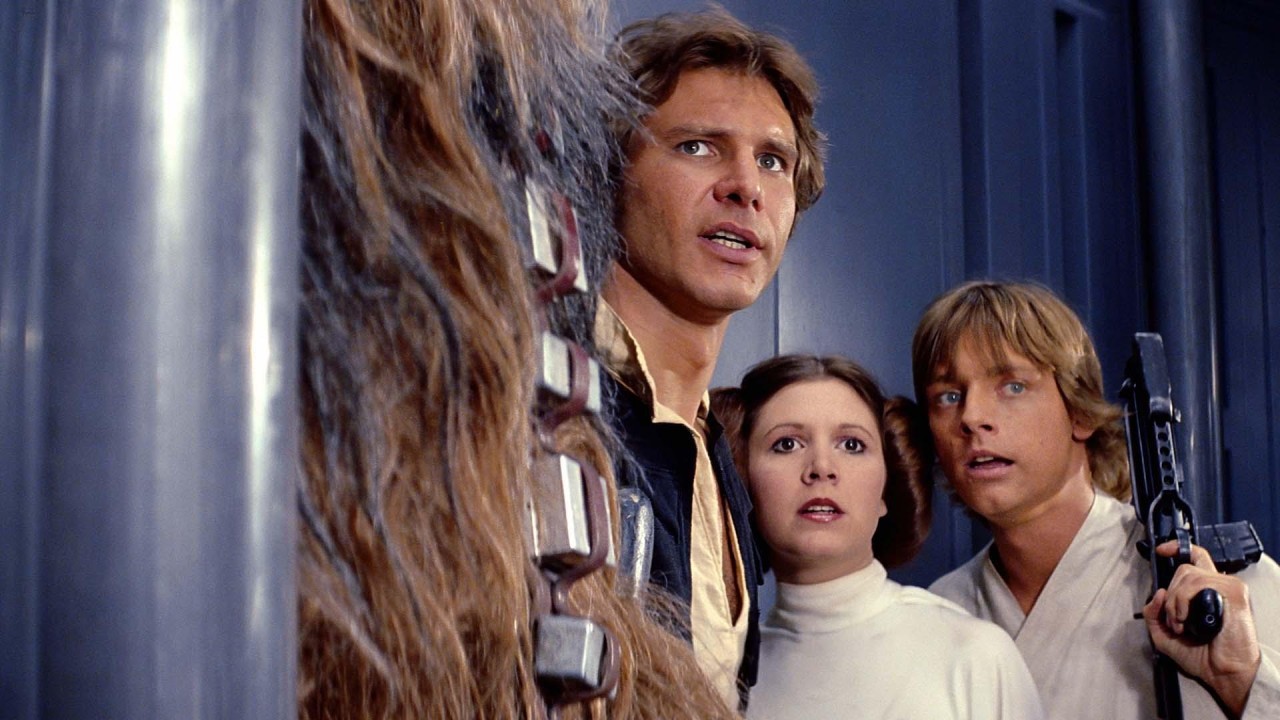
Long before it revolutionized filmmaking in Hollywood, ‘Star Wars‘ was heading towards disaster, doomed to fall apart under its own ambition. During a 1977 screening among a handful of close filmmaker friends, including Brian De Palma and Steven Spielberg, director George Lucas presented an undercooked first cut, so much so that they found themselves utterly perplexed by what was happening on screen. With unfinished visual effects patched up by splices of black-and-white war footage, ‘Star Wars‘ seemed to be less of a movie and more of an unfinished experiment.
But the panic generated by that terrible screening became the basis for one of cinema’s most recognizable storytelling methods. After relentless criticism by his peers, George Lucas came to realize the fatal flaw in his storytelling. And what emerged from that critical creative intervention not only saved the movie’s pacing issues but also transformed a half-baked cinematic experiment into an instantly-believable universe anyone could get lost within.
Star Wars Chaotic First Cut Left Everyone Confused
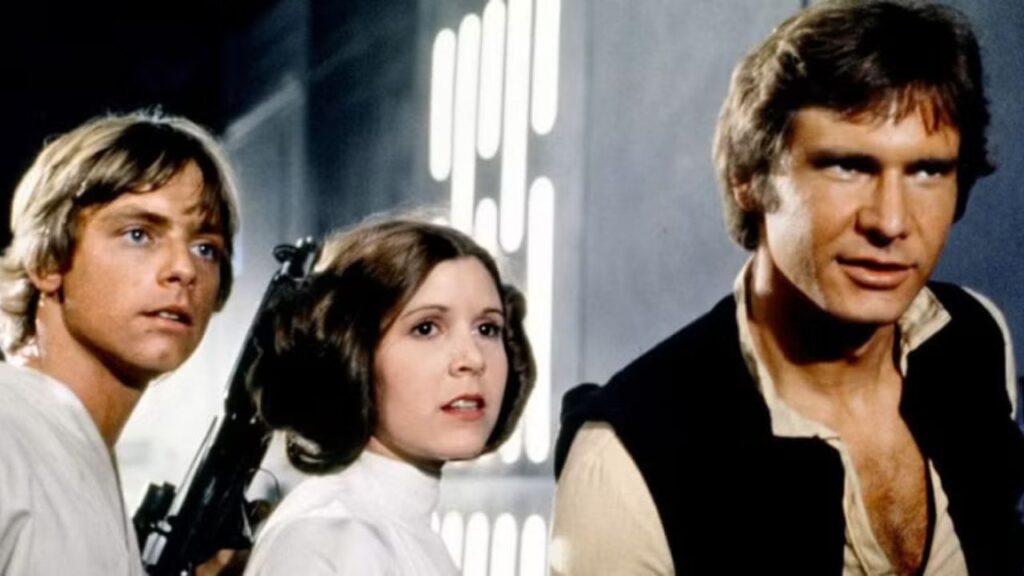
By 1977, George Lucas found himself struggling with the stress of completing his ambitious project. Desperate for feedback, Lucas convened a screening for some of his closest filmmaker friends, where the rough-cut version of ‘Star Wars‘ would be showcased.
However, without its iconic visual effects and with some scenes replaced by black-and-white WWII dogfight footage, the film appeared to be nothing more than a chaotic mess.
As recalled in the 2022 documentary Light & Magic, Steven Spielberg said, “to say it wasn’t finished is a kindness.” He further stated that the film “didn’t have the effects yet,” so ‘Star Wars‘ was essentially “a giant puzzle with three-quarters of the pieces missing.”
Reflecting on this editing nightmare, film editor Paul Hirsch noted the sheer impossibility of pacing a futuristic space epic using clips of 1940s propeller planes.
The Criticism That Led To The Iconic Opening Crawl
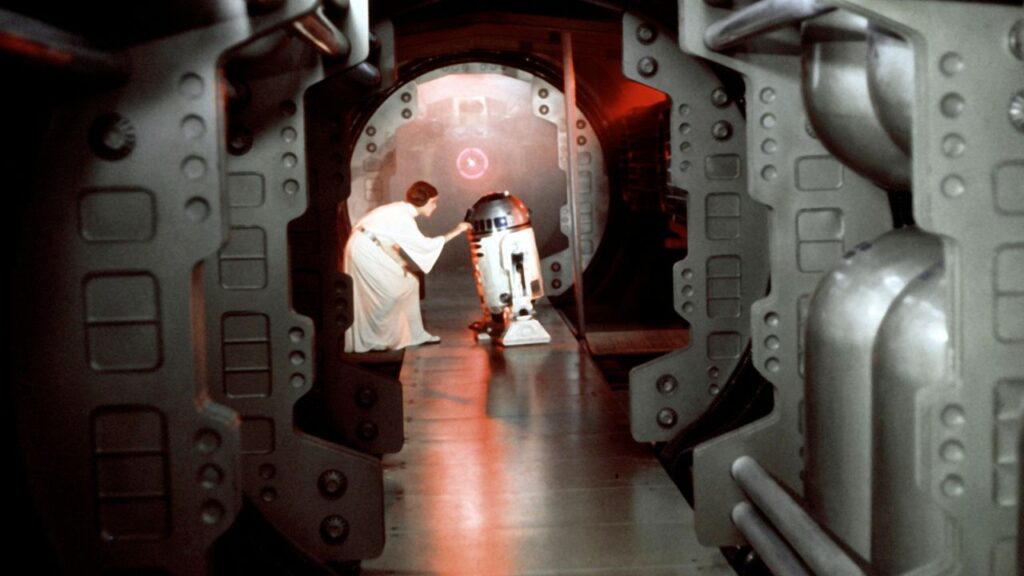
As the rest of the guests in the screening room began to panic, Brian De Palma delivered one brutal criticism after another: there was simply no way for audiences to understand who these characters were, where the story was taking place, or why the Galactic Empire was such a terrifying force.
In case you missed it: ‘Star Wars’: 5 Material That Can Block Lightsabers
Realizing that De Palma’s criticism was absolutely valid, George Lucas turned to his friends for help in finding a solution. Alongside writer Jay Cocks, De Palma helped Lucas condense the film’s sprawling backstory into a concise opening prologue.
The result was an elegant three-paragraph introduction that evolved into one of the most recognizable elements in cinematic history—the iconic yellow text crawl disappearing into infinity.
Ironically, the very criticism that nearly shattered Star Wars during its earliest screening ultimately helped shape one of the most iconic openings in cinematic history.
You Might Also Like to Read: Sam Witwer Compares ‘Star Wars’ Darth Maul to Jack Torrance in Shocking ‘The Shining’ Parallel