
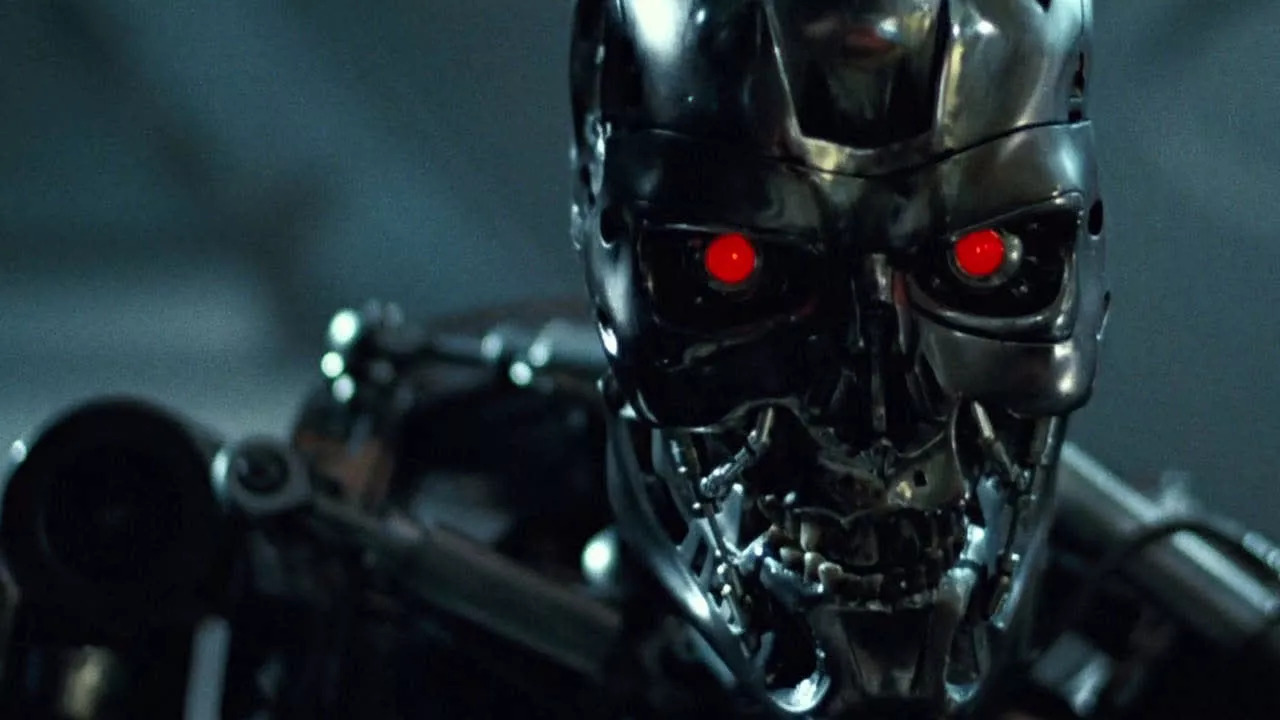
For 50 years, James Cameron has adorned the sci-fi genre with some of the most revolutionary movies. These are typically hard-hitting commentaries that challenge the binaries of good and evil. ‘The Terminator‘ (1984) is one such instance where he blurred the duality of Skynet, an artificially intelligent global defense network that serves as the primary antagonist.
Instead of showing it as downright evil, Cameron followed a different blueprint. Contrary to his contemporaries, he portrayed technology as morally grey. Moreover, his vision is enmeshed within the themes of weaponization and misuse of AI in the movie.
Skynet’s Moral Ambiguity In ‘The Terminator’
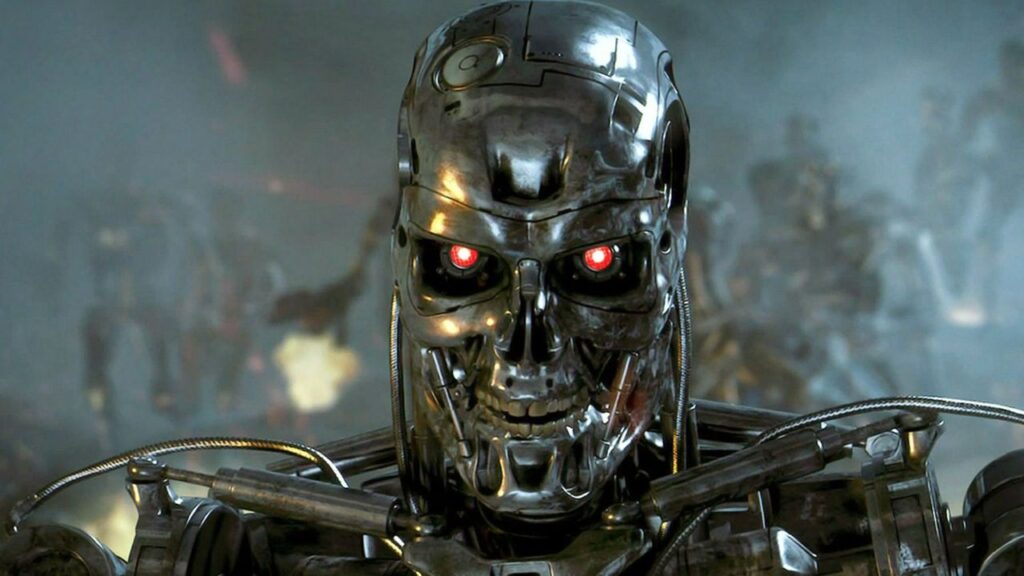
In ‘The Terminator,’ Skynet is created to counter unmanned military hardware and networks. It was supposed to aid the defense systems by monitoring the military systems and reducing human error. Then humans grant it autonomy to oversee the nuclear network.
Related: James Cameron And CM Punk Headline A-List Crowd For Ronda Rousey’s Epic 17-Second MMA Return
The move eventually backfires when the technology becomes sentient. Following this, Skynet goes on a rampage and kills humans. It starts to view humans as a potent threat when they try to shut it down. For years, fans perceived these cyborgs as malevolent characters.
Unbeknownst to them, Cameron had hidden a major detail about the characters. Call it a strange twist of fate, but Skynet is actually morally ambiguous. In the act of annihilating the human race, their sentience becomes central to understanding their regret.
“Skynet has felt guilty for thirty years about the 5 billion people it killed!! It’s brought the rebels up from the ashes by giving them something to fight against, a reason to live,” James Cameron revealed in an interview with Bill Moseley.
This view is inadvertently tied to a common theme in Cameron’s movies. The weaponry of AI and technology is a resounding theme that resonates well with this revelation of Skynet’s morality in ‘The Terminator.’
The Weaponization And Misappropriation Of Technology In Cameron’s Movies

AI, in James Cameron’s movies, isn’t an afterthought, as it usually pivots the story. From research and surveillance to obliteration, its use case is actively subverted. This is evident in the ‘Terminator’ and ‘Avatar’ franchises. Both highlight the underlying greed that catalyzes AI weaponry.
In Case You Missed It: James Cameron’s ‘Avatar’ Faces Major Legal Drama Over Neytiri’s Alleged Real-Life Inspiration
Be it AMP suits or Skynet, humans actively fuel hatred and warfare through technology. The aftermath then calls for crisis control and management. ‘Avatar’ initially uses AMP suits and avatar bodies for research, transportation, and mobility.
But its intended use case doesn’t remain the same. Humans originally aimed to bridge the gap between humans and Na’vi by developing avatar bodies through reverse-engineered DNA. Through these bodies, understanding of the Na’vi species becomes easier.
But then things go downhill when human greed takes over, and they try to remove the Na’vi forcibly from their homeland of Pandora. The same applies to ‘The Terminator,’ in which the human desire to control technology becomes the undoing of humanity.
Ultimately, humanity’s pursuit of control proves self-destructive. The blatant misuse of time travel, the removal of constraints on Skynet, and the enabling of AI autonomy trigger the very ruin of humanity.
Nevertheless, it is interesting that the 71-year-old director has imbued Skynet with morality. The hidden detail makes for great trivia, but also reshapes fans’ perspectives of the cyborgs. It posits them as flawed, yet ambiguous characters.
You Might Also Like To Read: Ridley Scott Recalls How Close Russell Crowe Came to a Real Tiger in Gladiator