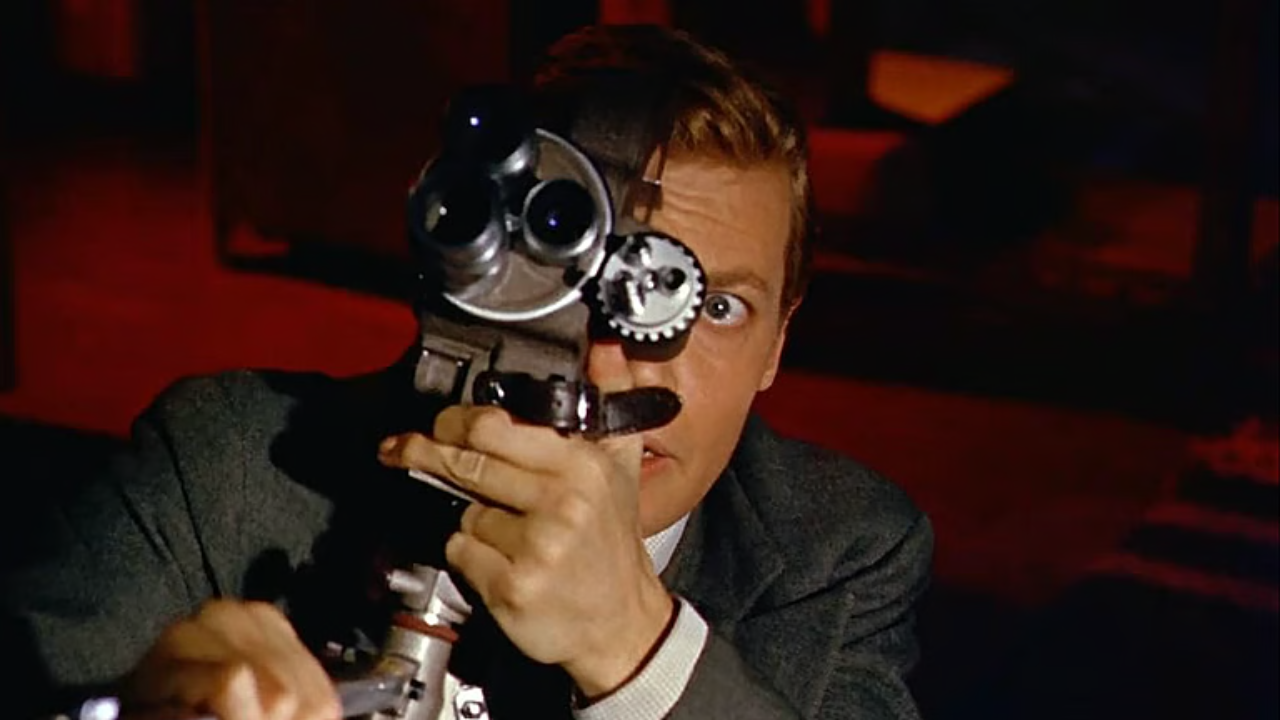
In a quiet London cinema back in March 1960, people sat in the dark and watched a man lift up a camera with a hidden blade inside it. He filmed his victims’ faces as the women looked terrified in their last moments. There was no blood spraying everywhere in slow motion, no loud music crashing in at the moment of the kill. But Michael Powell’s film ‘Peeping Tom‘ left the audience deeply shaken in a way that few movies ever have, before or since.
Today’s horror films load up on blood, sudden scares, and flashy special effects. Yet this 65-year-old psychological thriller still gets under your skin. It doesn’t just show you terror. It puts you in the position of the one holding the camera.
The Shocking 1960 Backlash Against ‘Peeping Tom‘
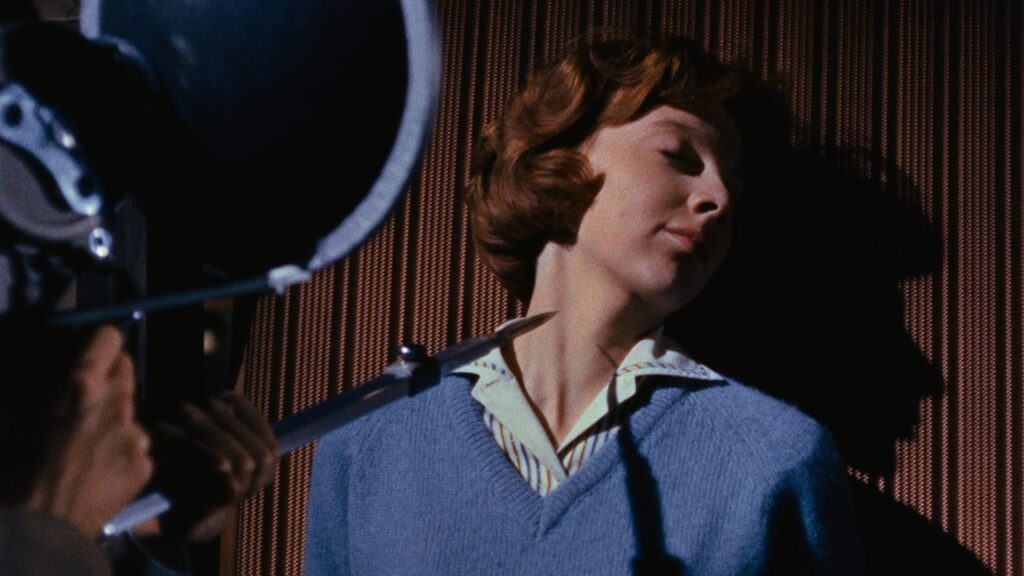
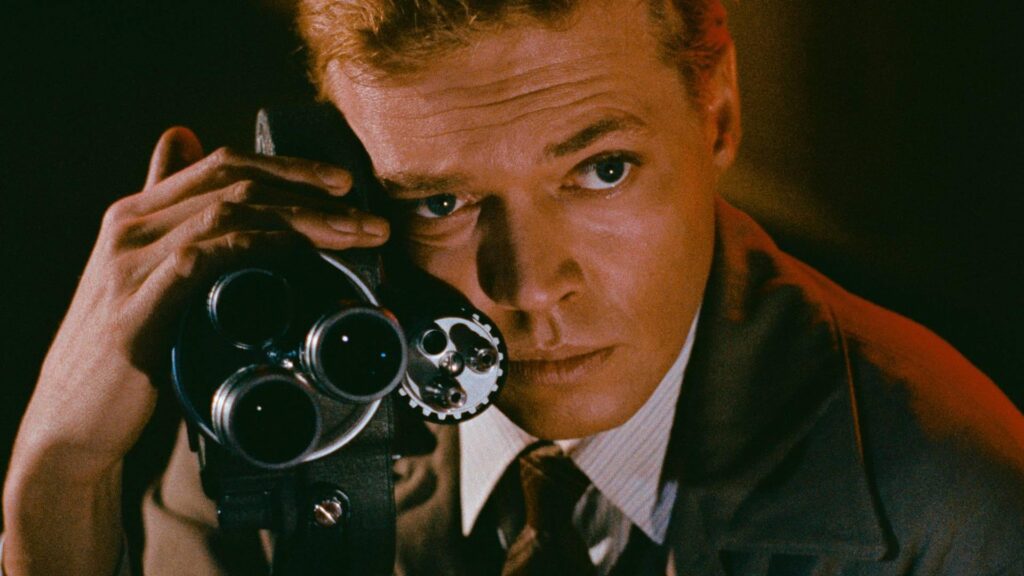
The story follows Mark Lewis, played by Karlheinz Böhm. He works as a quiet studio focus-puller during the day and becomes a serial killer at night. As a child, his psychologist father ran cruel experiments on him to study fear. That left deep scars.
Related:
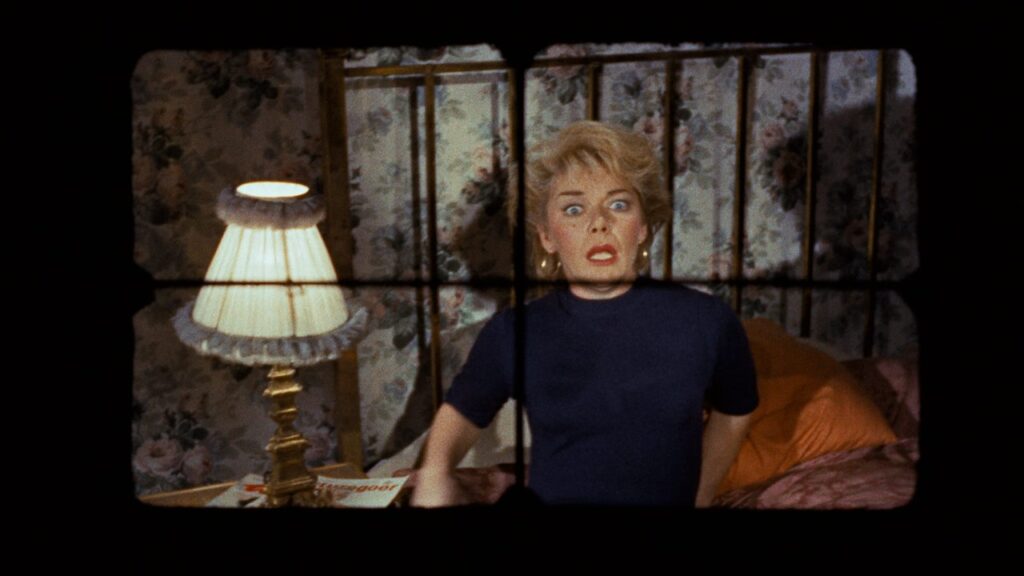
Now Mark hunts women, prostitutes, actresses, and models. He films them as they die, using a special camera setup that makes them watch their own faces twist in horror. The camera is his tool, his obsession, and his way of confessing everything.
‘Peeping Tom‘ came out the same year as Alfred Hitchcock’s ‘Psycho‘, and right away, critics hated it. They called it “beastly“, “nauseating“, and “the sickest and filthiest film” they could remember. One reviewer, Derek Hill from the Tribune, wrote that the only thing to do with it was to “shovel it up and flush it down the nearest sewer. Even then, the stench would remain.”
How The Film Forces Audience Complicity Through Violence
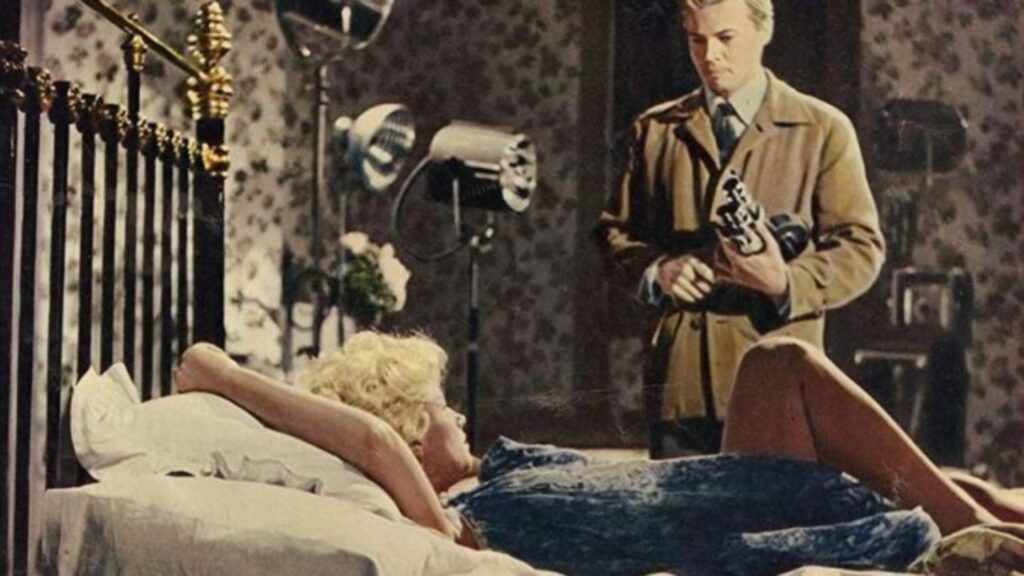
Powell’s successful career in British films fell apart almost overnight. So, what made the movie so hard to take? It was not just the violence. ‘Psycho‘ had plenty of that. The real problem was how Powell made the audience see everything through the killer’s eyes. The film starts right inside Mark’s viewfinder, and repeatedly, we watch the murders from his point of view. The lens becomes our own eyes.
Roger Ebert put it well later on. He said, “The movies make us into voyeurs. We sit in the dark, watching other people’s lives. It is the bargain the cinema strikes with us, although most films are too well-behaved to mention it.”
‘Peeping Tom‘ breaks that bargain. Ebert added that it did not let the audience hide safely in the dark. Instead, it pulled us right into the same kind of voyeurism as the main character.
Why ‘Peeping Tom’ Feels More Unsettling Than Modern Horror Films
Most horror films today do not ask that much from us. In slashers like ‘Halloween‘, we root for the final girl. In torture films like ‘Saw‘, we just react to the shocking scenes and then walk out feeling okay again. Even serious horror movies like ‘Hereditary’ or ‘Midsommar‘ give us a strong sense of dread that feels complete by the end, through family pain or strange rituals.
‘Peeping Tom‘ gives no easy way out. Mark is not some wild monster you can hate without thinking. He seems sad, lonely, and almost gentle at times. Powell himself acted as the harsh father in the old home movies that damaged Mark. The director later said, “I felt very close to Mark.”
In case you missed it: The Untold Truth About Alfred Hitchcock and His Troubling Views on Women
The film links the act of making movies with something that violates people. Powell once said, “I don’t think there is anything more frightening than a camera.”
Martin Scorsese, who helped bring the film back years later, called it one of only two movies, along with Fellini’s ‘8½,’ that say everything that can be said about filmmaking. He explained that ‘Peeping Tom‘ shows the aggressive side of it and how the camera can violate.
‘Peeping Tom’s Prophetic Warning in the Age of Smartphones and Social Media
These days, with phones everywhere, doorbell cameras, and constant sharing on social media, the film’s message feels ahead of its time. We record ourselves and others all the time, looking for strong reactions and even fear, just to get attention online. ‘Peeping Tom‘ saw back in 1960 what we are only starting to admit now. The desire to watch is never completely harmless.
Even after all these years, the film’s power has not weakened. It seems prescient. Modern horror entertains us, but ‘Peeping Tom‘ points a finger at us. And when the credits roll, and the lights come up, we realize we never turned our eyes away.
You might also want to read: The Real Cannes Robbery That Mirrors Alfred Hitchcock’s Classic Thriller