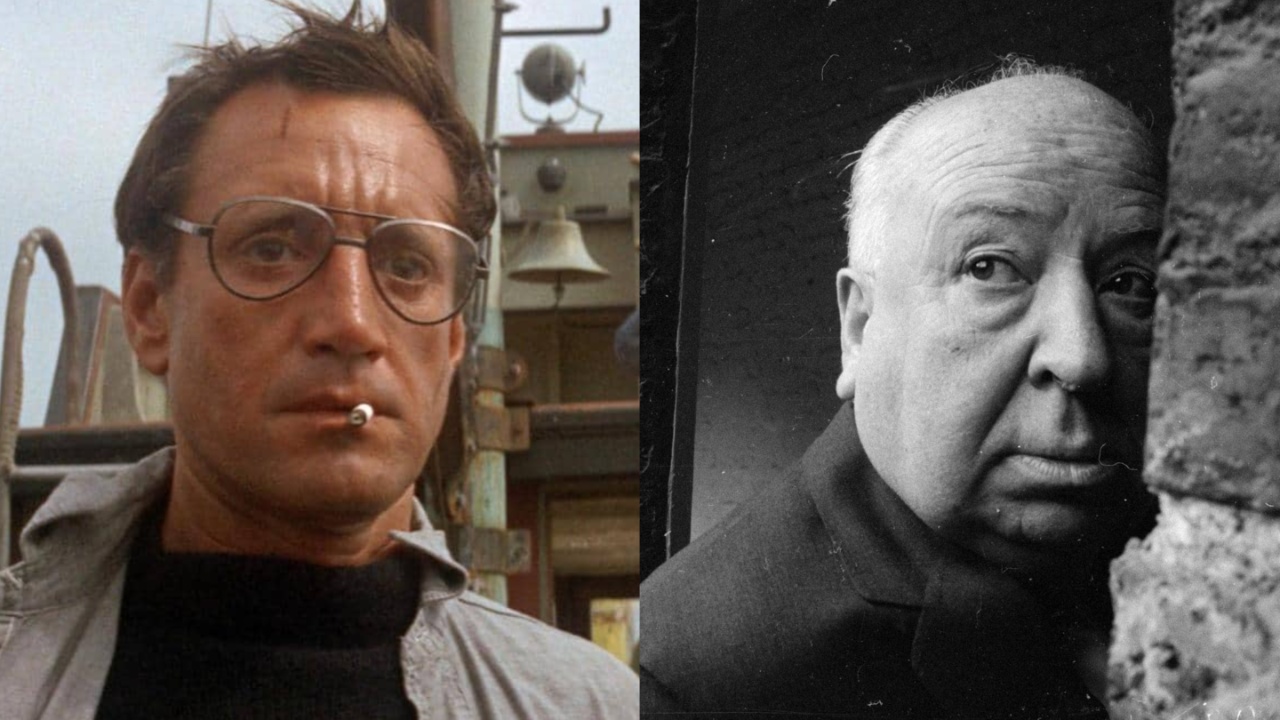
It is the most famous summer of 1975, and on screens across America, a great white shark is devouring swimmers. Yet, for the first eighty minutes of Steven Spielberg’s ‘Jaws‘, the monster barely appears. When it does, it is usually a blur of grey flesh or a dorsal fin slicing through the water. The terror isn’t in the teeth; it is in the imagination.
This artistic choice, now considered a masterclass in suspense, was not part of the original plan. It was a mechanical disaster. When a twenty-six-year-old Spielberg arrived on Martha’s Vineyard to shoot ‘Jaws‘, he intended to make a visceral horror movie featuring a fully functional, 25-foot animatronic shark. Dubbed “Bruce” after the director’s lawyer, the three mechanical sharks built for the film cost over $500,000 (approximately $3 million today). They were also, by all accounts, useless.
Applying Alfred Hitchcock’s “Bomb Under the Table” Theory to the Ocean
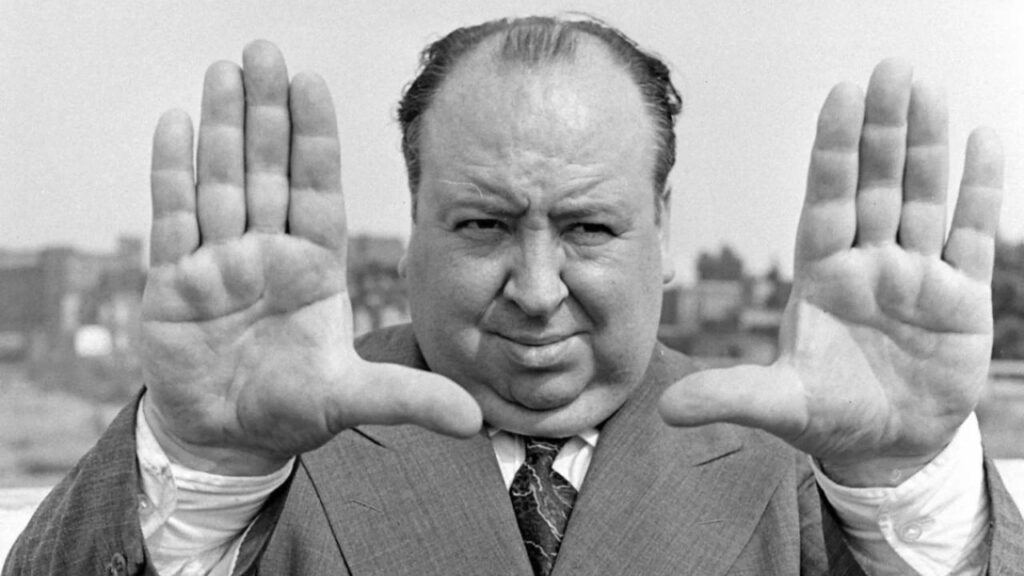
The pneumatically driven creatures were too heavy, sank to the bottom, and were corroded by the saltwater almost instantly. “The film went from a Japanese Saturday matinee horror flick to more of a Hitchcock, the less-you-see-the-more-you-get thriller,” Spielberg later told The Roanoke Times. Cornered by reality, the director looked to his hero, Alfred Hitchcock, for rescue.
Related: Alfred Hitchcock Fired His Greatest Collaborator Over One Major Disagreement
Hitchcock built his whole career on one simple rule. Suspense is when the audience knows the bomb is under the table, even if the people at the table don’t know it. Spielberg took that idea and moved it to the ocean.
Since he couldn’t show the shark ripping through the water, he put the camera underneath the surface. In the opening scene, when Chrissie Watkins dies, you only see her legs thrashing and feel the violent pull from below. The killer is invisible. This “POV cutting,” where the camera acts as the eyes of the monster, forces the viewer to become the prey.
Spielberg also weaponized the environment. Rather than cutting away from the shark, he cut to yellow barrels. Attached to the beast by harpoons, the barrels become a visual representation of the shark’s speed and rage. “What you don’t see is generally scarier than what you do see,” Spielberg explained. As the barrels bob and dive in the water, the audience projects their own horror onto the empty waves.
The “Vertigo Effect” In ‘Jaws’
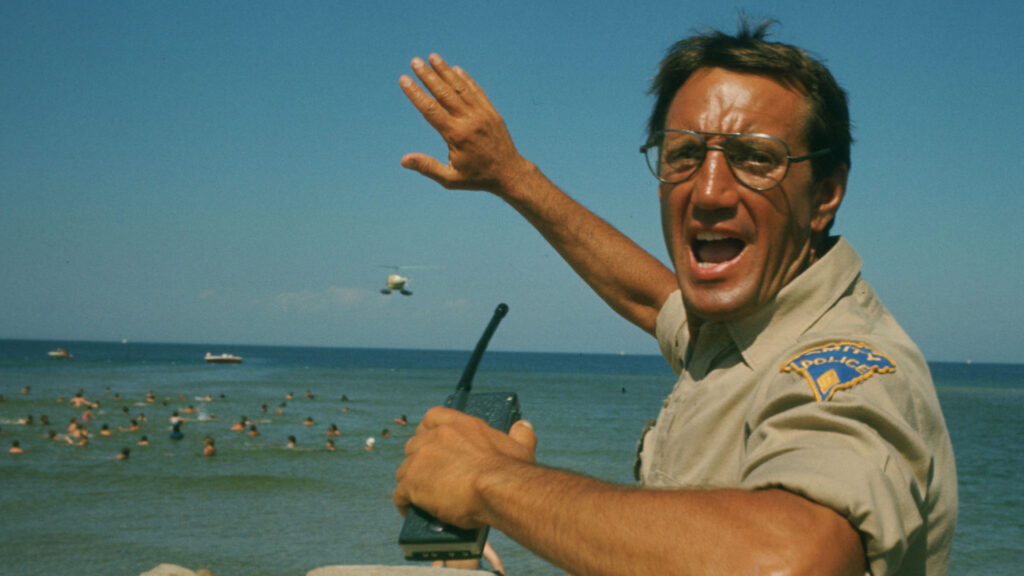
The most direct cinematic lift from Hitchcock occurs during the film’s climax on the beach. As Chief Brody (Roy Scheider) watches a boy being attacked, the camera performs a “dolly zoom”, a technique invented by Hitchcock and cameraman Irmin Roberts for the 1958 film ‘Vertigo‘.
In case you missed it: The One-Word Reply From Alfred Hitchcock That Took 40 Years to Understand
In this shot, the camera moves backward on a dolly while the lens zooms forward. The result is a sickening distortion of space where Brody’s face stays the same size, but the background stretches into an infinite tunnel of horror. Known informally as the “Jaws effect,” this specific visual cue signals the moment the character’s psychological reality shatters. It is the visual equivalent of a scream.
From Blockbuster Disaster to Psychological Masterpiece
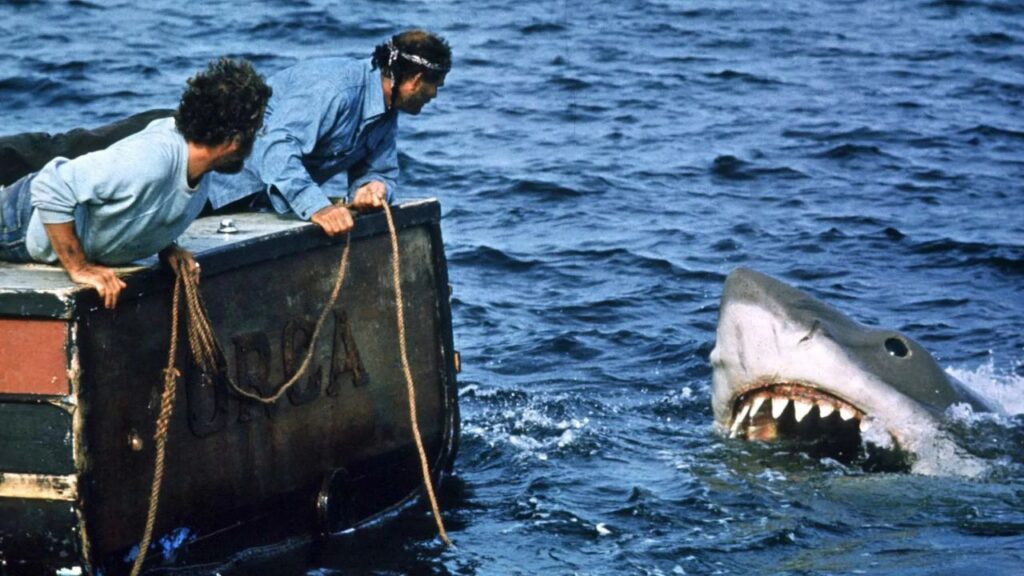
If the mechanical sharks had worked right, ‘Jaws‘ would have been a regular creature feature; a “Japanese Saturday matinee flick,” as Spielberg said. But the broken machines forced him to hide the monster, and that turned the movie into a masterpiece of psychological fear.
‘Jaws‘ became the first summer blockbuster. It made nearly five hundred million dollars worldwide and changed Hollywood forever. But the real lesson was that the scariest thing on the screen is often the empty space where the monster isn’t.
“It’s what we don’t see that is truly frightening,” Spielberg said. It was a philosophy born of broken electronics, saltwater corrosion, and the quiet genius of Alfred Hitchcock.
You might also want to read: How a Forgotten 1940 Alfred Hitchcock Film Inspired Christopher Nolan’s Most Intense War Movie