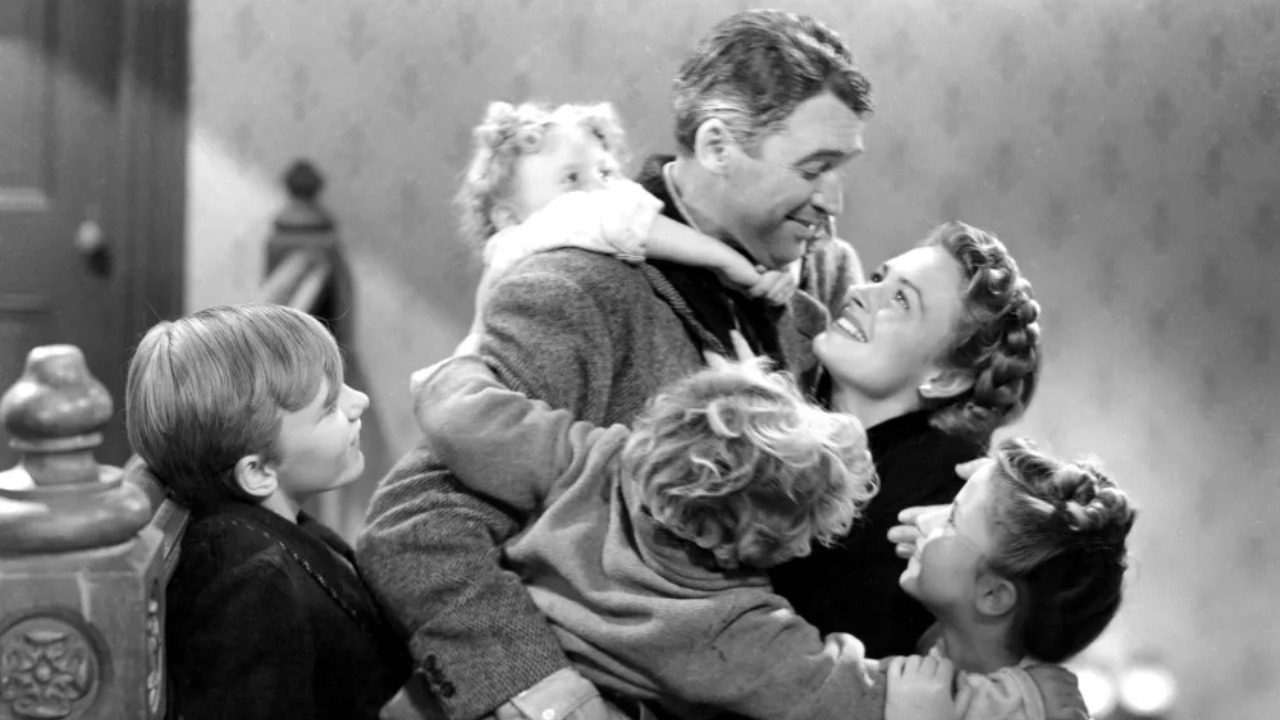
For decades, James Stewart called ‘It’s a Wonderful Life‘ his favorite of the eighty films he made. In a 1987 piece for Guideposts, he talked about coming home in 1945 after three years in the Air Force. He was unsure how to get his career going again when Frank Capra called him up with an idea about a suicidal man who gets saved by an apprentice angel.
Stewart said yes right away. But even though the film is now a Christmas staple, Stewart carried two complaints about it for the rest of his life; one about his career and one more personal, and neither is well known outside of film history circles.
Why ‘It’s a Wonderful Life’ Flopped at the Box Office in 1946
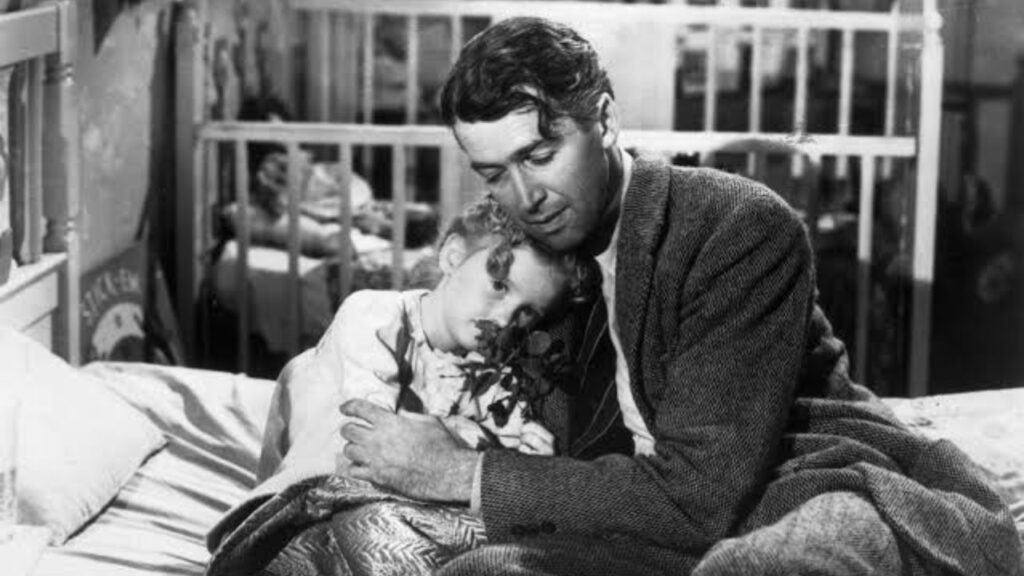
The first goes back to before the movie was ever considered a classic, because in 1946 it wasn’t one. ‘It’s a Wonderful Life‘ got mixed reviews and did so poorly at the box office that it helped bring down Capra’s studio, Liberty Films. Bosley Crowther at The New York Times liked Stewart’s performance but thought the movie was too sentimental, and critic James Agee said it was “pile-driving” in how hard it worked on the audience’s emotions.
Related: James Stewart Never Recovered From The Death Of His Favorite Co-Star Who Made Him A Star
The film came in twenty-seventh in earnings that season, behind movies like ‘Sinbad the Sailor.‘ It took a clerical mistake in 1974, one that let the copyright lapse and allowed TV stations to play it for free, to turn the film into the holiday favorite it is now. That happened almost twenty years after Stewart and Capra had already given up on it as a flop.
Based on things Stewart said later in life, that early failure left him quietly resentful toward his co-star Donna Reed, who played Mary Bailey. Reed’s daughter, Mary Anne Owen, has said her mother believed Stewart blamed her for the movie not doing well. He felt she wasn’t a big enough star to help it, and that he didn’t really want to work with her again after that. It’s a small, less flattering detail behind a screen partnership that people now remember as one of the most touching in movie history.
James Stewart’s Fight Against the Colorized Version
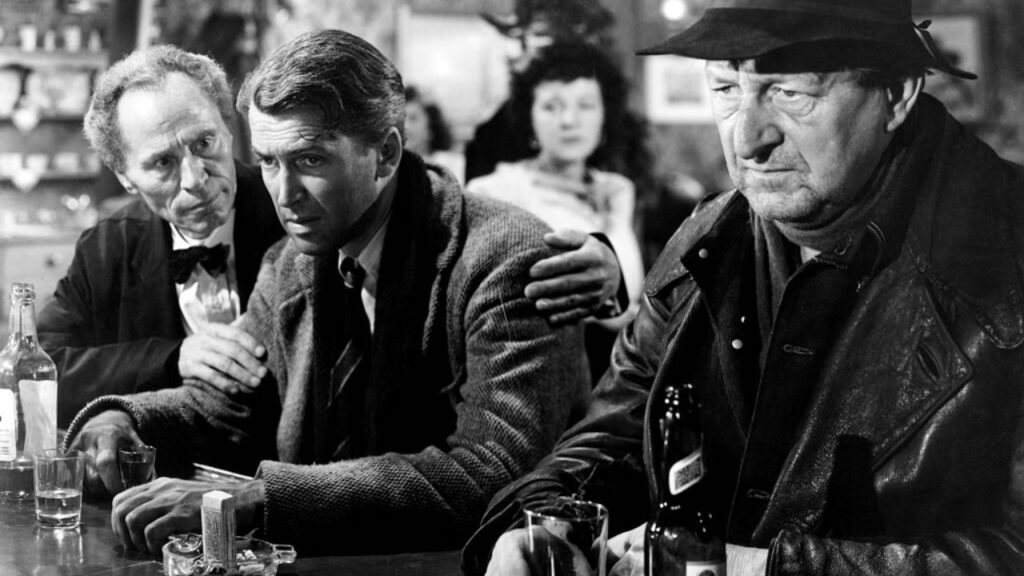
The second complaint came up much later and had nothing to do with 1946. When studios started colorizing old black and white films in the 1980s, Stewart was, by most accounts, genuinely angry about it. He wrote a statement that Ginger Rogers read out loud at a congressional hearing on film preservation, calling the colorized version a “bath of Easter egg dye.”
In case you missed it: The Hollywood Mogul Who Tried to Stop James Stewart from Fighting in World War II
He was especially bothered by one choice, putting Gloria Grahame’s character, Violet, in violet colored clothes through the whole film. To him, that was exactly the kind of obvious, heavy handed touch Capra never would have gone for. He felt it was the kind of cheap visual joke that clashed with how subtle Capra’s direction usually was. Stewart said watching the colorized version actually made him feel sick.
The Martini’s Bar Scene and James Stewart’s Congressional Testimony
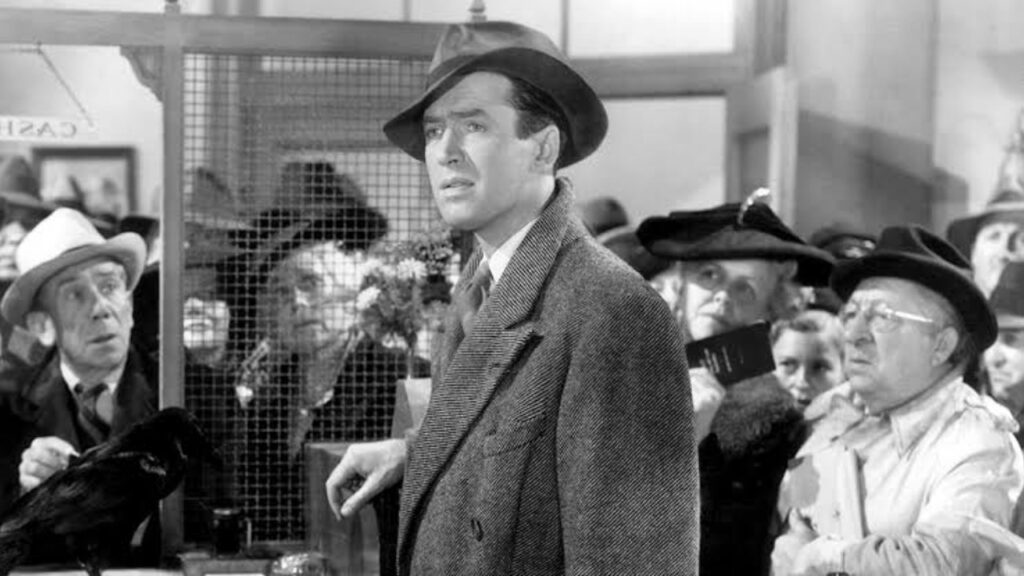
That fight was part of something bigger. Stewart joined directors like Woody Allen and Martin Scorsese in testifying before Congress in the late 1980s against colorization. They argued it messed with the original vision of filmmakers who had no say in the changes. For Stewart, this mattered even more because one of his most powerful moments in the film, George Bailey’s tearful prayer at Martini’s bar, was reportedly shot in a single raw, unplanned take that Capra decided to keep instead of reshooting. So the idea of altering the film’s look felt like a betrayal of something that had been real and unscripted.
Still, none of this changed how much he loved the film overall. Stewart kept calling it his favorite movie, and he believed its message, that an ordinary life lived honestly still matters, was the whole point of the story. He just wanted people to see it the way Capra actually made it, in black and white, without the dye.
You might also want to read: Why James Stewart and Henry Fonda Tried Digging a Tunnel to Greta Garbo’s House