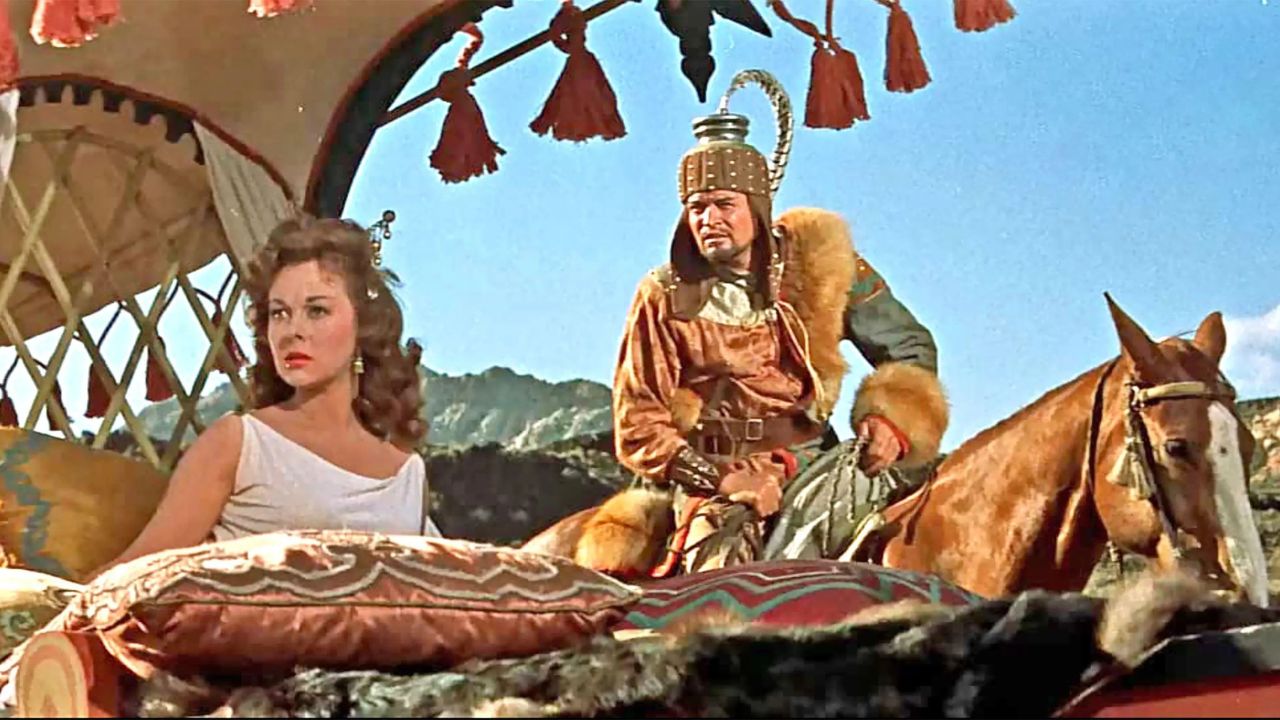
In 1954, Dick Powell and his team traveled to the red sands of St. George, Utah, to shoot an epic historical adventure film, ‘The Conqueror.‘ For this monumental project, which also starred the legendary John Wayne, Powell sought a dramatic setting to recreate the barren Gobi Desert.
But little did he know that his overly ambitious approach and slight oversight would become the undoing of his movie. Located a mere 137 miles downwind from a site where the U.S. government was conducting extensive tests on atmospheric nuclear weapons, the shooting location ultimately put hundreds at risk of a dangerous threat they couldn’t see at first. So, what ensued on the set of the 1956 movie?
The Poisonous Location That Wrecked Havoc
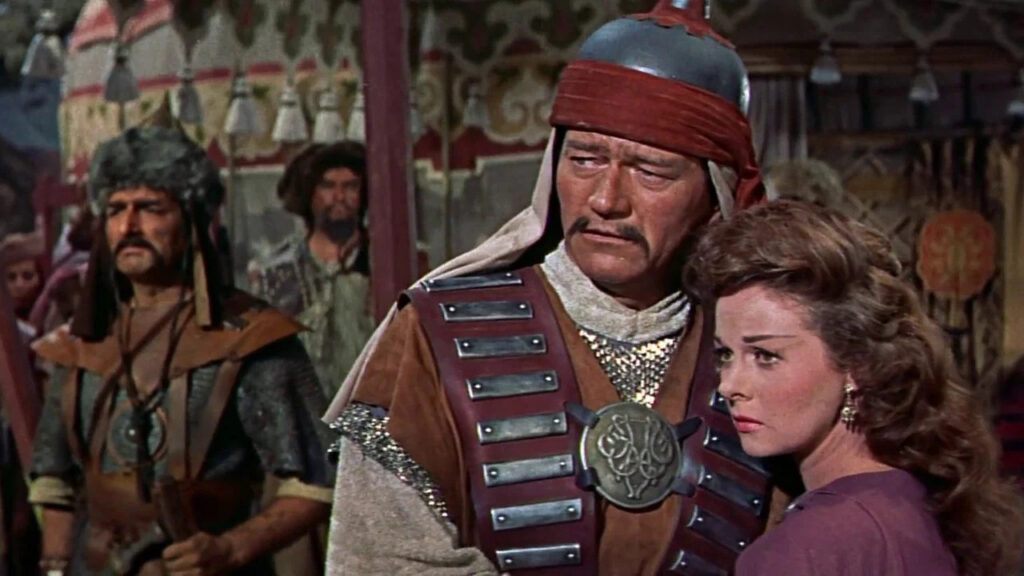
The desert landscape that director and producer Dick Powell chose was severely contaminated. Before filming began, the government had conducted the infamous “Dirty Harry” nuclear test, resulting in a huge amount of radioactive waste floating toward Utah.
Related: The Clint Eastwood Role John Wayne Admitted Was His “Biggest Mistake” To Turn Down
Unaware of this harsh reality, the entire cast and crew breathed the heavy air, saturated with swirling dust clouds in the sweltering heat for three months. Moreover, the crew transported even 600 tons of radioactive soil from the site back to Los Angeles soundstages to shoot interior scenes.
Unfortunately, a terrible statistic emerged in the years to come. Out of 220 people working on the film set, 91 had been diagnosed with cancer by the year 1980, while 46 of them died from the illness. The victims included Powell and actors Susan Hayward and Agnes Moorehead.
As for John Wayne, he died from stomach cancer in 1979 after being ill with lung cancer. Mexican actor Pedro Armendáriz took his life after learning about his cancer diagnosis. As if things weren’t devastating enough, the tragedy ultimately extended far beyond the movie’s cast and crew.
The Price Of Silence Paid By Civilians
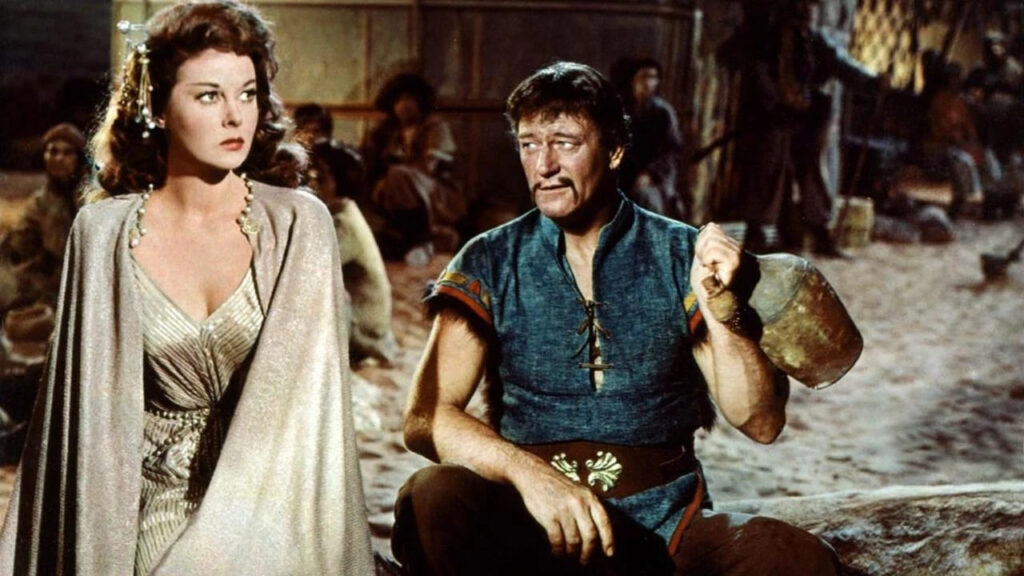
According to reports, an elevated frequency of radiogenic diseases also plagued local civilians, nicknamed Downwinders. These included cancers and leukemia. For many years, government agencies insisted that ground detonations posed no threat to people’s health.
In Case You Missed It: How John Wayne’s Grandson Brendan Wayne Created ‘The Mandalorian’ Iconic Walk
Because of a severe lack of information, local civilians were left entirely vulnerable to high doses of radiation without warnings or safeguards. The tragic consequences of the production became a source of great public concern.
The aftermath sparked a campaign to hold the state accountable and tighten nuclear energy rules. Years later, Congress passed the Radiation Exposure Compensation Act to help citizens affected by the disaster. Although many external factors could affect particular cases, the statistical fact remained remarkable.
To date, ‘The Conqueror’ remains a symbol of the severe consequences of Cold War military programs. History will not forget this dark episode, which serves as a testament to the dangers posed by government secrets and environmental negligence.
The combination of filmmaking and military testing caused an unnecessary death toll. From movie stars and stunt doubles to crew members, everyone fell prey to the tragedy without even realizing it. In the end, they helped expose the dangers lurking within the nuclear age.
It marks a significant contribution that led to much-needed transparency and justice for the communities involved. If you would like to learn more about this case, check out the videos available on the controversy surrounding nuclear fallout in ‘The Conqueror.’
You Might Also Like To Read: Jude Law Admits He Would Do Anything to Work With Radiohead