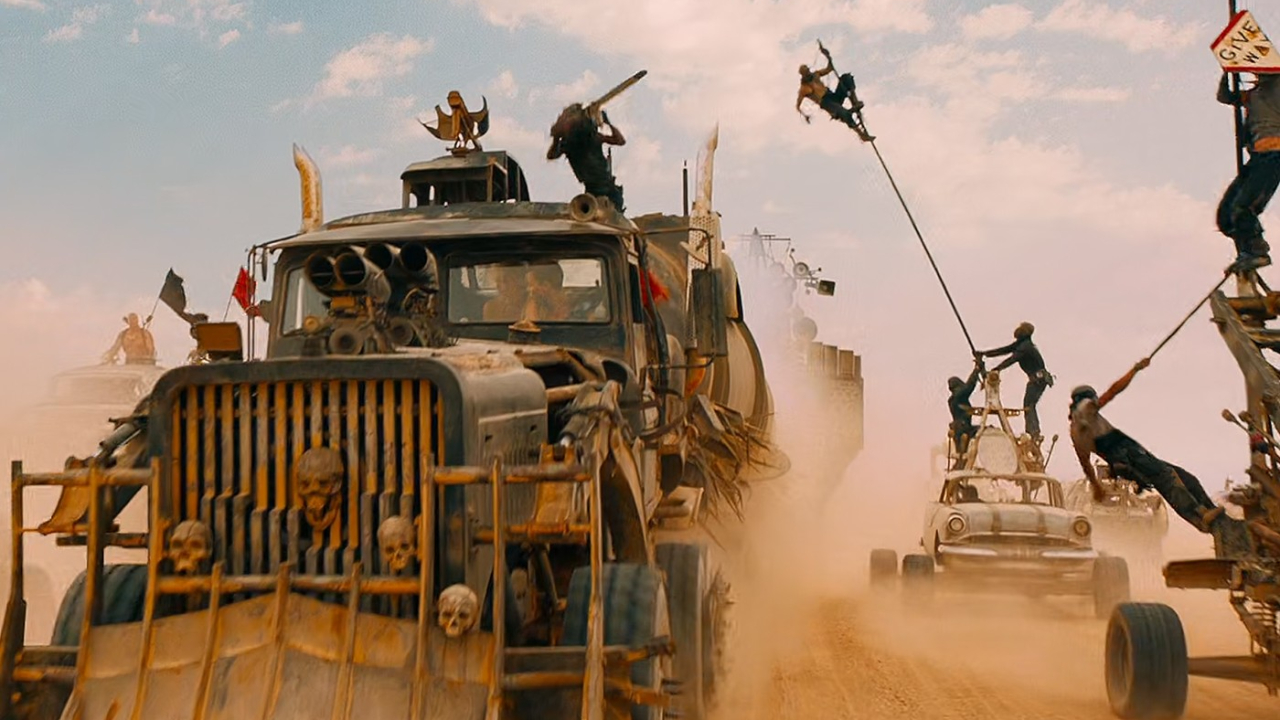
One of the wildest images in ‘Mad Max: Fury Road‘ comes during the chase when a line of War Boys rises into the air on giant, bending poles, swaying over speeding vehicles like human metronomes. The sequence looks so extreme that it barely registers as something a production would even attempt in real life. It feels like the sort of thing a modern action film would hand straight to a visual-effects team and build later on a computer.
However, George Miller and his crew went in the opposite direction. ‘Mad Max: Fury Road’ was built around the idea that if a stunt could be done practically, they would do it that way, and the Pole Cats became one of the clearest examples of that philosophy. While Miller reportedly initially assumed the sequence would require heavy digital help, the stunt team and designers developed a real mechanical system. They recruited acrobats who could handle it, and put them atop moving vehicles in the Namibian desert. Here’s how it all happened.
How Turning Giant Poles Into Metronomes Saved The Movie
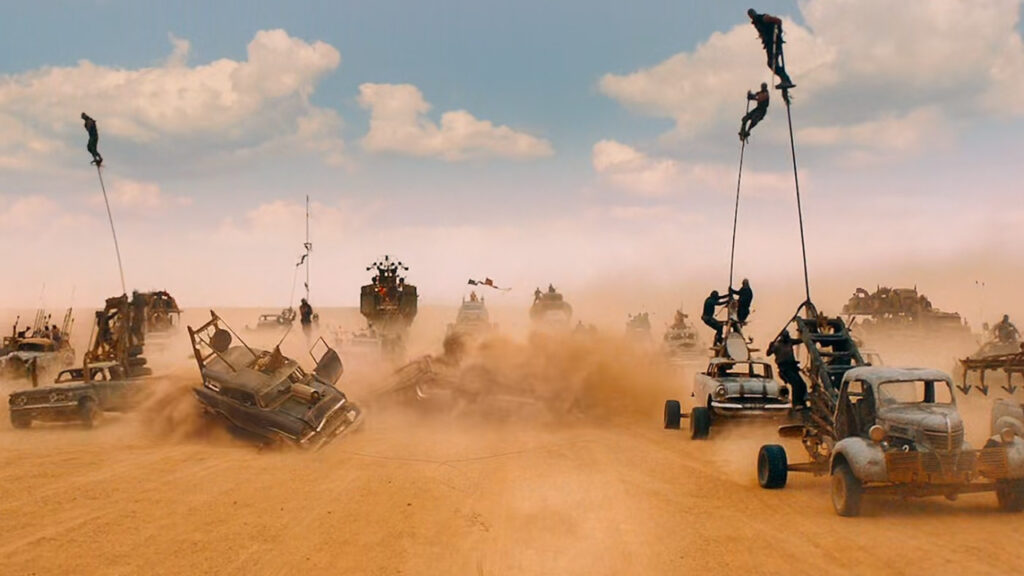
The biggest challenge to pulling off this tricky task was preventing the poles from bending. It was figuring out how to let them move without tipping the vehicles over or snapping the performers around so violently that the stunt became impossible.
Related: Why ‘Mad Max: Fury Road’ Was a Literal Living Nightmare for Its Cast
A long pole mounted on a moving car generates a dangerous amount of force, especially when a person is hanging from the top. Production designer Colin Gibson and action unit director Guy Norris spent months working through the engineering.
Their answer was to build the system around balance rather than brute force. The poles were mounted on a pivot at the back of the vehicles, allowing them to swing rather than be rigidly locked in place. Below that pivot, the team added a heavy counterweight.
In some cases, they used a V8 engine block to do the job. When the pole leaned in one direction, the weight swung the other way, balancing the movement and helping stop the vehicle from rolling under the shifting load. That counterweight turned the whole rig into something closer to a giant metronome.
Instead of jerking the performers around with sharp, violent motion, it created a smoother arc that let them sweep from side to side in a controlled way. Without that system, the Pole Cats would have looked chaotic in the worst way possible. With it, the stunt became both possible and strangely elegant.
Replacing Traditional Stunt Drivers With Acrobats
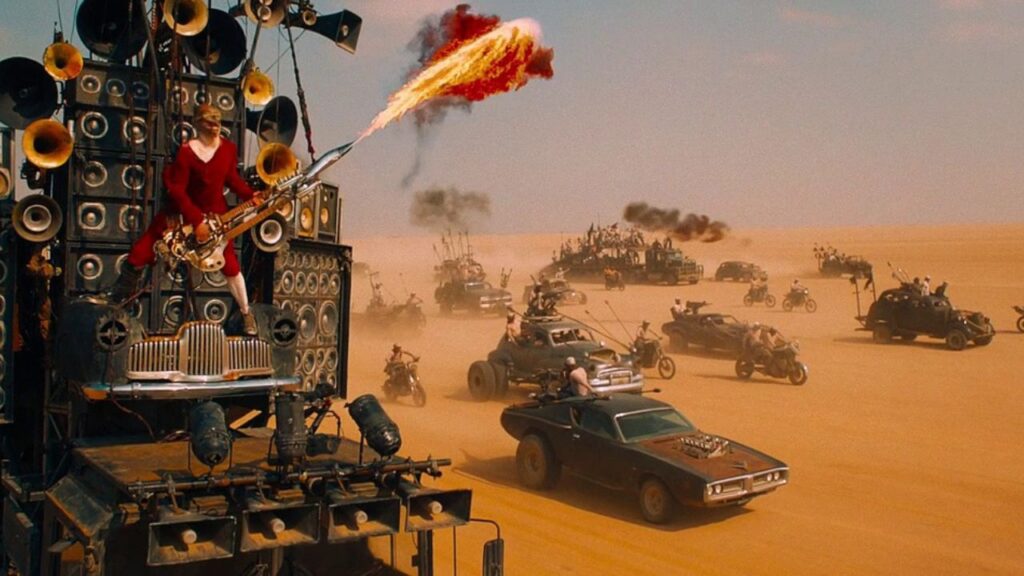
Once the mechanics worked, the production still needed performers who could actually ride the poles. This was not a normal car stunt or a standard fight beat. The people at the top of those rigs had to stay balanced while the vehicles moved at speed.
In Case You Missed It: Anya Taylor-Joy Fought George Miller Over ‘Furiosa: A Mad Max Saga’ Ending
They also needed to control their bodies in mid-air and make the motion look fluid enough to fit the movie’s strange energy. Guy Norris reportedly turned to performers with circus and acrobatic backgrounds rather than relying solely on conventional stunt performers.
The team included a former Cirque du Soleil performer, along with athletes and acrobats who could handle aerial movement and had the core strength to stay composed while the poles swayed over moving cars. The training period lasted about eight weeks in an abandoned warehouse in Australia.
Performers started on stationary vehicles and gradually worked up to the full mechanics of the stunt before taking it into the desert. By the time filming began in Namibia, they had spent weeks learning to move with the poles rather than fight them.
That preparation paid off in the confidence they showed on set. Reports from the production say some of the performers became so comfortable at the top of the rigs that they stayed strapped in between takes, drinking water and talking while suspended 20 feet in the air.
For everyone else on the ground, it still looked insane. But for the Pole Cats, it had become part of the workday.
How This Movie Kept It Almost Entirely Real
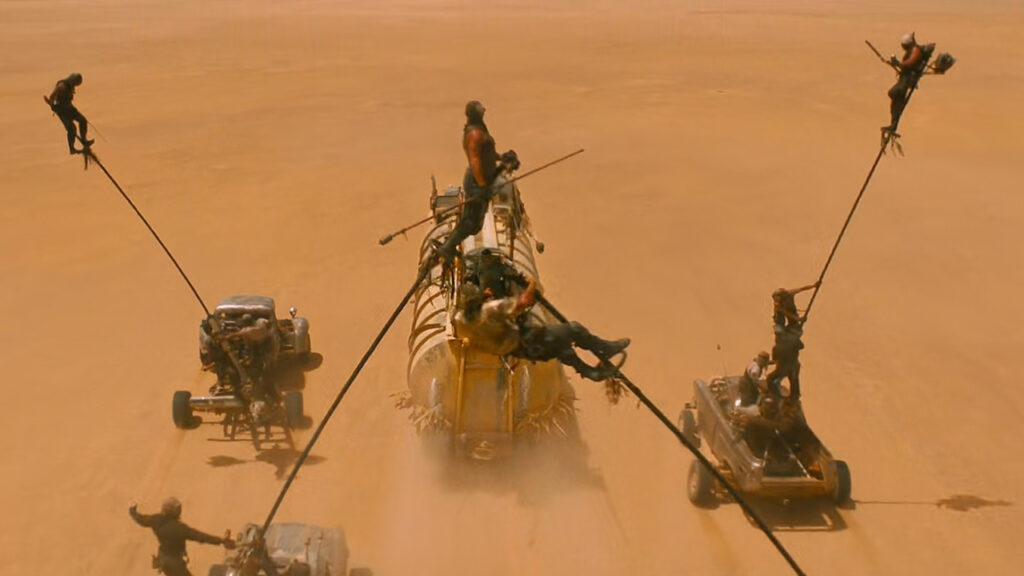
The finished sequence looks impossible because so much of it actually happened in front of the camera. The vehicles were really driving across the desert at high speed while the performers swung above them.
The acrobats were not miming movement against a green screen or waiting for the rest of the shot to be finished digitally later. They also had to coordinate their movement with the drivers below, timing swoops and shifts in motion while the vehicles kept moving through the chase.
Communication systems helped them stay in sync, but the danger and scale of the stunt were still very real. The movie did not invent that sense of instability after the fact. The stunt team created it in the desert, with the camera capturing it.
Digital effects still played a role, but not in the way viewers might assume. The production mainly used CGI to remove safety harnesses and clean up the image, not to replace the performers or create the entire effect from scratch.
The towering swings, the vehicles, and the physical motion all came from real stunt work. That commitment is a big reason the Pole Cats remain one of the defining images of ‘Mad Max: Fury Road.’ The stunt feels dangerous because it was indeed dangerous, even with careful engineering and rehearsal behind it.
George Miller wanted a world that looked dusty, unstable, and alive, and the Pole Cats delivered exactly that. They were not a digital illusion designed to imitate chaos. They were chaos, carefully built and then set loose in the desert.
You Might Also Like To Read: Robert Pattinson Draws Comparison Between His ‘The Odyssey’ And A ‘Twilight’ Character