
It is difficult to imagine a scarier scenario than what plays out in this classic Hollywood thriller, where a small mistake results in an unavoidable death sentence. In the 2002 psychological thriller ‘Phone Booth,’ entering a typical New York phone booth proved a major challenge for the young rising star Colin Farrell. Cornered in both literal and figurative senses, the actor had to create an entire movie plot in such a small area that he would have to confront a mysterious sniper in a battle for survival.
Without any possibility of escape and without the aid of big, spectacular actions, Farrell had to craft a psychological horror story solely through the power of acting and strong emotions. The film could become a silly gimmick if not for the outstanding acting and manic energy of its main star. Under Joel Schumacher’s direction, the picture became an exercise in claustrophobic tension.
Colin Farrell Carried The Psychological Thriller On His Shoulders
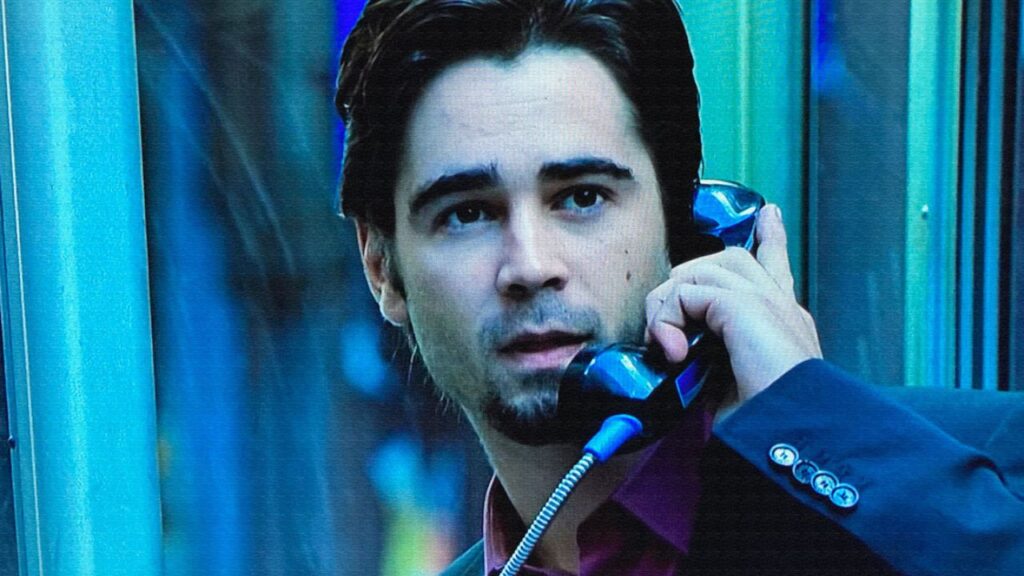
One of the main reasons Colin Farrell considers ‘Phone Booth’ (2002) one of his most ambitious movies is the immense responsibility he carried as the film’s lead. Unlike most thrillers, which feature multiple settings and an ensemble of supporting characters, the film places almost the entire narrative burden on its lead actor.
In Phone Booth, the protagonist—Stu Shepard—turns out to be a slick New York publicist who becomes a hostage in a phone booth after receiving a call there. Once it becomes clear that an invisible sniper controls the situation and threatens his life each time he attempts to leave the booth, Stu’s life turns upside down.
Related: 5 Gritty ’80s Thriller Movie Flops You Need To See
Confined to the booth for most of the film, Colin Farrell relied primarily on his voice, facial expressions, and emotional range to create a constant sense of fear and tension.
This role became an important milestone in the actor’s career, demonstrating that he could command the movie despite unusual filming conditions. Few actors take on such a level of responsibility, which makes ‘Phone Booth‘ one of the most ambitious projects of Farrell’s career.
The physical and emotional exhaustion was immense, largely due to the extremely compressed 10-day shooting schedule. Unlike most films where the co-star is on set, Kiefer Sutherland voiced the antagonist in post-production, leaving Farrell to interact with someone reading the sniper’s lines from off-camera while inside a working, wired phone booth.
“I certainly was getting through 100 Marlboro Reds a day for Phone Booth,” Farrell recalled, adding, “it was madness.”
The Film Transformed A Basic Idea Into Relentless Suspense

The next reason ‘Phone Booth‘ became one of the most ambitious films of Colin Farrell is its originality and audacity. Despite seeming ridiculous at first glance, the movie turned out to be an interesting thriller with many twists.
Thanks to the great work of director Joel Schumacher and writer Larry Cohen, the plot became full of intrigue and unexpected turns.
In Case You Missed It: 10 Comedy Movies About Really Serious Issues
All the conversations, decisions, and revelations increase the pressure on Stu, who understands that the sniper knows everything about him and wants to make him pay for all his lies.
The movie’s plot relies heavily on mind games, moral questions, fear, and suspense. That makes the concept quite risky in execution, since there are no extravagant set pieces or location changes to make it interesting.
Nevertheless, the filmmakers managed to create a successful high-concept thriller, making the Phone Booth movie a true gem of its kind.
You Might Also Like To Read: The ’90s Cinematic Masterpiece Ice Cube Thought Was Pure “Garbage”