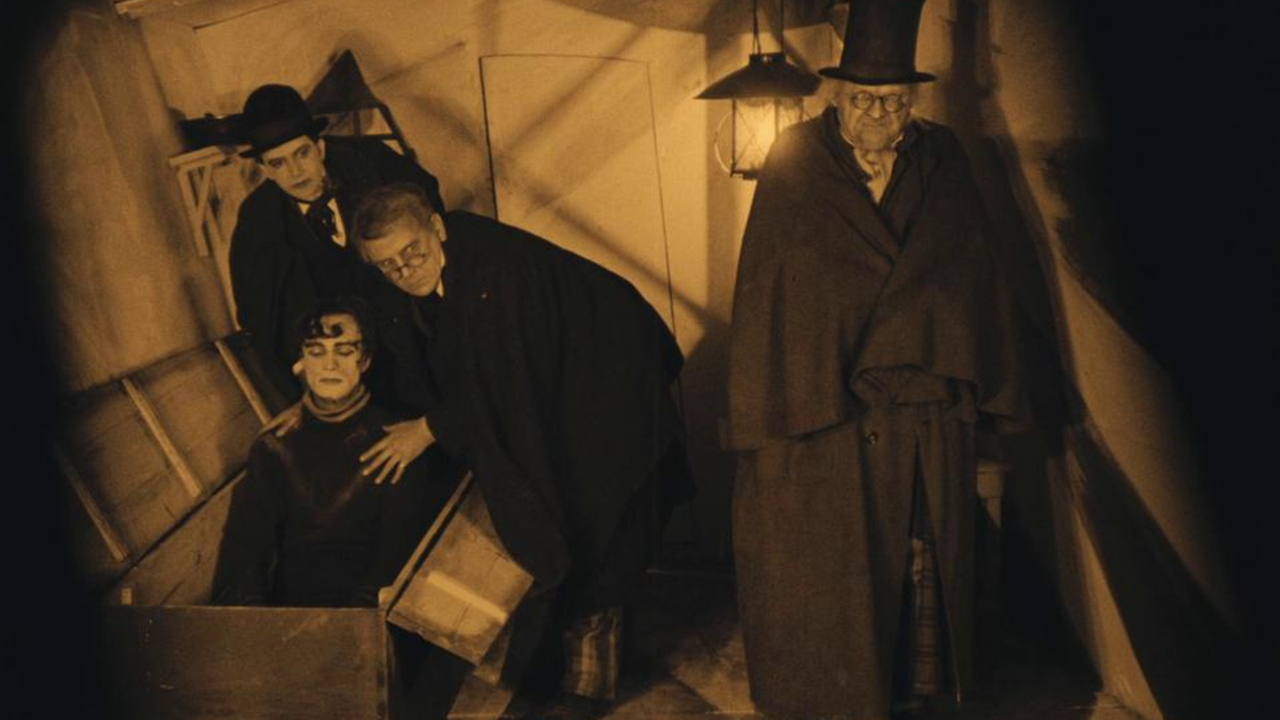
‘The Cabinet of Dr. Caligari,’ directed by Robert Wiene in 1920, revolutionized horror cinema forever. The silent German film was one of the most prominent representatives of Expressionist filmmaking and became the first-ever horror movie in film history. Painted shadows, distorted buildings, and unnerving streets created by the director made the film look scarier more than a century after the release date.
The film’s disturbing style did not emerge from pure artistic experimentation. It grew directly from the emotional and political collapse that followed World War I. Germany entered the 1920s carrying severe economic devastation, national humiliation, and deep psychological trauma after its defeat in the war. For many artists and writers, traditional realism no longer felt capable of expressing the anxiety, paranoia, and instability spreading throughout the Weimar Republic. ‘The Cabinet of Dr. Caligari’ became one of the clearest cinematic reflections of that shattered society.
Inspired By Wartime Traumas
Screenwriters Hans Janowitz and Carl Mayer drew much inspiration from their wartime experiences when working on the plot. Having witnessed the devastating impact of authoritarian regimes and the unquestioning obedience of soldiers, both authors developed an antipathy to authority and war.
This attitude determined the main metaphor of the movie. Dr. Caligari represents an authoritarian government that controls people’s lives.
The sleepwalker Cesare obeys the orders of his master, who makes him murder other people without asking questions. In turn, Cesare symbolizes common citizens and soldiers who have lost their independence due to the demands of governments.
Related: Top 5 Foreign Language Horror Films To Watch
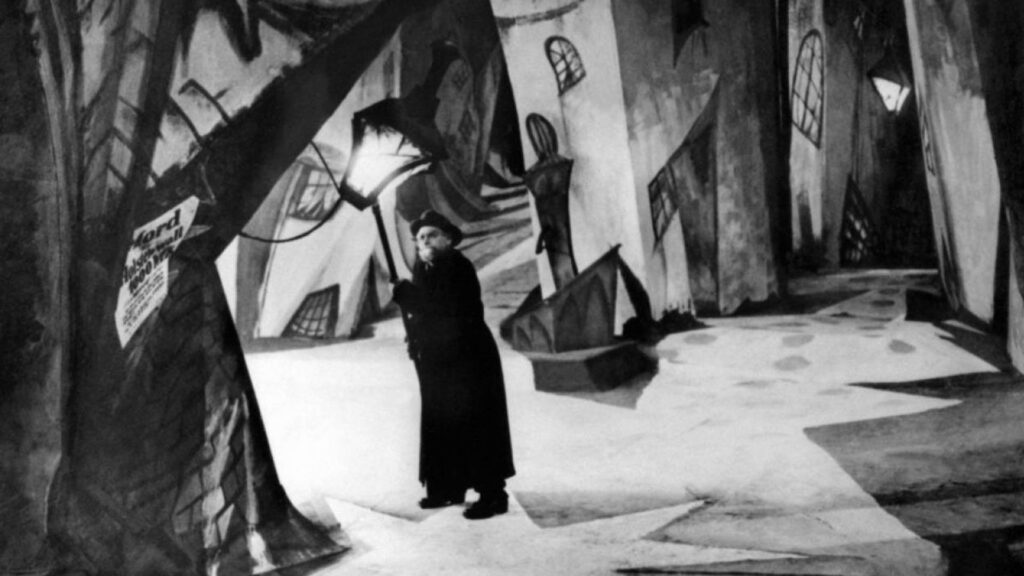
The set design of the film supported this interpretation as well. The work of set designers Hermann Warm, Walter Röhrig, and Walter Reimann was characterized by the rejection of realism and the introduction of unnatural geometry.
Distorted lines, tilted buildings, and unusual streets contributed to the creation of an eerie, mentally unbalanced environment.
It is believed that the visual aesthetics of the film were inspired by the devastated landscapes of trench warfare in World War I. Pointy trees and splinters in the scenery looked like fragments of destroyed battlefields covered with wood, pieces of debris, and ruins.
German Expressionism Created Psychological Horror Movies
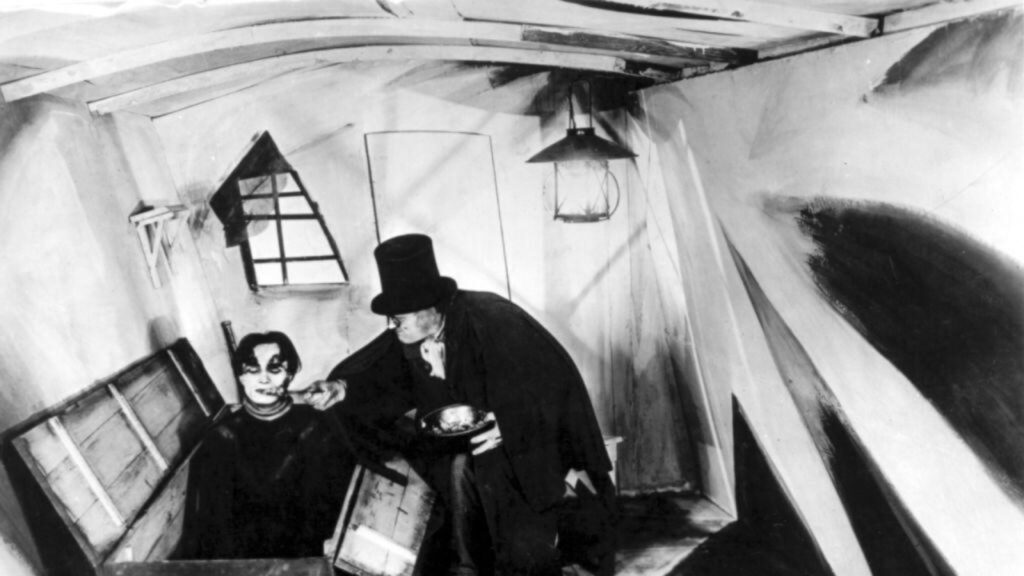
The financial situation in Germany after World War I also affected the appearance of the film. The lack of money and electricity forced the directors to find alternative solutions. For instance, painters applied shadows and artificial lights directly on walls and floors.
That decision created the film’s famous chiaroscuro imagery, where harsh darkness clashes against unnatural light. Rather than feeling cheap or unfinished, the painted shadows intensified the sense of paranoia and dread surrounding every scene.
In case you missed it: Then And Now: How 10 Actors Who Played Iconic Characters In 1990s Look Today
The twist at the end of the movie added another layer of visual distortion. Revealing that the story unfolds from the perspective of a disturbed narrator, the creators managed to create a movie shaped by paranoia and hallucinations. Thus, the horror in the film did not come from monsters or murders but existed in the form of human psychology.
The film inspired numerous other horror movies and psychological thriller films such as ‘Dracula‘ (1931) and ‘Frankenstein‘ (1931). The legacy of ‘The Cabinet of Dr. Caligari’ played a crucial role in the development of American film noir and Universal monster movies as well.
You might also like to read: Top 10 Films You Didn’t Know Won Oscars