
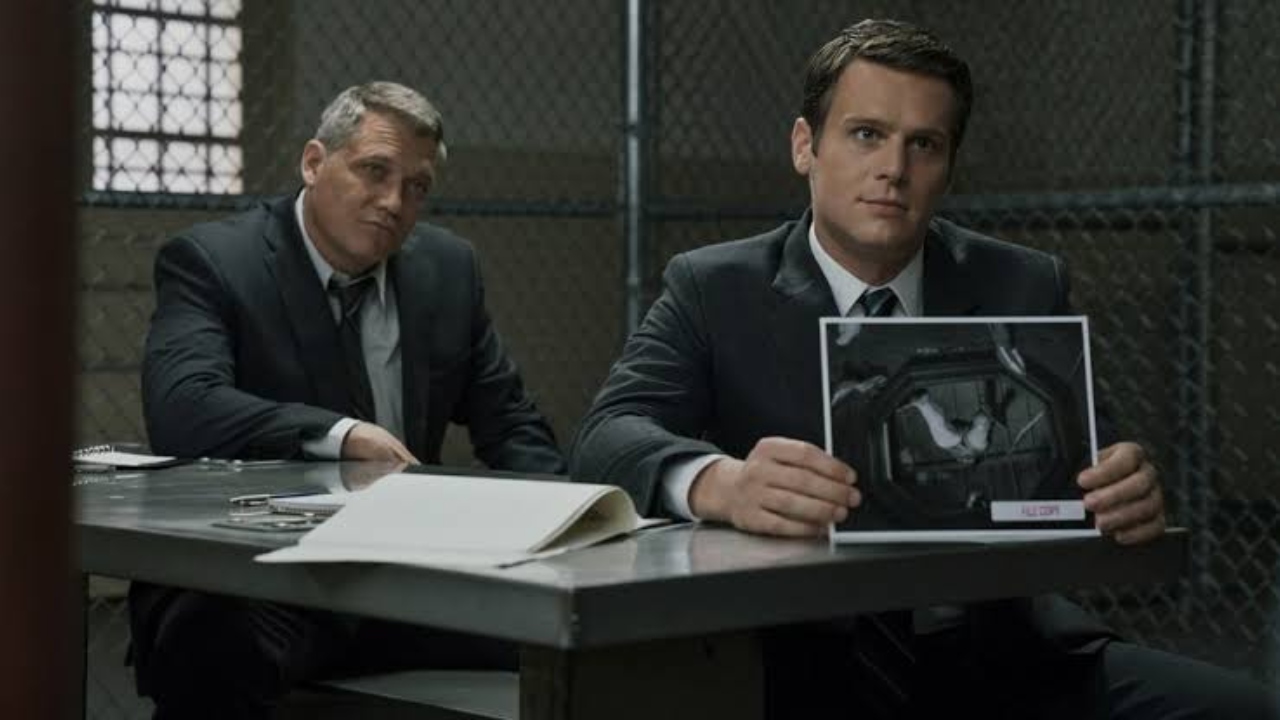
Most of the crime dramas are built on shocking murders, graphic violence, and disturbing crime scenes, which keep the viewers hooked. However, ‘Mindhunter’ knew something more disturbing: sometimes, what we think is much worse than what a camera can show us.
David Fincher’s Netflix series turned conversations into horror, proving that a quiet room and a carefully chosen sentence could be more disturbing than an entire sequence of violence.
The Interviews Were More Frightening Than The Crimes
‘Mindhunter’ is set in the late 1970s and chronicles the efforts of FBI agents Holden Ford and Bill Tench to learn about the minds of serial killers they are capturing. Instead of constantly presenting the crimes, the show puts viewers face-to-face with the perpetrators. The outcome is a psychological thriller that can get under your skin without using graphic imagery.
Related: Top 25 Shows Based On True Stories
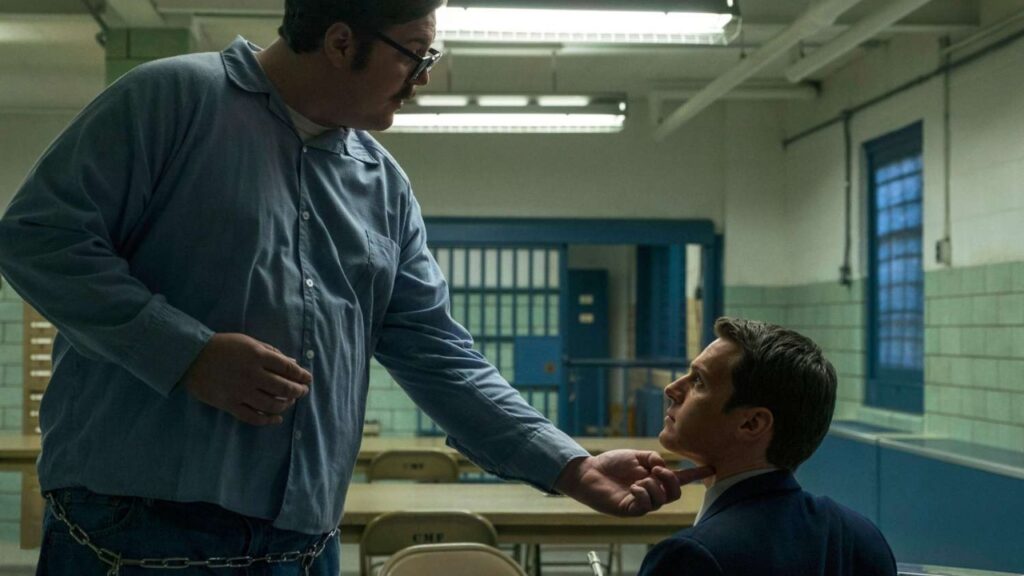
The most disturbing aspect of the show is its depiction of Edmund Kemper, brilliantly played by Cameron Britton. Though Kemper looks big and bad physically, he was polite, well-spoken, and even friendly in his interactions with Holden and Bill. He is calm, makes jokes, and speaks about his crimes in a disturbing way.
It’s the contrast that makes his scenes so effective. The horror in Kemper’s casual references to the murders is in the way he can be normal while talking about the extreme brutality. No need to depict the violence itself. His words and the agents’ reactions are enough to make the audience uncomfortable.
The scene in which Kemper embraces Holden at the end of their visit is another perfect example. All along, Holden has been trying to figure out these killers in his head, thinking that he can have some control over them by knowing more. But when Kemper suddenly pulls him into an embrace, Holden’s fear becomes impossible to hide.
The Horror Continued Outside the Interview Room
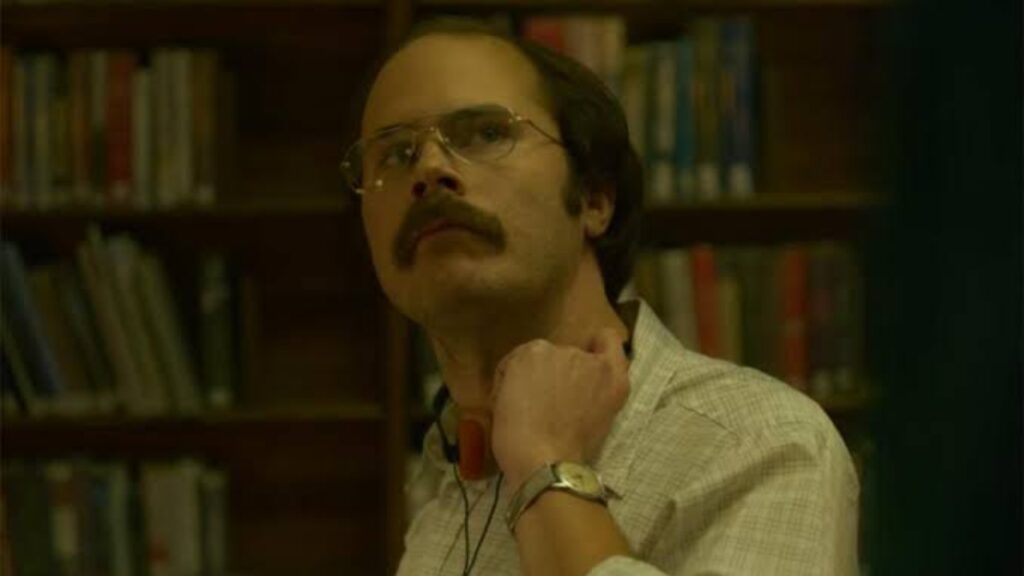
The series also relies on its backstory to induce fear. The recurring scenes with the BTK killer, Dennis Rader, are very effective. While the main characters investigate other murderers, viewers occasionally see Rader living an apparently ordinary life, balancing his family responsibilities with his secret crimes.
In case you missed it: Top 25 Thriller Series Of All Time, Ranked
The scenes are terrifying because they provide very little explanation initially. Rader doesn’t have to make a monologue or kill someone to scare the audience. His presence in the mundane world of everyday life, coupled with the knowledge of his capabilities, leaves a feeling of unease.
The show’s crime-scene investigations are the same. The agents frequently have to deal with pictures, evidence, and descriptions of terrible acts, but not the violence itself. Their responses give us viewers a lot to imagine.
In the end, ‘Mindhunter’ knows that fear doesn’t always have to be about what we see. Sometimes, it is about what we hear, what we suspect, and what we cannot stop imagining afterward. By refusing to turn violence into spectacle, the series makes its most disturbing moments feel uncomfortably human. Which is why its quietest scenes can be its most terrifying.
You might like to read: ‘Mindhunter’ Season 3 Would’ve Taken The FBI Agents To Hollywood And We Missed Out Big Time